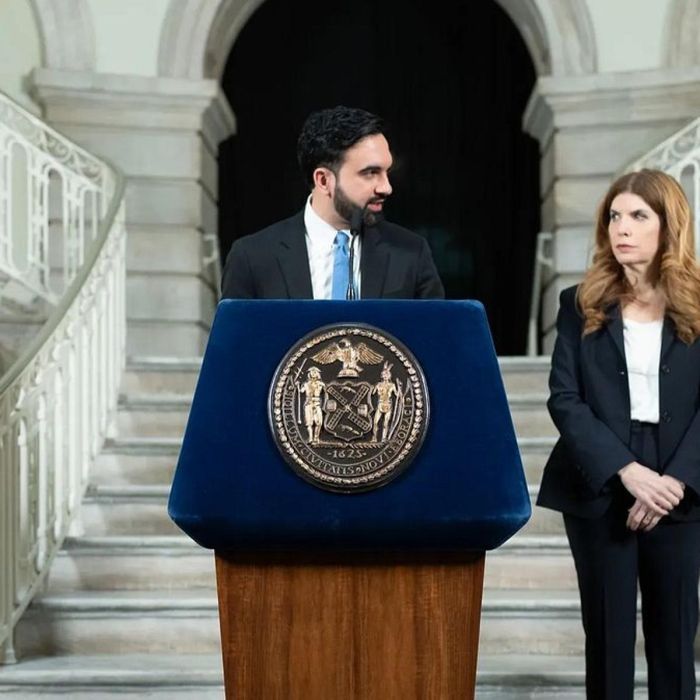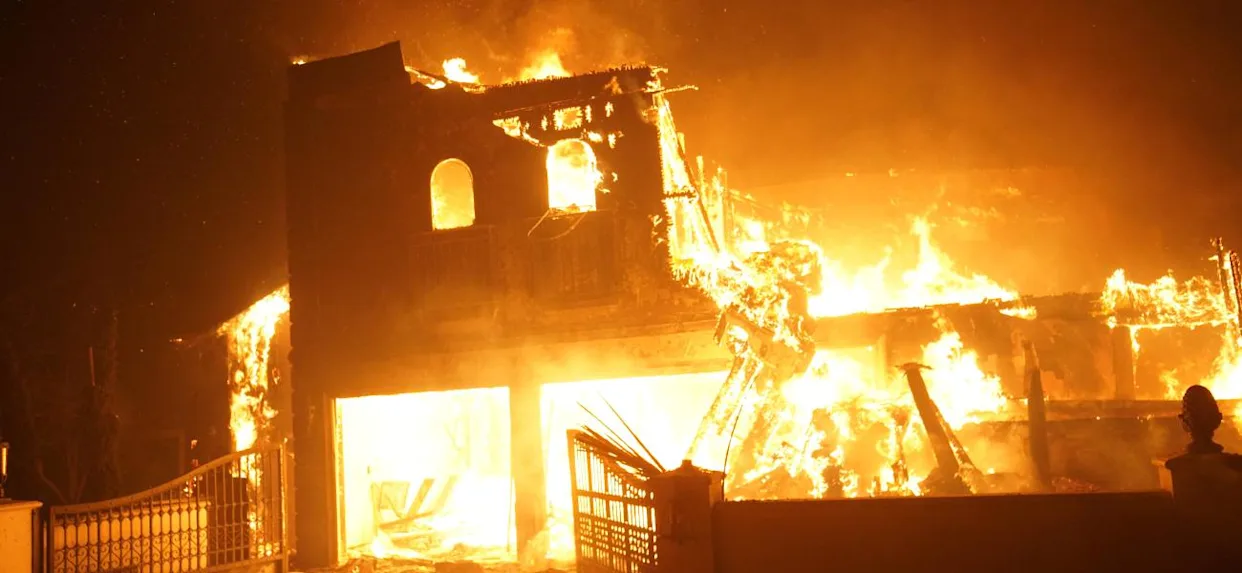
The Palisades fire trial opened this week in a downtown Los Angeles courtroom with starkly opposing accounts of the man accused of igniting one of the most catastrophic wildfires in the city’s history. Federal prosecutors painted a portrait of a lonely, embittered man seeking revenge on society, while his defense insisted he was simply a frightened bystander who tried to summon help.
Two Very Different Stories
In his opening statement, a federal prosecutor told jurors that Jonathan Rinderknecht, motivated by a desire for revenge, deliberately used a lighter to set what would grow into the most destructive wildfire in Los Angeles history.
His defense attorney offered a sharply different narrative. According to the defense, Rinderknecht, a 30-year-old former Uber driver, had climbed a hill on New Year’s Eve 2024 only to watch fireworks and immediately dialed 911 the moment he spotted flames. Defense attorney Steve Haney told the jury flatly that his client did not start the fire, arguing the evidence would point to fireworks as the cause.
The competing portraits set the stage for a trial centered on the Lachman fire, which smoldered underground for roughly a week before erupting into the deadly Palisades fire on January 7, 2025.
The Devastating Toll
The stakes of the case are enormous. The Palisades fire killed 12 people, destroyed 6,500 structures across the Palisades and Malibu, and caused billions of dollars in damage and insurance claims.
Rinderknecht, who has been in federal custody since October, faces charges of destruction of property by means of fire, arson affecting property used in interstate commerce, and timber set afire. If convicted, he faces up to 45 years in prison.
A Packed Courtroom
The proceedings drew significant attention. More than 70 people filled the courtroom Wednesday morning, including Rinderknecht’s father, who sat in the front row, and City Councilwoman Traci Park, who represents the Palisades.
In a small human moment before opening arguments, Rinderknecht smoothed back his hair while his attorney helped adjust his tie and offered a reassuring pat on the back.
The Prosecution’s Case
Assistant U.S. Attorney Matthew W. O’Brien pointed directly at Rinderknecht, telling jurors that investigators determined he was the only person near the fire when it began on January 1.
Both sides agree on the basic timeline of that night. Rinderknecht had been working as an Uber driver on New Year’s Eve, dropping off his final passenger around 11:35 p.m. in a neighborhood close to where the fire ignited. O’Brien noted that Rinderknecht knew the area well, having lived there a few years earlier with a boyfriend who rented a large house with a pool.
That relationship later ended, and Rinderknecht moved to a small apartment in North Hollywood, where, the prosecutor said, his life began to unravel. O’Brien described him as lonely in 2024, withdrawn, and without real friends, and argued the evidence would show he wanted revenge against a society he blamed for his troubles.
A Detailed Account of That Night
O’Brien walked jurors through what he said happened next. Rinderknecht allegedly canceled his next Uber ride and drove to a small parking lot at the edge of the neighborhood, just a block from his former home. After an unanswered call to an ex, he reportedly used his phone’s flashlight to walk up a trail to a clearing atop the hill known as Hidden Buddha.
Once there, O’Brien said, Rinderknecht listened to a French rap song whose music video features the singer setting things on fire while singing about despair. Around 12:12 a.m., within seconds of the fire being detected on a surveillance camera, Rinderknecht attempted to call 911, but the call failed. Phone location data, the prosecutor said, placed him less than 30 feet from the fire during one of those attempts.
Ruling Out Other Causes
O’Brien told jurors that investigators eliminated other possible causes, including power lines, lightning, and fireworks. He said the fire grew so rapidly in its first minute or two that it must have been started by a lighter, and that Rinderknecht admitted bringing a lighter up to Hidden Buddha.
The prosecutor also pointed to digital evidence, saying Rinderknecht had asked ChatGPT to generate images of fire and had expressed anger toward wealthy people and society at large. Investigators reportedly found an AI-generated image of a burning city on his iPhone.
According to O’Brien, when investigators asked why someone might commit arson in Pacific Palisades, Rinderknecht responded that it would stem from resentment of the rich enjoying their wealth while others were, in his words, basically enslaved by them. O’Brien concluded that the evidence would prove beyond a reasonable doubt that Rinderknecht lit the January 1 fire on purpose, and that it was the same blaze that caused the destruction on January 7.
The Defense Pushes Back
Haney countered that the physical evidence simply wasn’t there. He told jurors that investigators found no accelerants and no incendiary devices linked to his client, and that nothing physically connected Rinderknecht to starting the Lachman fire.
Instead, Haney argued, his client called 911 immediately after spotting the flames, the first of more than a dozen such calls. When Rinderknecht finally reached an operator around 12:17 a.m. after walking down the hill, Haney said, he pleaded for help. Jurors heard a recording in which Rinderknecht can be heard saying there’s a fire. The defense framed those words as the actions of a man trying to stop a fire, not start one.
Questioning the One-Fire Theory
Haney also seized on the evolution of the government’s own investigation. He stressed that authorities had initially treated the Lachman and Palisades fires as two separate events with two separate sets of suspects, and argued it was the prosecution’s burden to prove they were actually one continuous fire.
In the days after the blazes, Haney said, the federal government operated on the belief that the Lachman fire was sparked by fireworks while the Palisades fire was the work of arsonists. Only months later, he contended, did the government abandon that two-fire theory in favor of the single combined-fire theory now being presented to the jury.
The defense closed its opening by urging jurors to see the evidence differently, describing a frightened young man repeatedly and desperately calling for help.
What Lies Ahead
As the trial unfolds, jurors will be asked to weigh a web of circumstantial evidence, cellphone location data, a lighter, AI-generated imagery, and 911 recordings, against the absence of accelerants or incendiary devices the defense has highlighted.
With 12 lives lost, thousands of structures destroyed, and a community still recovering, the outcome carries profound weight for Los Angeles. Whether the jury sees Rinderknecht as a vengeful arsonist or a panicked witness will determine the fate of a man facing decades behind bars, and may offer a measure of closure to a region scarred by one of its worst disasters.
Author