The growing use of Trump acting officials has emerged as one of the more unusual features of the president’s second term, raising fresh questions about how far the executive branch can stretch the law before it breaks. At the center of the latest controversy is an eyebrow-raising decision: handing oversight of the American intelligence community to a housing expert.
A Curious Choice for Intelligence
It seems strange on its face that President Donald Trump would tap a housing official to lead the nation’s intelligence apparatus. Yet Trump has dug in on his temporary appointment of Bill Pulte, whom he wants to start next week with a mandate to shake things up and clean house during a temporary assignment overseeing the intelligence community.
The move has sparked a standoff on Capitol Hill. In protest of the hiring, Democrats could allow a key foreign surveillance law to lapse, while Republicans scramble to manage the fallout.
The Pulte decision fits a broader pattern. Qualified leaders of both the CDC and the FDA were pushed out and have yet to be replaced, and the role of surgeon general remains permanently unfilled during Trump’s second term.
A Weakening Hand in the Senate
Part of what’s driving this approach is political. Trump’s ability to push nominees through the Senate is fading as his party braces for a November election in which his low approval ratings could weigh down other Republicans.
In an echo of his first administration, Trump appears increasingly likely to lean on acting agency heads for as long as the law permits. At the same time, he continues to test the Federal Vacancies Reform Act of 1998 by piling vast responsibilities onto a small circle of trusted aides.
Familiar Territory
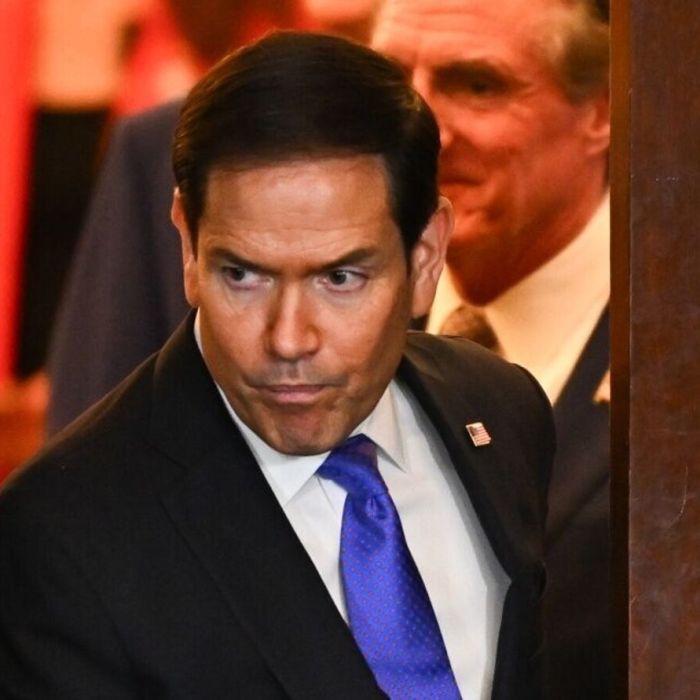
This is hardly new ground for the administration. Secretary of State Marco Rubio also served as acting archivist, while the administrator of the Social Security Administration has taken on the invented title of CEO of the IRS, a workaround necessitated because the tax agency’s director position can no longer legally be filled on a temporary basis.
For Pulte, soon to be acting director of national intelligence while remaining the Senate-confirmed head of the Federal Housing Finance Agency, the connecting thread is neither housing nor intelligence. According to reporting, it is his track record of using his federal position to target Trump’s political enemies.
Trump’s Stated Goals
The president has been candid about the temporary and unconventional nature of the appointment. In the Oval Office on June 4, he stressed that Pulte would not hold the job long, calling it an acting position rather than a permanent one.
Rather than framing the choice around the need to coordinate intelligence during a time of war, Trump suggested a different motivation, expressing hope that Pulte might uncover information about what he called rigged elections.
Critics see deep dysfunction in the arrangement. Max Stier, CEO of the nonpartisan Partnership for Public Service, described it as a layer cake of mismanagement. He warned that a civil service already shaken by job cuts and purges of supposed deep-state actors now faces leaders with no background in the agencies they head, calling it a recipe for waste, corruption, incompetence, and poor outcomes for the public.
Two Distinct Problems
Pulte’s rise highlights two separate issues in how Trump runs the government.
The first is the use of acting officials to temporarily bypass the Senate confirmation process, which can be contentious even under the best circumstances. While every president has done this, Trump does so far more frequently and openly. In his first term, he spoke about enjoying the flexibility that avoiding confirmation provided, despite the fact that the Constitution requires it.
The second is the bundling of unrelated duties onto a handful of loyal aides, producing a series of odd job combinations across the government.
Where the Laws Come In
Both practices eventually collide with federal statutes. The law establishing the director of national intelligence role, for instance, requires that any nominee possess extensive national security expertise. When his appointment was announced, Pulte did not even hold a security clearance, though he has not been nominated for the permanent post.
The same law specifies that when a vacancy arises, the principal deputy director of national intelligence shall act in the role. That position is currently held by Aaron Lukas, an experienced former CIA officer, raising questions about why he isn’t the natural choice to fill the gap.
Understanding the Vacancies Act
The Federal Vacancies Reform Act of 1998 adds another layer of complexity. Passed on a bipartisan basis to limit President Bill Clinton’s ability to sidestep Senate approval for key appointments, the law governs the jobs known in Washington shorthand as PAS positions.
The act sets out a fairly intricate system. Vacant PAS roles may only be filled by their top deputies, other senior officials within the same agency, or another Senate-confirmed official. Pulte qualifies under that last category.
The law also imposes strict time limits. An acting official may serve only 210 days after a vacancy occurs. If the president nominates a permanent replacement, that clock pauses during the nomination process. Should the first nomination fail or be withdrawn, the president gets another 210-day window, but not a third. Notably, presidents of both parties have routinely violated these provisions, according to the Government Accountability Office.
Roles Left Deliberately Empty
Trump has also chosen to leave many positions vacant rather than name permanent replacements. U.S. Trade Representative Jamieson Greer, already consumed by Trump’s trade war, was additionally tasked with leading both the Office of Government Ethics, which guards against conflicts of interest, and the Office of Special Counsel, which protects government whistleblowers.
The administration appears to have little interest in either office, and neither currently has a permanent leader.
Commissions Left Hobbled
The vacancies extend to critical oversight bodies. The Federal Election Commission, designed to be bipartisan, lacks enough commissioners to launch investigations. The U.S. Merit Systems Protection Board, which hears complaints from federal workers, technically retains a quorum only because its Senate-approved chairman, Henry Kerner, is also serving as acting vice chairman.
A Mountain of Unfilled Posts
The scale of the gaps is striking. Of roughly 1,300 Senate-approved positions, the Partnership for Public Service is tracking more than 800 key roles. More than 270 of those have no nominee from the administration, while about 100 have nominees awaiting Senate confirmation.
Curiously, this actually represents a slightly higher confirmation rate for Trump’s second term than either the Biden administration or Trump’s first term achieved. The deeper concern is not the pace of confirmations but the reliance on acting officials, which strains the laws governing vacancies and the constitutional spirit of forcing compromise between the president and lawmakers through the Senate’s advice and consent.
The Lesson Trump Learned
For Stier, the pattern reflects a clear takeaway from Trump’s first term. He argued that the president seems to have concluded that loyalty matters more than competence, choosing people who will do whatever he wants rather than those who will defend the Constitution, uphold the rule of law, and capably run the complex organizations that profoundly affect American lives.
A Constitutional Test
What’s unfolding is more than a series of unusual personnel decisions. It is a sustained test of the boundaries that separate executive convenience from constitutional design. As Trump continues to shuffle trusted aides through overlapping roles and leave key positions empty, the question looming over Washington is how much strain the system can absorb before something gives.
For now, the layering of titles and the empty offices stand as a quiet but significant challenge to the framework the founders built, one that may not be fully resolved until the courts, Congress, or voters weigh in.
Author