Israel’s occupation of Lebanon and Syria is set to continue indefinitely, Prime Minister Benjamin Netanyahu declared, even as a newly announced ceasefire between the United States and Iran appears to touch directly on those very hostilities. His stance threatens to inject fresh tension into an agreement many had hoped would calm the region.
Standing Firm in the Buffer Zone
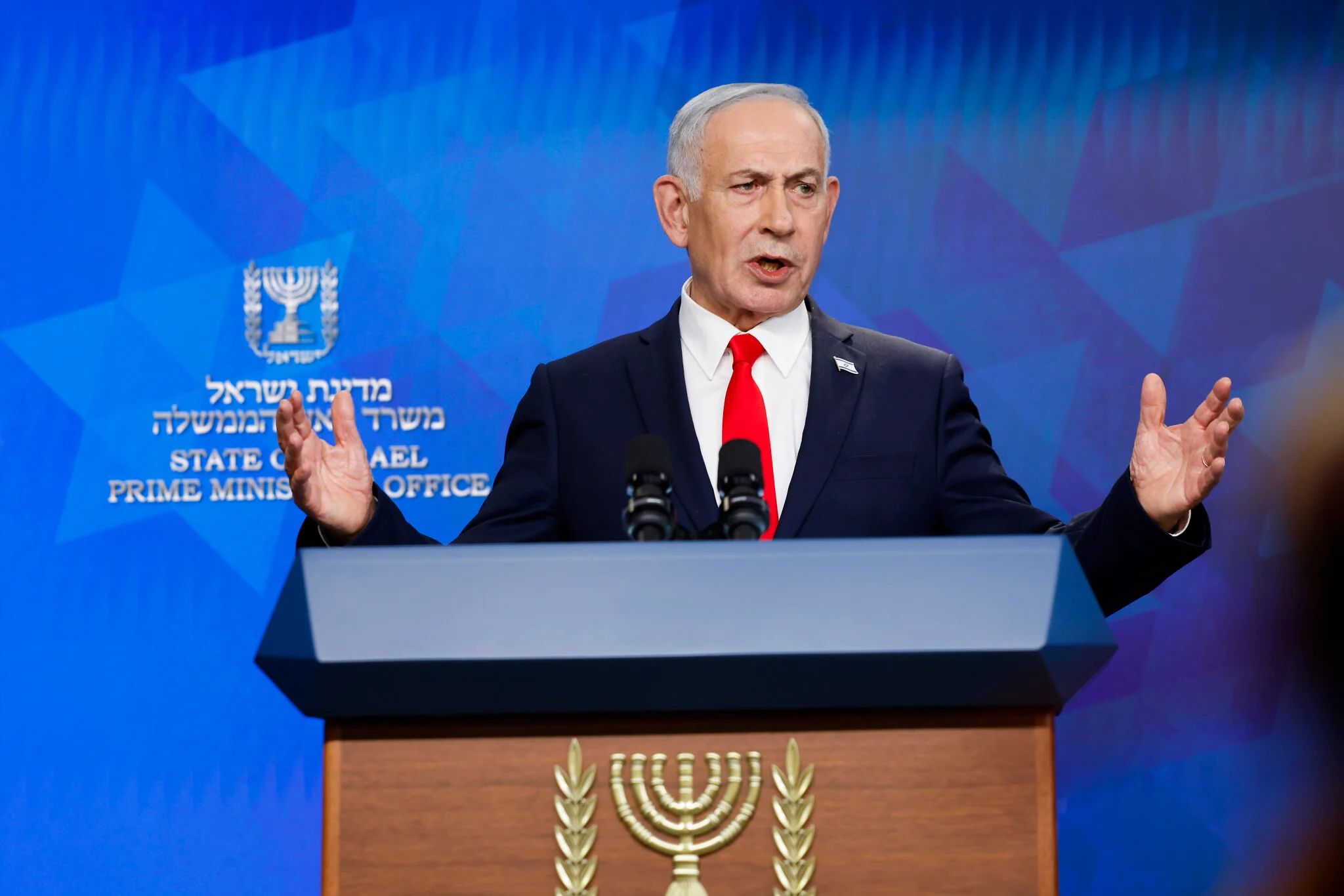
Speaking at a press conference on Monday, Netanyahu made clear that Israeli forces would not be pulling back. He emphasized that troops would remain in Lebanon, where Israel currently holds roughly 570 square kilometers of territory.
“We will stay in the Lebanon security buffer zone for as long as necessary,” he told reporters.
The conflict driving this occupation has been devastating. Israel’s fight with Hezbollah, the Iran-backed Lebanese armed group, has left more than 3,000 people dead.
A Collision With the Ceasefire
The timing of Netanyahu’s remarks is significant. According to unconfirmed details, Lebanon is expected to be folded into the deal that Iran and the US are due to sign on Friday. That makes the prime minister’s defiance a potential complication for an already delicate arrangement.
Pakistan’s Prime Minister Shehbaz Sharif, who announced the breakthrough on Sunday, said the memorandum of understanding would include the immediate and permanent end of military operations on all fronts, Lebanon explicitly among them. Netanyahu’s insistence on staying put sits uneasily alongside that promise.
How Israel Got Here
The roots of the current standoff stretch back several years:
- Israel has been at war with Hezbollah since October 2023.
- It launched cross-border raids in October 2024, which escalated into a full-scale invasion of Lebanon.
- Israeli forces now occupy territory beyond the Litani River in southern Lebanon, pushing past the official boundary of Israel’s self-declared security zone.
Even with a ceasefire on the horizon, Netanyahu signaled no intention of easing up. He said Israel would keep targeting what he called Iran’s terror arms and would need to remain on guard against Tehran.
A Strike That Tested the Deal
The fragility of the moment was underscored on Sunday, when Israel struck Beirut’s suburbs and killed three people. The attack was widely seen as crossing one of Iran’s red lines tied to the negotiations with the US.
Reports suggest the strike unsettled President Donald Trump, who feared it might derail momentum toward the ceasefire. Despite Tehran’s threats of retaliation, the memorandum of understanding linked to the agreement was still signed that same night.
Tension Behind Closed Doors
Netanyahu’s public confidence appears to mask friction with Washington. According to reports, he has clashed privately with Trump while simultaneously facing criticism at home, both from the Israeli opposition and from the right, for failing to head off the US-Iran deal altogether.
Hardline voices in Israel worry that ending the war with Iran could force an unraveling of Israel’s broader military presence across Lebanon, Syria, and Gaza, where it occupies around 1,000 square kilometers.
At the press conference, Netanyahu acknowledged the strain with Trump but framed it as a normal feature of the relationship. He said the two leaders often agree, though not always, and stressed that he answers to Israel’s security interests above all.
He also cast the war with Iran as a clear victory, declaring that Iran would never possess nuclear weapons and claiming Israel had decapitated the leadership of what he called the terror regime and dismantled its weapons facilities.
The Defense Ministry Doubles Down
Netanyahu was not alone in his messaging. Earlier on Monday, Defense Minister Israel Katz vowed that Israel would not surrender any of the territory it has held since 2023.
Katz described a deliberate policy of keeping Israeli forces stationed in the security zones across Lebanon, Syria, and Gaza, with no fixed end date, framing it as essential protection for Israel’s borders and communities against jihadist threats. He stated plainly that Israel opposes any withdrawal from Lebanon, regardless of current or future pressure.
What It Means Going Forward
Netanyahu’s refusal to budge raises pointed questions about how the US-Iran framework can hold if one of the region’s central actors openly rejects a key element of it. With the formal signing set for Friday and Israeli forces dug in across three occupied zones, the gap between what the deal promises and what Israel is willing to do looms large.
This is a fast-moving and sensitive story, and the coming days, particularly around Friday’s signing, will reveal whether the ceasefire can withstand the strain.
Author