US Strikes on Iran Resume as Trump Declares It Is Washington’s Turn to Hit Back
US strikes on Iran returned in force late Wednesday, ending a fragile stretch of quiet in the Middle East and pushing a conflict that has dragged on since late February back into open escalation. American forces spent two hours pounding targets across the country before Central Command announced the operation was finished at 10 p.m. Eastern time, describing it as a direct answer to Iran’s failed missile launch against US positions the night before.
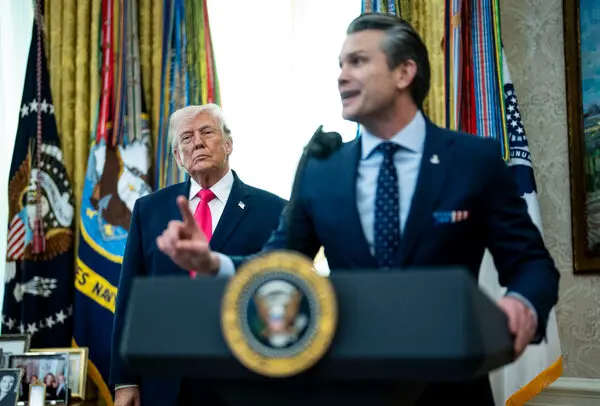
The message from Washington was blunt. Speaking to reporters in the Oval Office earlier in the day, President Donald Trump made clear that a heavy response was already in motion and that Tehran should not be surprised by what was coming. Hours later, the sky over southern Iran lit up.
A Two-Hour Wave Across Southern Iran
According to Central Command, the operation began at 8 p.m. Eastern and hit dozens of sites tied to the Islamic Revolutionary Guard Corps. The target list, as the military described it, leaned heavily toward Iran’s ability to project force outward: command facilities, missile and drone production and storage sites, coastal radar and air defense positions, and naval assets.
Officials framed the goal as reducing the danger Iran and its allied militias pose to American troops, to commercial vessels moving through regional waters, and to neighboring Gulf states. No figures were released on the exact number of targets destroyed, and the military offered no assessment of casualties.
Iranian state media reported blasts in several locations along the country’s southern coastline and in the Persian Gulf, including the port city of Bandar Abbas and the island of Kish. Images circulated by Iranian outlets claimed to show wreckage on Qeshm Island, another strategically placed piece of territory near the mouth of the Strait of Hormuz. Independent verification of the extent of the damage was not immediately available.
The Missile Launch That Broke the Pause
The chain of events began the previous evening. Revolutionary Guard forces fired a volley of ballistic missiles toward American troops stationed in the region in what US officials characterized as an attempted surprise strike. None of the missiles reached their targets. Jordan’s military reported shooting down five of them over its own territory in the early hours of the following morning.
Iran’s account differed in emphasis rather than substance. The Guard said it had aimed at an American airbase and a Central Command facility in Jordan, and warned that as long as it viewed US actions in the region as hostile, its campaign would not stop.
That exchange effectively dissolved an informal lull in fighting that had held for several days, one that some observers had hoped might harden into something more durable.
Diplomacy Running Alongside the Bombing
What makes the latest round of US strikes on Iran so striking is that it unfolded while a negotiating track technically remains alive. Delegations from both countries sat down in June to work toward an agreement that would end the war, building on a memorandum of understanding the two sides had signed. Talks have not collapsed outright, but they have also failed to stop the shooting.
The Strait of Hormuz has remained the pressure point throughout. Roughly a fifth of the world’s oil passes through the narrow waterway, and every flare-up there carries consequences far beyond the Gulf.
There was also a diplomatic layer to Tuesday’s events. Trump hosted Israeli Prime Minister Benjamin Netanyahu at the White House that same day, and an Israeli official later said the two leaders reviewed a mix of military, economic and diplomatic approaches to keeping Iran from building a nuclear weapon.
Energy Markets React Immediately
Oil prices climbed as news of the renewed fighting spread. Traders have grown accustomed to sudden swings driven by this conflict, but each escalation tightens the risk premium built into crude.
Shipping is feeling the strain just as sharply. Tanker operators have started plotting alternative routes after Yemen’s Houthi movement, which is backed by Tehran, announced that Saudi-linked vessels attempting to sail toward the Indian Ocean would be treated as legitimate targets. For an industry that depends on predictable transit times and insurable risk, that kind of declaration reshapes commercial decisions almost overnight.
The practical effects tend to appear in stages:
- Longer voyages as ships avoid contested waters
- Rising insurance premiums for Gulf transits
- Higher freight costs that eventually reach consumers
- Growing reluctance among crews and operators to enter high-risk zones
A Conflict Now Well Past Its Fifth Month
The current fighting traces back to late February, when Trump announced the start of major combat operations and American and Israeli aircraft struck military, government and infrastructure sites across Iran. In the months since, the war has settled into an uneven rhythm of strikes, attempted retaliation, brief pauses and renewed violence.
The campaign has also widened geographically. Just a day before Iran’s missile launch, American and Saudi aircraft carried out joint strikes on Iran-aligned militia positions across several Iraqi provinces, a response to a steady stream of drone attacks on US forces and Saudi energy facilities.
What Comes Next
For now, the key question is whether Tehran chooses to absorb this round or answer it. Iranian officials have consistently signaled they will not let strikes pass unanswered, which raises the odds of another cycle beginning within days.
The wider risk is that the fighting spills further into the shipping lanes and energy infrastructure that the global economy relies on. Renewed US strikes on Iran have shown how quickly a quiet week can turn, and how little separates a pause from a fresh round of escalation.
Author
-
Lucienne Albrecht is Luxe Chronicle’s wealth and lifestyle editor, celebrated for her elegant perspective on finance, legacy, and global luxury culture. With a flair for blending sophistication with insight, she brings a distinctly feminine voice to the world of high society and wealth.