The global university rankings for 2026-2027 are out, and California has quietly emerged as one of the biggest winners. While much of the attention naturally lands on which school claimed the top spot, a closer look reveals a remarkable story: the Golden State has packed an impressive number of institutions into the upper tiers of the worldwide list, with the University of California system leading the charge.
A Different Way of Measuring Greatness
Before diving into the standings, it helps to understand what these rankings actually measure, because they’re not the same as the national lists most American families are familiar with.
The global rankings, typically released each June, rely on a distinct methodology. This year’s edition evaluated 2,250 universities across 105 countries. The largest portion of each school’s score comes from its research strength, factors like scholarly publications, overall research reputation, and how often that research gets cited by others.
That’s a meaningful contrast with the national rankings, which arrive in the fall and emphasize very different priorities. Those lists weigh things like graduation and retention rates, student debt levels, peer assessments, and career outcomes. In short, the global rankings reward research firepower, while the national ones focus more on the student experience and results after graduation.
Who Sits at the Very Top
At the summit of the global list is Harvard University, named the top institution in the world. Harvard also holds the distinction of being the oldest higher education institution in the United States.
The rest of the top five reads like a who’s who of academic prestige: the Massachusetts Institute of Technology, Stanford University, the University of Oxford, and the University of Cambridge round out the leading group, in that order.
That places two American heavyweights and two storied British universities right alongside Harvard, but for California, the story is just getting started.
Stanford Holds Its Ground
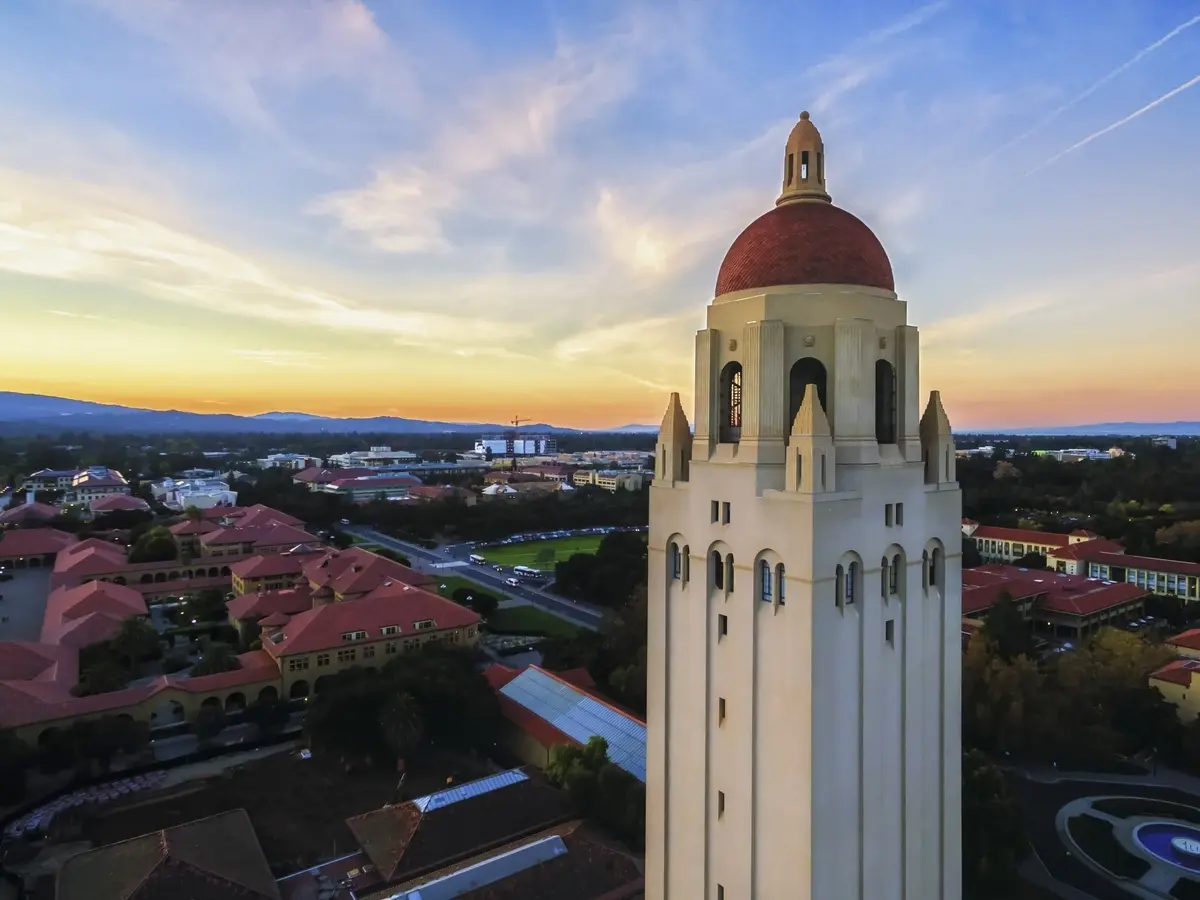
Stanford University once again secured the same global position it earned the previous year, and its strength runs deep across individual subjects.
The university claimed the number one spot worldwide for mathematics. It ranked second in several fields, including economics and business, psychiatry and psychology, immunology, and radiology, nuclear medicine, and medical imaging. Stanford also landed third in a cluster of disciplines such as biology and biochemistry, cell biology, clinical medicine, neuroscience and behavior, and optics.
Beyond specific subjects, Stanford was recognized as the third-best university for its global research reputation and ranked fourth for the number of highly cited papers that fall among the top 1% most cited worldwide. That kind of breadth underscores why it remains a fixture near the top.
UC Berkeley: Still the Best Public School in America
California’s second entry in the global top 10 is UC Berkeley, which came in at number seven overall. The school slipped one spot from the previous year, landing just behind Tsinghua University in Beijing and ahead of Yale, University College London, and Columbia.
Even with that slight dip, Berkeley held onto a meaningful title: the best public university in the United States. Its research credentials are formidable as well. Berkeley ranked sixth for global research reputation and earned strong subject placements, including third in physics and fourth in biology and biochemistry, economics and business, and environment and ecology.
For a public institution competing against deeply resourced private universities, that’s a striking achievement.
UCLA Climbs the Ranks
The next California school on the list, UCLA, continued its upward momentum. It reached number 11 globally, rising two spots from its previous position of 13.
That steady climb reinforces a broader theme: California’s strength isn’t concentrated in just one or two campuses. It’s spread across multiple institutions that keep pushing toward the top.
A Crowded California Presence in the Top 25
Beyond the headline names, several other California schools made their mark in the upper reaches of the rankings.
UC San Francisco landed at number 22, though that represents a notable drop from the prior year, when it shared the number 16 position in a four-way tie with Cornell, Princeton, the University of Toronto, and the National University of Singapore.
Two more California institutions tied for the number 23 slot: the California Institute of Technology and UC San Diego. Caltech matched its placement from the year before, while UC San Diego slid two spots from its earlier ranking of 21, a position it had previously shared with the University of Michigan.
Here’s a quick snapshot of California’s top-25 finishers this year:
- UC Berkeley — No. 7
- UCLA — No. 11
- UC San Francisco — No. 22
- California Institute of Technology — No. 23 (tied)
- UC San Diego — No. 23 (tied)
The Depth Behind the Numbers
What truly sets California apart isn’t just a handful of elite names near the top, but the sheer depth of its representation further down the list. Several additional schools, most of them from the UC system, secured spots within the global top 100.
The University of Southern California reached number 74, sharing that position with Sun Yat-sen University in Guangzhou, China. The UC system then rounded out the picture with a cluster of strong finishers: UC Davis at number 95, UC Irvine at number 99, and UC Santa Barbara at number 100.
That stretch of rankings tells the real story. It’s one thing to have a single flagship university competing globally; it’s another to have an entire network of public and private schools consistently landing among the world’s best.
Why This Matters
California’s performance highlights something important about the state’s investment in higher education and research. The dominance isn’t accidental, it reflects sustained funding, world-class faculty, and research output that draws global attention and citations.
For prospective students, it signals an abundance of options at the highest level, whether they’re drawn to Stanford’s private prestige or the public excellence of the UC system. For the state itself, it’s a powerful reminder that its universities remain engines of discovery and influence on the world stage.
While Harvard may wear the global crown this year, the deeper headline belongs to California, a state that didn’t just place a school or two near the top, but quietly stacked the entire leaderboard in its favor.
Author