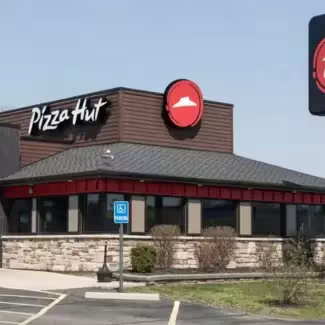
Pizza Hut has been sold, marking a major turning point for one of the world’s most recognizable pizza chains. After 68 years and a long battle against fierce competition and an aging restaurant model, the iconic brand is changing hands in a deal worth $2.7 billion. Its parent company, Yum Brands, is letting go of a division that has increasingly become the laggard in an otherwise thriving portfolio.
Breaking Down the Deal
The sale, announced Tuesday, actually splits Pizza Hut into two parts based on geography.
The bulk of the business, everything except the mainland China operations, is being acquired by private equity firm LongRange Capital for roughly $1.5 billion. Meanwhile, the mainland China arm is being purchased separately by Yum China Holdings Inc. for approximately $1.2 billion.
That China business is no small piece of the puzzle. It stands as Pizza Hut’s second-largest market outside the United States, accounting for 19% of the chain’s sales. Yum China Holdings, notably, has operated as an independent company since spinning off from Yum Brands back in 2016, making it a natural buyer for that segment.
Why Yum Brands Wanted Out
The decision to sell didn’t come out of nowhere. Yum Brands, which also owns the far healthier KFC and Taco Bell brands, started weighing its options for Pizza Hut back in November.
The financial picture helps explain the move. While Yum Brands saw its global sales climb 5% last year, Pizza Hut bucked that trend with a 2% decline. The brand had already shown signs of strain earlier in the year, when the company announced plans in February to shut down 250 Pizza Hut locations across the US. At the end of last year, the chain still operated 19,974 restaurants worldwide.
Industry analysts didn’t mince words about the brand’s struggles. Neil Saunders, managing director of GlobalData, described Pizza Hut as the persistent weak point in Yum’s lineup. Despite attempts to breathe new life into the brand and close underperforming stores, he argued it had grown clear that returning the division to growth would demand a level of investment and patience that Yum simply wasn’t willing to commit.
From Humble Beginnings to Global Giant
To appreciate the weight of this moment, it helps to look back at how far Pizza Hut has come.
The chain was founded in 1958 in Wichita, Kansas, by two brothers who borrowed $600 from their mother to open their first store. The now-famous name came from a practical limitation, their sign only had room for eight letters.
From there, the brand soared. Its instantly recognizable red roof made its debut in 1969, and by 1971 Pizza Hut had become the top pizza chain in the world by sales. PepsiCo acquired the company in 1977, then later spun off its restaurant division, which became Yum Brands, in 1997.
Where It All Started to Slip
Pizza Hut’s troubles trace back decades, rooted in shifting consumer habits the chain struggled to adapt to.
By the 1980s, Domino’s had emerged as the fastest-growing US pizza company, powered by its famous promise of 30-minute delivery. As carryout and delivery surged in popularity, Pizza Hut found itself burdened by large, dine-in-focused restaurants that were increasingly out of step with how Americans wanted their pizza.
The challenges only deepened over time. In 2020, even as pizza delivery boomed during the COVID-19 pandemic, Pizza Hut still closed 300 US restaurants, a sign that its physical footprint had become more liability than asset.
More recently, the rise of delivery platforms like DoorDash and Uber Eats added another layer of pressure. These services gave customers easy access to a huge variety of cuisines beyond pizza, eroding the convenience advantage that chains like Pizza Hut once relied on.
A Brand Underperforming the Market
The numbers paint a sobering picture of just how much Pizza Hut has lagged behind.
US pizza sales overall have slowed considerably since the pandemic, growing less than 1% in 2024 and slipping by less than 1% in 2025, according to restaurant consulting firm Technomic. But Pizza Hut fared notably worse than the broader industry, with its US sales tumbling 8.2% last year.
That gap between the brand’s performance and the wider market underscores why Yum Brands ultimately decided it was time to part ways.
A Chance to Refocus
For Yum Brands, the sale is as much about the future as it is about cutting a weak link.
CEO Chris Turner framed the move as an opportunity to concentrate on the company’s stronger-performing brands. He expressed confidence in Pizza Hut’s new direction, saying that under LongRange and Yum China, the chain would be well positioned for future growth with owners who bring deep expertise in the restaurant industry.
Who Is LongRange Capital?
The firm taking the reins of most of Pizza Hut comes with a notable track record. Connecticut-based LongRange Capital was founded in 2019 by Bob Berlin, who previously orchestrated a turnaround at Arby’s during his time leading private equity investments at The Baupost Group.
Berlin sounded optimistic about the road ahead, saying he looked forward to working alongside Pizza Hut’s executive team and franchisees to drive the brand’s next phase of growth. He praised Pizza Hut as a beloved global brand with a rich heritage and a loyal customer base that few competitors can match.
One question, however, remains unanswered. When asked Tuesday whether LongRange planned to close any Pizza Hut locations, the company declined to comment beyond Berlin’s statement, leaving the fate of individual restaurants uncertain for now.
What Happens Next
The mechanics of the deal are already taking shape. Yum Brands, headquartered in Louisville, Kentucky, expects both the US and China sales to close in the third quarter.
Investors appeared to welcome the news, with the company’s stock rising nearly 2% on Tuesday, a sign that Wall Street sees value in Yum shedding its underperforming division.
The Bigger Picture
Pizza Hut’s sale closes a remarkable chapter in American restaurant history, one that began with two brothers, a $600 loan, and an eight-letter sign. The brand rose to dominate the global pizza market, only to be gradually outmaneuvered by nimbler delivery-focused rivals and changing consumer preferences.
Now, under new ownership split between a private equity firm and an independent China operator, Pizza Hut faces a pivotal test. Whether LongRange and Yum China can revive a brand that Yum Brands had given up on will determine if this storied chain can reclaim its former glory, or whether its best days are simply behind it. For a company that helped define how the world eats pizza, the next phase carries enormous stakes.
Author