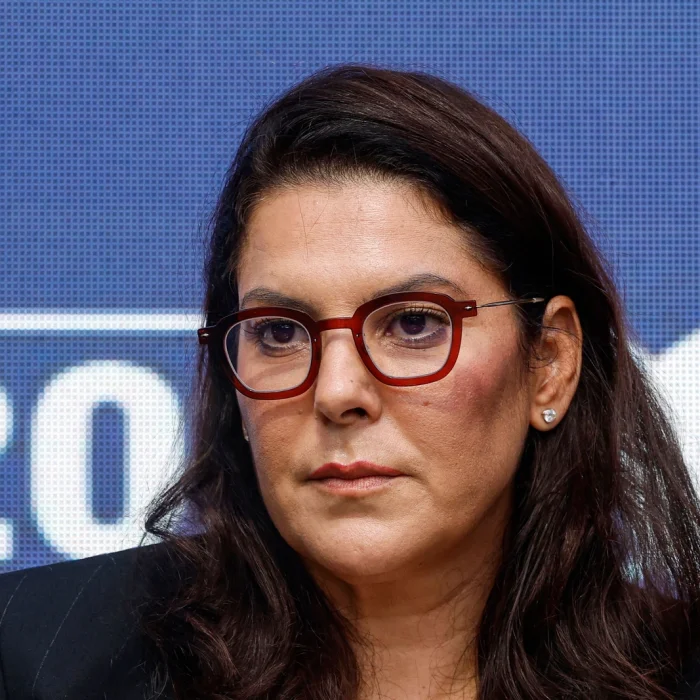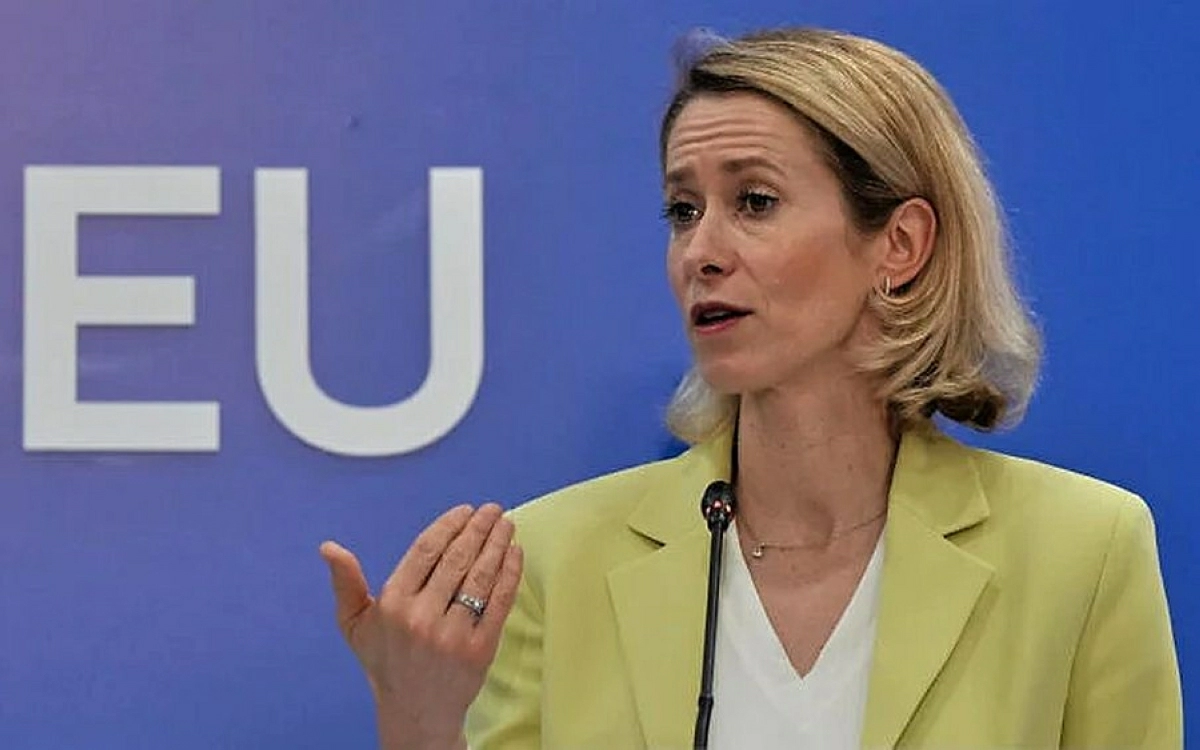
Israel severs contact with EU foreign policy chief Kaja Kallas, the country’s foreign minister announced Thursday, escalating an already strained relationship between Jerusalem and Brussels. The dramatic move came in response to comments allegedly made by Kallas that compared Israel to apartheid-era South Africa, a comparison Israeli officials condemned as deeply offensive and unjust.
A Sudden Diplomatic Rupture
Israeli Foreign Minister Gideon Saar didn’t mince words when he declared he was cutting off “all contact” with the European Union’s top diplomat.
Posting on social media, Saar said Kallas had reportedly likened Israel to a racist apartheid regime during a visit to Mexico. In his view, such a comparison crossed a clear line, prompting him to suspend communication entirely until she formally withdraws the remarks.
For now, the standoff hinges on a single demand: a retraction.
What Sparked the Break
According to Saar, the controversy stems from statements Kallas made abroad that drew a direct parallel between modern Israel and one of history’s most condemned systems of racial oppression.
Saar framed his decision as a matter of principle, accusing the EU’s foreign policy chief of treating Israel unfairly and singling it out for harsh judgment. He went further, claiming that Kallas was “acting obsessively and with blatant unfairness toward the State of Israel.”
As of the announcement, Kallas’s office had not issued any immediate response to the accusations.
A Relationship Already Under Strain
This latest clash didn’t emerge in a vacuum. Tensions between Israel and the European Union have been building for some time, fueled by sharp disagreements over Israeli policy in the occupied territories.
Key points of friction include:
- The EU’s ongoing criticism of Israel’s expansion of Jewish settlements in the West Bank, which much of the international community considers illegal under international law.
- Concerns that settlement growth undermines prospects for peace and blocks the establishment of a future Palestinian state.
- Broader European unease about Israel’s military conduct during the war in Gaza.
These issues have repeatedly placed the two sides at odds, even as official channels remained open until now.
The Sanctions That Deepened the Divide
The friction took a more concrete turn in May, when the European Union imposed sanctions tied to alleged abuses in the West Bank.
The bloc targeted three individuals and four entities it accused of being responsible for serious and systematic human rights violations against Palestinians in the region. Israel reacted swiftly and firmly, with Saar rejecting the decision outright at the time.
That episode set the stage for the current rupture, reinforcing a pattern of escalating confrontation between Israeli leadership and EU institutions.
A Divided Europe
While the European Union has been vocal in criticizing aspects of Israel’s actions, the bloc is far from unified in its stance.
On one hand, the EU has condemned certain Israeli policies and conduct in Gaza. On the other, it has consistently reaffirmed Israel’s right to defend itself against threats.
This balancing act reflects deeper divisions among the EU’s 27 member states. Some governments have taken a strongly critical line toward Israel, while others continue to maintain close and cooperative relationships. This lack of consensus often complicates the bloc’s ability to present a single, coherent position.
Why This Matters
The decision to sever contact with a senior EU official is more than a symbolic gesture, it signals just how fragile Israel-EU relations have become.
Cutting communication with the bloc’s foreign policy chief risks:
- Stalling diplomatic dialogue at a sensitive moment in the region.
- Hardening positions on both sides rather than encouraging compromise.
- Adding further strain to an already complicated partnership shaped by trade, security, and political ties.
Diplomacy typically depends on open lines of communication, even between parties that disagree. By closing one of those lines, Israel is making clear that it views the apartheid comparison as an unacceptable breach.
The Bigger Picture
At its core, this dispute reflects a fundamental clash over how Israel’s policies should be characterized on the world stage.
For Israeli officials, comparisons to apartheid South Africa are not just political criticism, they are seen as delegitimizing the state itself. For critics within Europe, persistent concerns about settlements, the West Bank, and the war in Gaza continue to drive calls for accountability.
Caught in the middle is a relationship that has long balanced cooperation with disagreement, now tested by increasingly heated rhetoric.
The Bottom Line
The move by Israel to sever contact with the EU foreign policy chief underscores a relationship at a breaking point. What began as criticism over settlements and Gaza has now escalated into a direct personal and diplomatic standoff between Gideon Saar and Kaja Kallas.
Whether the rift can be repaired may depend on how the EU responds, and whether Kallas chooses to address or walk back the remarks at the center of the controversy. Until then, one of Israel’s most important diplomatic channels with Europe appears to be firmly shut.
Author