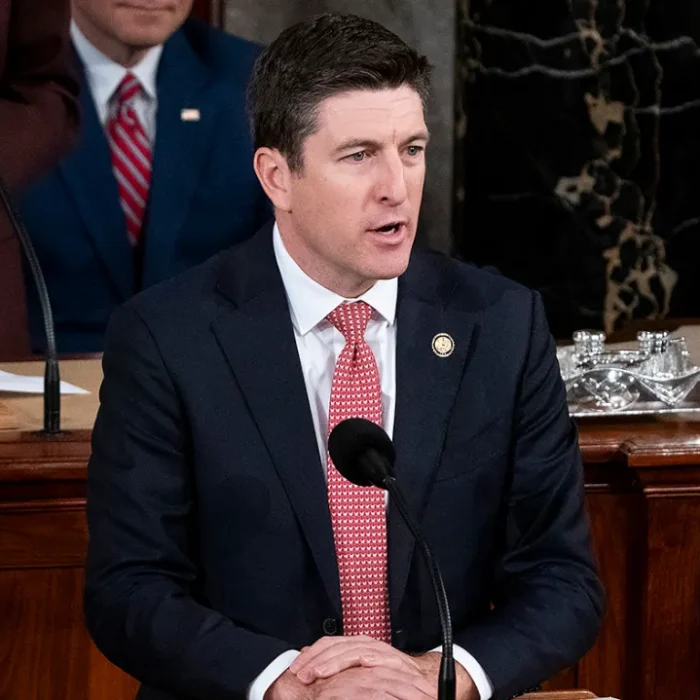
The bipartisan housing bill cleared the House on Tuesday evening, marking a rare moment of cross-party agreement in Washington as lawmakers moved to confront the nation’s shortage of affordable homes. The legislation now heads to President Trump, who is expected to sign it into law.
Why This Moment Matters
The Road to Housing Act stands out not just for what it does, but for how it got done. In a deeply divided Congress, the measure demonstrated that both parties genuinely recognize the housing crisis as a problem worth tackling together.
The vote wasn’t close. The bill passed by a lopsided 358-32 margin, after clearing the Senate the previous day. Supporters are calling it a historic breakthrough, describing it as the most significant home construction legislation since 1990 and the biggest housing bill in decades.
That said, the law is unlikely to deliver much immediate relief to people trying to buy a home right now.
What’s Inside the Bill
At its core, the legislation aims to loosen local regulations and spur new construction. It bundles together nearly 50 separate measures, drawing housing proposals from both sides of the aisle into a single package.
Some of the most notable provisions include:
- The Build Now Act, which rewards localities that build more housing by giving them a larger share of existing federal funding, money that comes at the expense of regions building less.
- A manufactured housing measure that makes it easier and cheaper to build these homes, a provision likely to have a relatively quick impact.
- A scaled-back private equity restriction, a softened version of a proposal originally intended to bar private equity firms from buying and owning single-family homes.
The Fight Over Private Equity
The private equity provision generated real debate. In its final form, it allows institutional investors to keep the homes they already own but blocks future purchases that would push an investor’s holdings above 350 homes.
Senator Elizabeth Warren, one of the bill’s architects, insists the measure still carries weight despite being watered down. She framed it as the first time Congress has told private equity firms to stop moving from neighborhood to neighborhood and turning the country from a nation of owners into a nation of renters.
The original, stricter version had support from Trump but ran into resistance from House Republicans. Backers of the restriction argue that big investors help keep home prices elevated when they buy up single-family homes to rent out or resell.
What the Bill Doesn’t Touch
For all its ambition, the legislation sidesteps the two biggest forces squeezing the housing market: high mortgage rates and the sharp climb in home prices over the past five years.
There’s a reason for that. Lawmakers have little ability, and little appetite, to act on either front. Mortgage rates are tied to the yield on the 10-year Treasury note, which is shaped largely by market forces and the Federal Reserve.
Senator Tim Scott, who led the effort alongside Warren, acknowledged this directly. He noted that nothing in the bill could influence the Federal Reserve, adding that an independent Fed is what people actually want.
A Delicate Balancing Act
Scott also pointed to one of the thorniest challenges in making housing more affordable: the tension between current homeowners and aspiring buyers. Existing owners don’t want to see their property values drop, while first-time buyers are hoping prices fall enough to let them in.
Rather than lowering the value of the current housing stock, which Scott warned could be a “cataclysmic” experience for homeowners, the bill’s strategy centers on increasing the supply of affordable starter homes.
An Unexpected Crypto Provision
Tucked into the legislation is a measure that has nothing obvious to do with housing. It prohibits the federal government from issuing a digital dollar, a long-standing goal of the crypto industry.
So why include it? Scott was blunt about the reasoning, saying it simply helped get the bill passed because the House wanted it.
The Bottom Line
Even its champions are careful not to oversell the law. As Warren put it, the bill is not a single magic bullet capable of fixing the housing problem on its own. She described it as a big bill confronting an even bigger challenge, stressing that more work still lies ahead.
For now, the Road to Housing Act represents a notable first step, proof that bipartisan cooperation on a major issue remains possible, even if lasting relief for homebuyers will take far more time and effort to achieve.
Author