A dangerous heatwave is tightening its grip on much of the United States this week, and its timing could hardly be worse. As families gear up for Fourth of July cookouts, fireworks, and outdoor celebrations, forecasters are warning of blistering daytime temperatures, thick humidity, and nights so warm they offer little relief.
The National Weather Service (NWS) reports that roughly 120 million people were under extreme heat warnings as of Tuesday, with that figure expected to climb as the heat spreads. For a holiday built around being outside, this is shaping up to be one of the most punishing stretches of summer so far.
A Heat Dome Is Behind the Misery
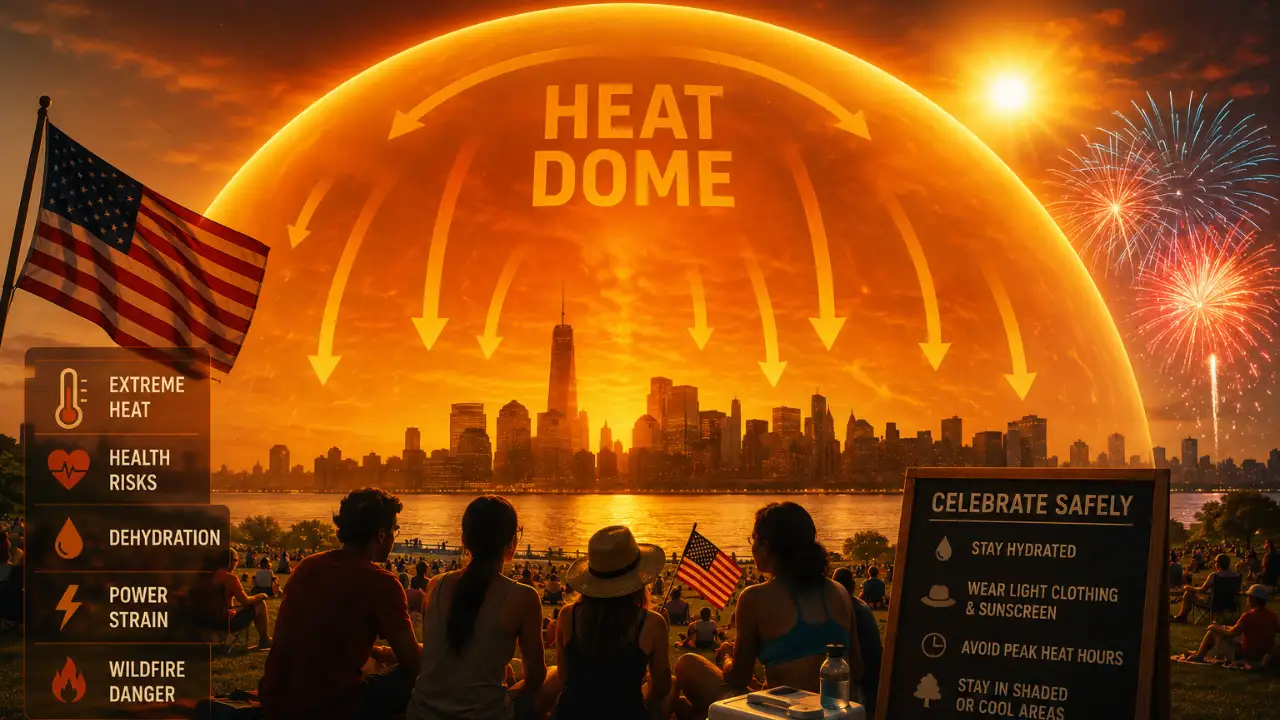
The culprit is a phenomenon known as a heat dome. Think of it as an invisible lid clamped over the atmosphere: a massive zone of high pressure traps hot air near the ground, compresses it, and keeps clouds and rain from breaking the pattern. The result is relentless heat with almost no escape.
Meteorologists say this system will bring dangerous conditions across a huge portion of the country, stretching from the East Coast all the way into the central states. The heat has already been building through the South and Midwest, and it is only expanding from there.
When and Where It Peaks
The NWS expects the worst of it to hit the Midwest and Mississippi Valley by Thursday. From there, the dome shifts eastward, settling over the Ohio Valley and East Coast heading into the holiday weekend, particularly along the busy Interstate 95 corridor.
Here is what forecasters are bracing for:
- Daytime highs of roughly 95°F to 105°F (35°C to 40.6°C)
- Heat index values, or “feels like” temperatures, climbing to 100°F to 115°F (38°C to 46°C) once humidity is factored in
- Daily temperature records expected to fall Thursday and Friday, with some monthly and even all-time records in play
For cities like New York and Washington, DC, this could rank among the hottest spells in more than a decade.
Why the Nights Are the Real Danger
Blistering afternoons grab the headlines, but forecasters are especially worried about what happens after dark. When overnight lows stay in the 70s, the body never gets a chance to cool down and recover. That lack of relief is what makes prolonged heatwaves so deadly, particularly for older adults, young children, and anyone without air conditioning.
High humidity compounds the risk by preventing sweat from evaporating efficiently, which is the body’s natural cooling mechanism. When that system fails, heat exhaustion and heat stroke can set in fast.
Officials Urge Caution
Authorities across the affected regions are pushing the same core message: take this seriously. People are being advised to limit time outdoors, stay well hydrated, and make sure they have access to air conditioning or a public cooling center.
Cities are opening their doors to residents who need somewhere to escape the heat:
- New York City activated a heat emergency plan, with hundreds of cooling centers set to open across the five boroughs.
- Detroit, Michigan, where temperatures could touch 100°F (38°C), opened a dozen air-conditioned recreation centers for residents.
Emergency management agencies are also reminding people to check on elderly neighbors and to act immediately at the first sign of heat-related illness, such as nausea, headache, dizziness, or confusion.
The Heat Collides With the World Cup
The timing is complicated further by the ongoing FIFA World Cup, with matches being played in outdoor stadiums across the country. In some locations, heat index values could push past the threshold that the global players’ union, Fifpro, considers unsafe for play.
Texas is expected to be the hottest of the host regions, though the air-conditioned stadiums in Houston and Arlington will spare players the brunt of it. Fans traveling to and from the venues, however, will still face brutal conditions. The Wednesday match between England and DR Congo in Atlanta, Georgia, could see similar concerns.
In Philadelphia, organizers are adapting by moving parts of the World Cup Fan Festival into cooled tents on Thursday and Friday to protect attendees.
Canada Feels the Heat Too
The dangerous heat is not stopping at the border. Much of Canada began sweltering on Tuesday, with Ontario expected to see temperatures as high as 37°C (99°F) through the week.
Toronto, which is hosting its own World Cup match on Thursday, could reach 35°C (95°F) during the game. In response, Canadian officials issued orange heat warnings, the middle tier of a three-level alert system, across Ontario. Central and eastern parts of the province, including the Montreal region, are under yellow warnings, the lowest level, as elevated temperatures push through.
Part of a Wider Global Pattern
This North American heatwave arrives on the heels of an extraordinary early-summer heatwave in Europe, where several countries shattered temperature records in recent days and some regions saw a tragic rise in heat-related deaths. Scientists have long noted that as the planet warms, heatwaves are becoming more frequent, more intense, and longer-lasting.
How to Get Through It
If you are in one of the affected areas, a few simple precautions can make a real difference:
- Drink water consistently, even before you feel thirsty
- Stay indoors during peak afternoon hours whenever possible
- Wear light, loose clothing and use shade or umbrellas outdoors
- Never leave children or pets in parked vehicles
- Know the warning signs of heat illness and act quickly
The holiday weekend is meant for celebration, but this year the smartest move is to plan around the heat rather than against it. Some parts of the Midwest and Northeast may catch a break as the dome weakens and drifts westward later in the weekend, but until then, staying cool is not just about comfort. It is about safety.
Author