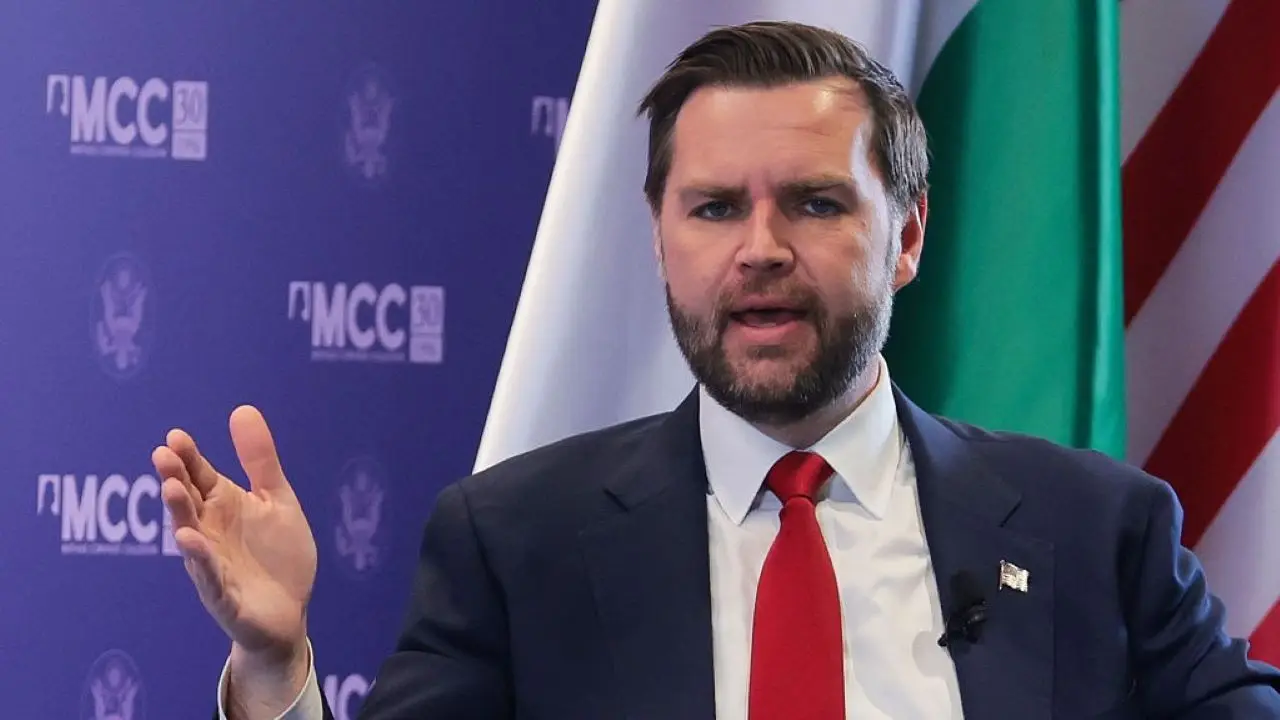
The possibility that the US could resume war with Iran moved back into the spotlight this week, as Vice President JD Vance made clear the option remains firmly on the table. Speaking to reporters on Wednesday, Vance suggested that whether the two countries return to open conflict may ultimately depend on the choices Iran makes in the weeks ahead.
A Conditional Warning
Vance framed the prospect of renewed fighting as something the United States would prefer to avoid, but would not hesitate to pursue if provoked. He emphasized that the president has no intention of sending American forces back into action without a clear and justified reason.
The vice president laid out specific scenarios that could shift the administration’s thinking. Speaking after an appearance at Naval Air Station Oceana in Virginia Beach, he pointed to two developments in particular that would alter the calculus:
- If Iran attempts to rebuild its nuclear program
- If Iran resumes attacks on commercial vessels
Should either occur, Vance indicated, the situation would change dramatically. For now, though, he stressed that the president’s directive is focused on diplomacy, empowering his team to negotiate in good faith and secure an agreement.
How the Ceasefire Came to Be
The current standoff traces back to a turbulent stretch earlier this year. The United States has maintained a fragile ceasefire with Iran since April, following a seven-week bombing campaign targeting what the Trump administration described as Iran’s dangerous nuclear ambitions.
Since the fighting paused, both sides agreed to a 60-day window to finalize the terms of a peace plan. That framework took shape on June 17, when President Trump signed a 14-point memorandum of understanding with Tehran aimed at bringing the conflict to a definitive close.
The clock is now ticking on that arrangement. If the ceasefire expires without a completed agreement, the door to renewed hostilities could swing open, which is precisely what makes Vance’s remarks so significant.
Negotiations Underway in Doha
Diplomatic efforts are actively unfolding, though they remain complex and indirect. Middle East envoy Steve Witkoff, along with Trump’s son-in-law Jared Kushner, are currently in Doha for negotiations.
The talks are being facilitated by counterparts led by Pakistan and Qatar. Notably, the discussions are technical in nature rather than face-to-face, with the two primary sides working through intermediaries rather than meeting directly. That structure reflects the delicate state of relations and the sensitivity surrounding the core issues.
Chief among those issues is the fate of Iran’s highly enriched uranium. Trump has repeatedly identified the removal of that material as a central goal of the entire effort.
The President’s Optimism
Despite the high stakes, Trump projected confidence about the direction of the talks. Speaking to reporters on Wednesday, he claimed that the denuclearization of Iran was progressing well.
He described the recent meetings as productive, noting that they had gone well while stopping short of any firm predictions. His measured optimism suggested cautious hope rather than certainty about the final outcome.
Vance Claims the Mission Is Already Accomplished
Interestingly, Vance took a somewhat different angle, arguing that the administration had already secured its most important objective regardless of how the Doha negotiations conclude.
In an appearance on Fox News, the vice president asserted that the United States holds all the leverage in the talks. While he acknowledged that a successful deal remained the preferred result, he insisted the core mission had already been achieved.
That mission, in his framing, was ensuring that Iran would never obtain a nuclear weapon. By his account, even a breakdown in negotiations would not undo what the administration considers its primary accomplishment. It was a striking claim, effectively positioning the military campaign as a success independent of any diplomatic resolution.
Keeping Every Option Open
Even as he touted that achievement, Vance made clear the administration is not ruling anything out. He noted that Trump maintains a wide range of options, and pointedly included the possibility of resuming airstrikes against Iran among them.
That combination of messages, declaring victory while simultaneously threatening further military action, reflects the administration’s dual-track approach. On one hand, officials express confidence that they have already neutralized the threat. On the other, they preserve the flexibility to strike again if Iran steps out of line.
A Question of Credit and Blame
The political dynamics surrounding the Iran effort have taken on a personal dimension as well. Earlier this month, Trump made a revealing comment about how responsibility for the outcome would be assigned.
According to the president, success would belong to him, while failure would fall squarely on his vice president. He put it bluntly, saying that if the effort works out, he would take the credit, but if it does not, he would place the blame on Vance.
That framing adds an intriguing layer to Vance’s public confidence. With his own political standing potentially tied to the outcome, the vice president has clear incentive to emphasize that the mission has already succeeded, insulating himself somewhat from any diplomatic collapse.
What Lies Ahead
As the 60-day window continues to narrow, the coming weeks will prove decisive. The negotiations in Doha carry enormous weight, yet the administration has made clear it is prepared to act militarily if the terms are not met or if Iran reverts to its previous behavior.
For now, the situation rests in an uneasy balance. Diplomats are working through technical details in Qatar, the president is expressing optimism, and the vice president is signaling both satisfaction with what has been accomplished and readiness to return to force if necessary.
The central message emerging from Washington is unmistakable. The United States would welcome a peaceful resolution, but the choice, as Vance framed it, largely belongs to Iran. Should Tehran attempt to revive its nuclear ambitions or threaten shipping once more, the fragile calm could give way to renewed conflict. Until the ceasefire’s fate is sealed one way or the other, the possibility of a return to war will continue to loom over the entire process.
Author