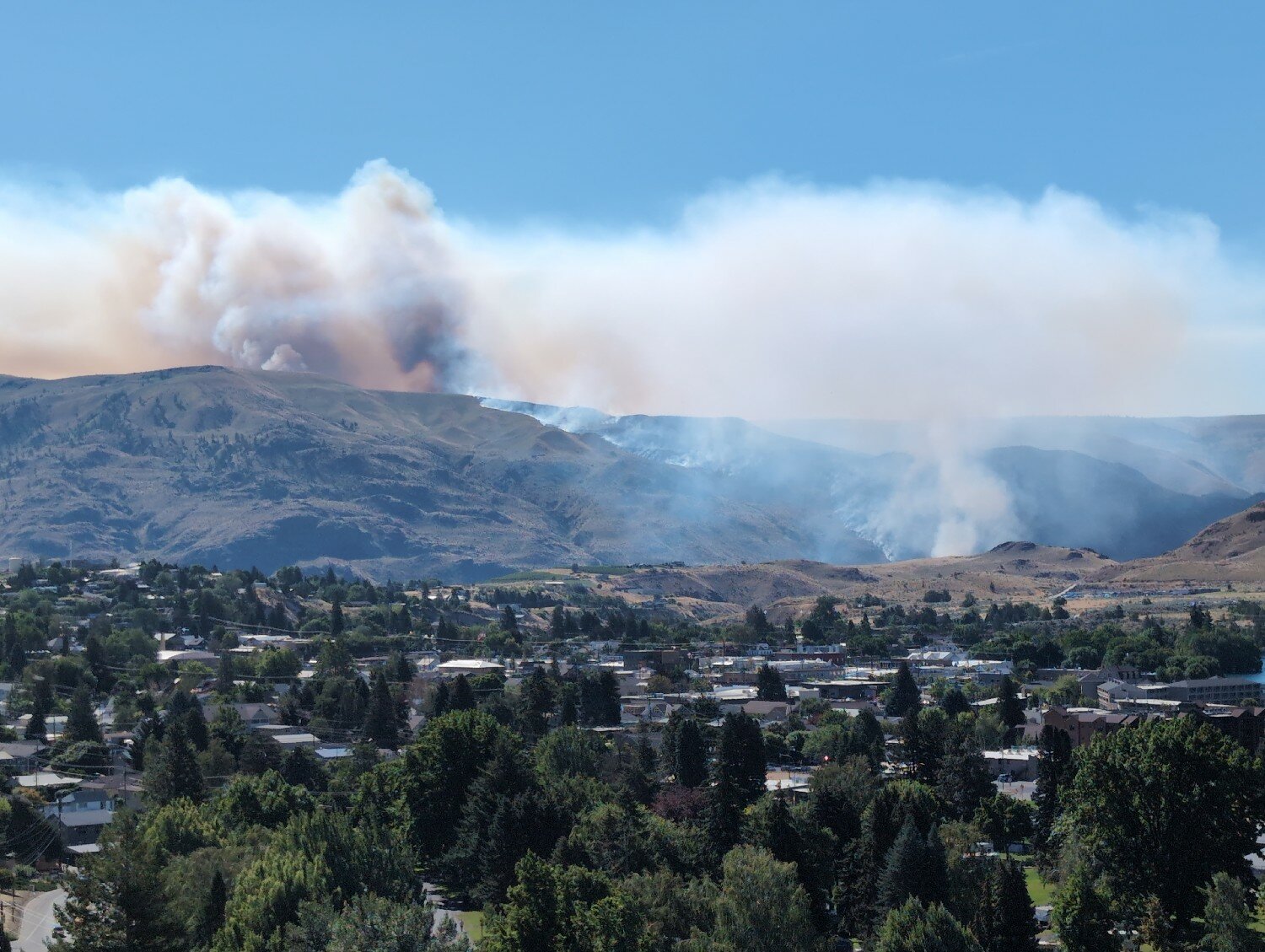
The Chelan Hills Fire has rapidly become a serious threat in Washington’s Douglas County, swelling to an estimated 2,000 acres in a matter of hours and prompting state officials to step in with additional firefighting support. What began as a small blaze in the early hours of Independence Day quickly escalated into a full-scale emergency, forcing evacuations, threatening homes, and putting local communities on high alert.
A Fire That Grew Fast Overnight
The situation unfolded with alarming speed. Shortly after midnight on Saturday, July 4, flames ignited near a stretch of Highway 97 between the towns of Orondo and Chelan. Within just a few hours, the fire had ballooned into a major incident demanding resources far beyond what local crews could handle alone.
By early Saturday morning, the blaze had already consumed roughly 2,000 acres, and crews had yet to establish any containment. The fire tore through dry grass and brush, conditions that allowed it to spread quickly and unpredictably across the landscape.
Officials warned that the flames posed a direct danger to homes, critical infrastructure, and overall public safety. As of the latest updates, the exact cause of the fire remains unknown and is still under active investigation.
State Resources Called Into Action
Recognising that the fire had outpaced local firefighting capabilities, authorities moved swiftly to bring in reinforcements. At 4:30 a.m. on July 4, the Washington State Patrol officially authorised state fire assistance.
This decision came at the request of a local assistant fire chief from Douglas County Fire District 4 and was carried out under Washington’s established Fire Services Resource Mobilization Plan. That plan exists precisely for moments like this, when an emergency grows too large for a single jurisdiction to manage on its own.
Here is how the mobilisation took shape:
- Three strike teams were ordered to assist exhausted local firefighters on the ground.
- Mobilisation specialists from the Fire Protection Bureau coordinated the deployment of additional personnel and equipment.
- Staff from the State Fire Marshal’s Office worked to dispatch further resources where they were needed most.
The coordinated response reflected the seriousness of the threat and the urgency of protecting nearby residents and property.
Evacuation Orders Sweep Through the Area
As the fire advanced, officials wasted no time issuing evacuation notices to keep residents out of harm’s way. Different areas received different levels of warning depending on how immediate the danger was.
The most urgent orders were the Level 3 “Go Now” evacuations, signalling that residents needed to leave immediately. These applied to:
- Box Canyon Road
- Heidi Lane
- Combine Road
- Jerrys Lane
In addition, a broader set of neighbourhoods fell under Level 2 “Set” evacuation warnings, meaning residents should be prepared to leave at a moment’s notice. These areas included:
- Chelan Hills Acres Road
- Park Drive
- Jackson Canyon Road
- Baty Way
- Riverview Road
- Canyon View Drive
- Rocky Road
- Big Ranch Road
- Spring Lane
- King Bird Lane
- Green Lane
- Farnham Lane
- Spur Lane
- High Corner Road
The wide reach of these warnings underscored just how far the fire’s potential impact stretched across the region.
Coordinating the Emergency Response
Behind the scenes, a larger operation was springing into motion to manage the crisis effectively. The State Emergency Operations Center, located at Camp Murray, was activated at Level 2, representing a partial activation designed to coordinate statewide assistance.
This activation allowed various agencies to work together seamlessly, ensuring that resources flowed efficiently to the front lines. The Fire Protection Bureau took charge of overseeing the dispatch and administrative coordination of both personnel and equipment throughout the entire mobilisation effort.
By centralising command and communication, officials aimed to maximise the impact of every crew and piece of equipment sent to battle the flames.
How Washington’s Mobilization Plan Works
The response to the Chelan Hills Fire offers a clear example of how Washington’s emergency system is designed to function during large-scale disasters. Under the state’s mobilisation plan, additional resources can be unlocked whenever a wildfire or similar emergency exceeds what local responders can manage.
This framework ensures that smaller fire districts are never left to face overwhelming threats entirely on their own. Instead, they can call upon a coordinated network of state support, drawing in trained personnel, specialised equipment, and experienced coordinators to strengthen their efforts.
In practice, this means that even a fire igniting in a relatively remote area can quickly receive the kind of robust response typically reserved for major emergencies. The system is built for speed and scalability, both of which proved essential in the early hours of this particular blaze.
A Community on Edge
For the residents of Douglas County, the Fourth of July took an unexpected and frightening turn. Rather than celebrating the holiday, many found themselves gathering essentials, monitoring official updates, and preparing to flee their homes at short notice.
The combination of dry summer conditions, fast-moving flames, and the fire’s proximity to populated areas created a tense and uncertain situation. Homes, infrastructure, and lives all hung in the balance as firefighters worked tirelessly to gain the upper hand.
Looking Ahead
As firefighting crews continue their efforts, the immediate priorities remain clear: protect lives, defend homes, and establish containment as quickly as possible. With state resources now fully engaged and multiple strike teams on the scene, officials are hopeful that reinforcements will help turn the tide against the growing blaze.
For now, the Chelan Hills Fire stands as a stark reminder of how quickly wildfires can erupt and spread, especially during the hot, dry conditions of summer. Residents in affected areas are being urged to stay alert, heed all evacuation orders without delay, and prioritise their safety above all else.
While the coming hours will prove critical in determining the fire’s ultimate path, the swift mobilisation of state resources offers a measure of reassurance. Communities across Douglas County can take some comfort in knowing that a coordinated, well-organised response is now firmly underway as crews fight to bring the flames under control.
Author