The Wisconsin governor primary on Tuesday puts a question to Democratic voters that the party has been arguing over all year: whether the candidate who excites people or the candidate who reassures people is the safer bet in a state decided by fractions of a point.
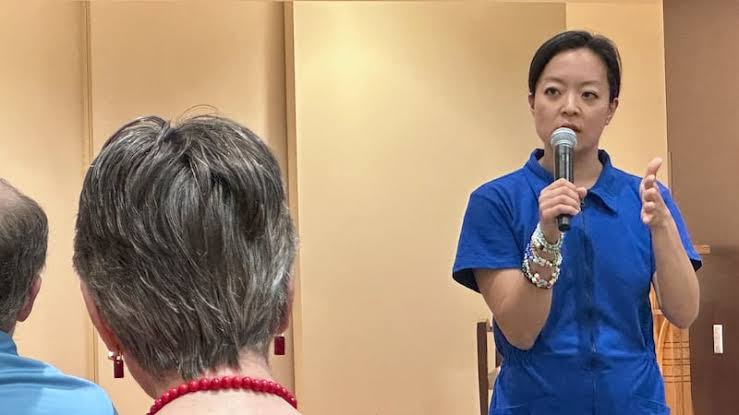
Francesca Hong, a democratic socialist state lawmaker, enters as the frontrunner in a four-candidate field seeking to succeed Governor Tony Evers, who is not pursuing another term.
A Field That Kept Rearranging
The shape of this race changed repeatedly in the weeks before the vote.
Sara Rodriguez, once considered a leading contender, departed following campaign finance irregularities. Milwaukee County Executive David Crowley, who had previously exited, re-entered on July 18 in the aftermath. Mandela Barnes, the party’s 2022 Senate nominee, withdrew on July 31.
That left four names on the ballot: Hong, Crowley, state Senator Kelda Roys, and Joel Brennan, formerly head of the state administration department.
Evers endorsed Crowley and spent the closing two weeks touring Wisconsin alongside him. Their argument centered on electability, contending Crowley is better positioned to prevail in a general election in a genuine swing state.
Some observers interpreted Crowley’s return as an establishment maneuver aimed at blunting Hong’s momentum. Crowley has rejected that characterization of himself.
A Marquette University Law School survey conducted in late July, after Crowley re-entered, found Hong leading, though a substantial share of voters remained undecided at the time.
What Hong Is Running On
Hong is a chef and former restaurant owner from Madison, first elected to the state assembly in 2020.
Her platform includes:
- Childcare available to all families
- Free school meals
- A one-year moratorium on new datacenter construction
Her pitch rests on the argument that voters across Wisconsin have grown impatient with the political establishment and want candidates who will pursue changes that tangibly improve their circumstances.
She told the Guardian she entered the race believing she could win, and that Wisconsinites are prepared to fight for one another and to participate in change because they are exhausted by decisions that fail to improve their lives and by the status quo generally.
The Attacks She Has Faced
National attention brought scrutiny of her past statements.
Journalists examined and Republicans attacked a tweet suggesting Thanksgiving be cancelled along with her earlier support for defunding police. Donald Trump has led that line of criticism personally.
Those older positions have become the central Republican argument against her candidacy, and they will almost certainly feature heavily in the general election if she wins.
The Midwest Is Different Ground
Progressives and democratic socialists have accumulated victories this year, but mostly in reliably Democratic territory.
The midwestern primaries changed the terrain. Last week Abdul El-Sayed won Michigan’s Democratic Senate primary over a moderate opponent. Minnesota voters have been weighing a comparable choice in their own Senate primary.
What distinguishes these races is that the general elections are actually competitive. In deep blue cities, the primary effectively decides the outcome. In Wisconsin, it does not, which is why the electability argument carries weight here that it lacks elsewhere.
Who Waits in November
The Democratic nominee will face Republican Congressman Tom Tiffany, a committed Trump supporter who ran unopposed in his primary.
Tiffany voted against certifying the 2020 presidential election results.
That vote has become central to how Democrats frame the stakes. Control of the governor’s office carries direct implications for how future elections are administered and certified in a state that has repeatedly sat at the center of national contests.
Democrats are also targeting both chambers of the state legislature, hoping to assemble a governing trifecta capable of advancing their agenda.
A Second Fight in the Third District
Wisconsin’s western region hosts a separate contest with its own establishment tensions.
Democrats there will choose a nominee to challenge Republican Derrick Van Orden in the third congressional district, considered a significant pickup opportunity.
Rebecca Cooke, a blue dog Democrat who ran for the seat in both 2022 and 2024, faces Emily Berge, formerly president of the Eau Claire city council.
The Democratic Congressional Campaign Committee endorsed Cooke, a move that irritated some local Democrats who viewed it as improper interference in a primary. As Berge gained ground amid the same anti-establishment mood visible statewide, additional national groups spent money supporting Cooke, whom they consider the stronger general election candidate.
The pattern mirrors the governor’s race almost exactly: national party organizations backing the candidate they judge most electable, local energy running toward the challenger.
The Question Being Tested
Both Wisconsin contests examine the same proposition from different angles.
One theory holds that Democrats keep losing winnable races by nominating cautious candidates who inspire little enthusiasm and turn out few new voters. The other holds that in a state this evenly divided, candidates carrying vulnerable records simply hand opponents the campaign they want to run.
Tuesday will not resolve the argument. But unlike the primaries that produced progressive wins in safe cities, this one will eventually be graded by a general electorate, and that grading begins in November.
Author
-
Lucienne Albrecht is Luxe Chronicle’s wealth and lifestyle editor, celebrated for her elegant perspective on finance, legacy, and global luxury culture. With a flair for blending sophistication with insight, she brings a distinctly feminine voice to the world of high society and wealth.