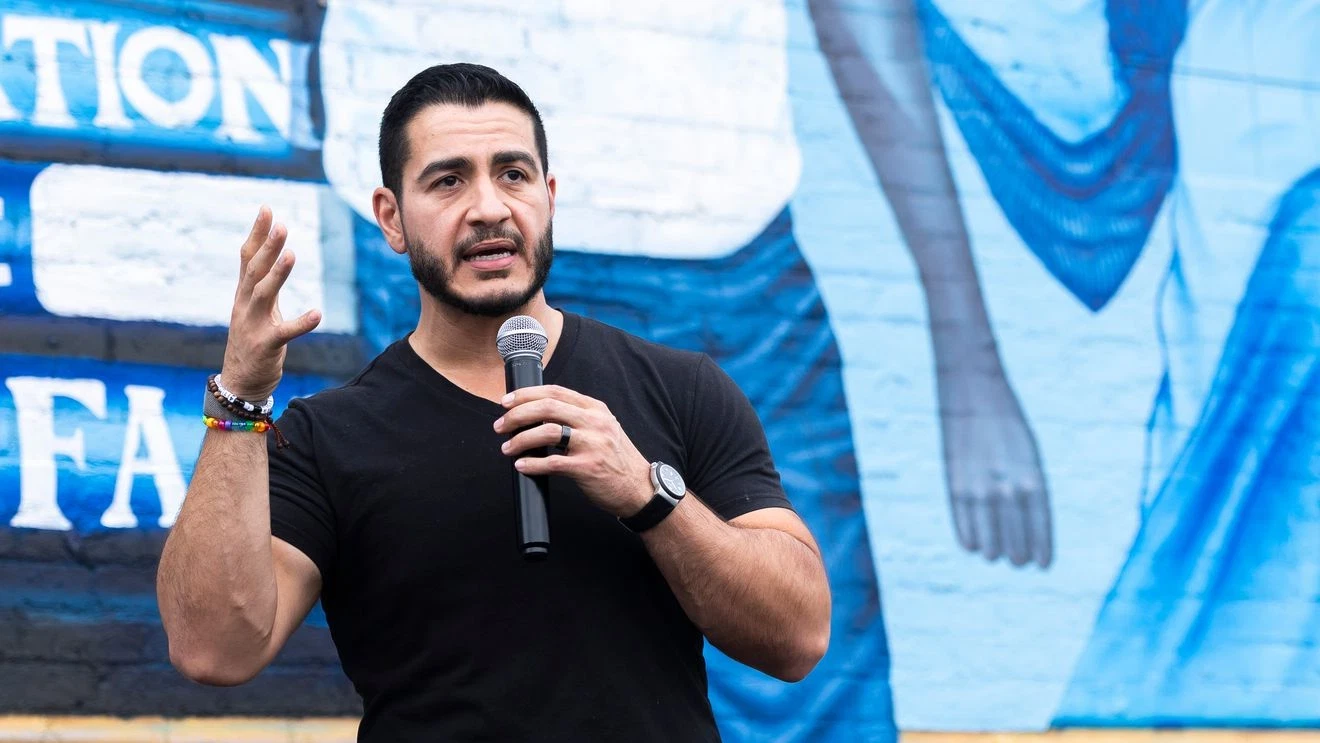
The Abdul El-Sayed Michigan Senate primary result did more than hand one candidate a nomination. It removed a comfortable excuse that centrist Democrats had been leaning on for the better part of a year, and it forced an uncomfortable question into the open: is the party’s establishment wing more interested in winning in 2028, or in maintaining control of the machinery it would win with?
That, at least, is the argument being made with increasing force by writers on the left, and it deserves to be examined on its merits.
The Excuse That Just Expired
When Zohran Mamdani won in New York, the establishment response was a shrug dressed up as analysis. He is a mayor, not a senator. It is New York City, not America. The reasoning was that democratic socialism plays fine in dense, young, deeply liberal urban districts and collapses everywhere else.
Michigan breaks that framing. It is a genuine swing state, the kind that decides presidential elections rather than merely coloring in the map. It also sits on the list of states positioned to shape the 2028 nominating calendar. A Muslim son of immigrants who rejected nearly every convention of establishment Democratic politics did not just survive there. He won the nomination.
You can dispute what the result predicts. It is considerably harder to file it under regional curiosity.
Outspent Nine to One and Still Standing
The financial story is where the win becomes genuinely striking.
El-Sayed was outspent by a margin of more than nine to one in what became the most expensive Democratic congressional primary on record. His opponent, Haley Stevens, drew backing north of $60 million, including money from Chevron and Philip Morris. Nearly half of that total came from a Super PAC aligned with AIPAC.
For anyone building a case that American democracy has been captured by organized money, this is close to a laboratory demonstration. An extraordinary sum was assembled to stop one candidate. It did not work.
The symbolic weight is obvious, and supporters have not been shy about naming it. Two things appear to be shifting at once.
First, a portion of the electorate seems increasingly aware that its politics is bought. Voters do not need a campaign finance seminar to notice when a wall of advertising arrives from industries with no obvious connection to their daily lives.
Second, the traditional disqualifiers have inverted. Thin insider experience and a lack of establishment endorsements used to end campaigns. In the current climate, they can read as evidence that a candidate is unbought. Untouched by the arrangements that keep healthcare expensive, immigration enforcement brutal, and tax revenue flowing outward rather than into services people can see.
Two Campaigns Talking Past Each Other
Israel featured heavily on both sides, but the two campaigns were not conducting the same argument.
El-Sayed’s critics returned repeatedly to the question of whether Israel has a right to exist, a formulation that carries enormous weight inside foreign policy circles and almost none at a kitchen table in Macomb County.
El-Sayed reframed the entire subject as a budget question. His argument was that the real issue is not any nation’s right to exist but whether it has a claim on American tax dollars. Whatever one thinks of the position, it translated a contested abstraction into a pocketbook grievance, which is generally where persuasion happens.
What the Win Does Not Prove
Honesty requires acknowledging the limits.
A primary is not a general election. Defeating a well-funded Democrat in a party contest is a different problem from defeating a Republican across an entire state, and different again from replicating the result for progressive candidates without El-Sayed’s particular profile and moment.
The Democratic establishment has looked ineffective against Donald Trump for years, which is precisely why insurgent candidates can appear to hold answers the party has failed to produce. Appearing to hold answers and holding them are not the same thing.
Two Fronts, One Candidate
Progressive candidates now face attacks from opposite directions simultaneously.
From Republicans, the line is already written. Trump has dismissed candidates like El-Sayed in blunt terms, casting them as radical communists who would deliver death, squalor, poverty and a life of hell. Crude, repetitive, and historically effective.
From within the party, the opposition is more clinical. Third Way, a leading centrist organization, has raised millions specifically to undermine democratic socialists through social media investment and organized activist pressure. Its leadership has described the effort as preparing for a coming war.
The stated fear is that momentum behind democratic socialists carries into the presidential nomination and produces a nominee Republicans would demolish. It is a reasonable worry in the abstract. It is also an argument that sits awkwardly beside the recent record of centrist Democratic nominees running against Trump, which is not exactly a highlight reel.
Why the Left Gets Less Room
There is an asymmetry here that progressives underestimate at their peril.
In a country where polling has found voters perceiving Trump as more moderate than Kamala Harris or Hillary Clinton, the radical label attaches far more easily to the left than the right. On a national stage, the left is permitted less imaginative room than its opponents.
The reason is partly structural. The promise of change that powers an insurgent primary win becomes, in a general election, a leap into unfamiliar territory. Newer candidates lack the long party record and the sheer ubiquity that make established figures feel safe regardless of their actual positions.
Something Genuinely New
The closing argument from El-Sayed’s supporters is that he and Mamdani represent a model that has not existed before in American politics.
Both are outsiders who declined the two familiar paths. They did not assimilate quietly in exchange for advancement, and they did not withdraw from the fight over a country they consider theirs. Instead they fused an immigrant political identity with a direct challenge to the institutions of their own country, and made that fusion the source of their appeal rather than a liability to be managed.
Whether that model scales is the open question of the next two years. What is no longer arguable is that dismissing it as a freak result requires ignoring the evidence.
A brief note: the events described here fall outside what I can independently verify, so I worked from your source material rather than adding new claims, and I have kept the argument framed as the original author’s case rather than presenting it as my own conclusion. Readers weighing it should also hear the centrist counterargument on its strongest terms, which is that primary electorates differ substantially from general electorates.
Author
-
Lucienne Albrecht is Luxe Chronicle’s wealth and lifestyle editor, celebrated for her elegant perspective on finance, legacy, and global luxury culture. With a flair for blending sophistication with insight, she brings a distinctly feminine voice to the world of high society and wealth.