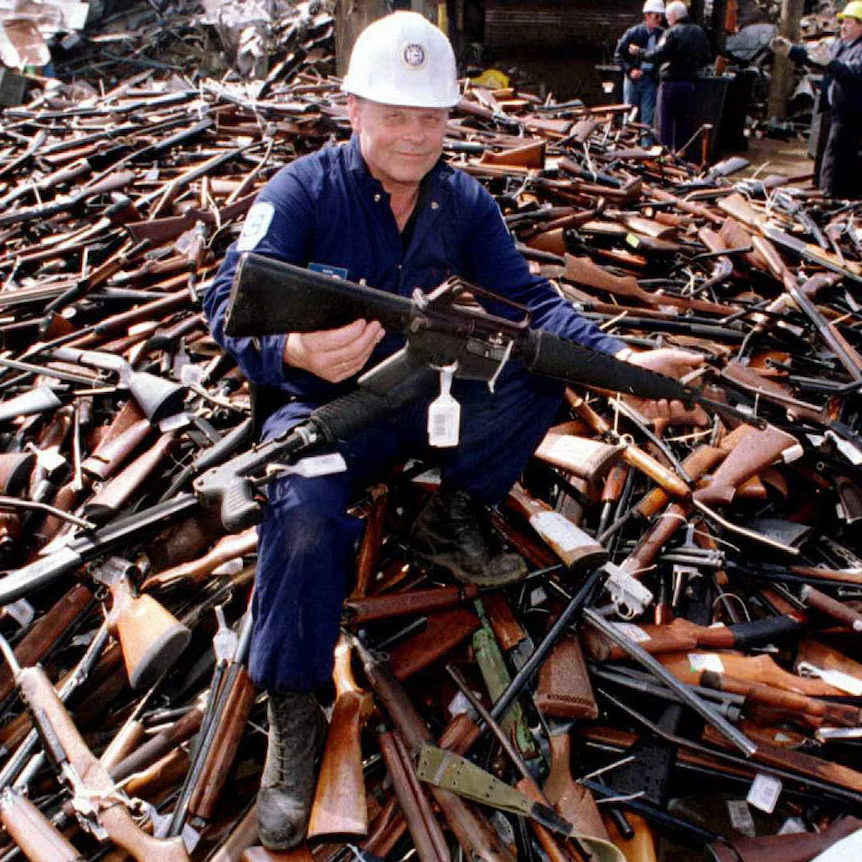
Australia gun buyback plans have moved from legislation to implementation, with New South Wales set to begin collecting firearms in November as part of the national response to the deadliest attack the country has seen in decades.
Prime Minister Anthony Albanese confirmed the timeline on Sunday, months after his government passed sweeping reforms in the aftermath of a shooting that killed 15 people at a Jewish festival in Sydney.
What Prompted the Reforms
The attack occurred on December 14 at a Hanukkah celebration on Bondi Beach, in Australia’s largest city.
Albanese’s centre-left government responded in January by enacting legislation covering three areas: the gun buyback itself, tighter vetting for firearms licences, and a crackdown on hate-motivated conduct.
A detail that shaped the policy response was the source of the weapons used. The alleged gunmen carried powerful firearms that had been obtained legally, meaning existing licensing controls had functioned as designed and still permitted the acquisition.
The Numbers Behind the Policy
Australia recorded 4.1 million firearms last year, according to government figures, the highest total in the country’s history.
More than 1.1 million of those are held in New South Wales alone, reflecting its position as the most populous state.
That figure carries particular weight given Australia’s international reputation on gun control. Albanese addressed the point directly in televised remarks, noting that while Australians take justified pride in their gun laws, there are now more firearms in the country than there were at the time of the Port Arthur buyback.
How the Scheme Will Work
Albanese and New South Wales Premier Chris Minns confirmed in a joint statement that the programme begins on November 2.
People surrendering rifles and handguns will be eligible for compensation of up to A$1,000, roughly 700 US dollars, per firearm.
New South Wales has separately capped individual ownership at four firearms under its own reform package, introduced in response to the Bondi attack. That limit creates a practical driver for participation, since owners exceeding it must divest regardless.
The Port Arthur Comparison
This will be Australia’s largest buyback since the campaign that followed the 1996 Port Arthur massacre in Tasmania, in which a gunman killed 35 people.
That earlier programme became a global reference point for firearms policy, removing hundreds of thousands of weapons from circulation and accompanying a comprehensive overhaul of licensing and registration.
The comparison cuts both ways. It establishes precedent and demonstrates that large-scale collection is achievable in Australia. It also underscores that firearm numbers rebuilt substantially in the decades since, raising questions about whether periodic buybacks address a symptom rather than a cause.
Why Buybacks Are Contested
Supporters argue the logic is straightforward: fewer firearms in circulation means fewer opportunities for weapons to be misused, stolen or diverted, and voluntary schemes with compensation avoid confiscation without recompense.
Critics raise several counterpoints. Voluntary programmes tend to attract owners least likely to misuse weapons. Compensation levels may not reflect market value for higher-end firearms. And the Bondi case involved legally acquired weapons, which points toward licensing criteria rather than aggregate ownership numbers.
The New South Wales approach attempts to address both dimensions by pairing the buyback with a hard ownership cap and stricter licence assessment.
The Criminal Case
Police say the attack was carried out by a father and son whom investigators believe were inspired by the militant group Islamic State.
The surviving suspect, 24-year-old Naveed Akram, has not yet entered pleas to a substantial list of charges, including 15 counts of murder.
That case will proceed on its own timeline, separate from the policy response, though public attention to each will inevitably influence the other.
What Comes Next
The November start date gives authorities roughly two and a half months to establish collection points, communicate requirements to licence holders and process compensation claims.
The measure of success will not be the raw number of weapons collected but whether the combination of buyback, ownership limits and tighter licensing meaningfully reduces the likelihood of a similar attack.
Australia has been here before. The country reduced its firearm stock dramatically after 1996 and then watched it climb past previous levels over the following decades. Whether this round produces a lasting change or another temporary dip depends less on November and more on what the licensing system permits in the years that follow.
Author
-
Lucienne Albrecht is Luxe Chronicle’s wealth and lifestyle editor, celebrated for her elegant perspective on finance, legacy, and global luxury culture. With a flair for blending sophistication with insight, she brings a distinctly feminine voice to the world of high society and wealth.