The Bundibugyo virus outbreak unfolding across the Democratic Republic of the Congo and Uganda is evolving at an alarming pace, with case numbers climbing, the geographic reach widening, and cross-border transmission continuing. This strain of Ebola disease has placed health authorities and the World Health Organization under intense pressure as they race to contain its spread.
A Rapidly Worsening Situation
The figures paint a sobering picture. As of 27 May, the Democratic Republic of the Congo had reported 906 suspected cases and 223 deaths among those suspected cases. By 29 May, a combined total of 134 confirmed cases had been recorded across both countries, including nine in Uganda, with 18 deaths among the confirmed cases.
These numbers represent a sharp jump in just over a week. Since the previous update on 21 May, the outbreak added 49 confirmed cases, eight confirmed deaths, 160 suspected cases, and 47 suspected deaths.
The reach of the virus has even extended beyond Africa. One confirmed case involves an individual from the United States who had treated patients in the DRC and is now receiving care in Germany. This single case underscores how easily such diseases can cross continents through the movement of healthcare workers.
Where the Outbreak Is Concentrated
Within the DRC, transmission is heavily concentrated in the Ituri province, alongside North Kivu and South Kivu. Ituri alone accounts for a striking 88% of confirmed cases, making it the clear epicenter of the crisis.
The hardest-hit health zones in Ituri include Bunia, Rwampara, Mongbwalu, and Nyankunde. Among the 17 deaths recorded among confirmed cases in the DRC, ten were male and seven were female, spanning both adults and children.
Health and care workers have not been spared. Sixteen confirmed cases have been reported among them, a detail that highlights just how dangerous the response environment has become for those on the front lines.
Testing and Tracing Efforts
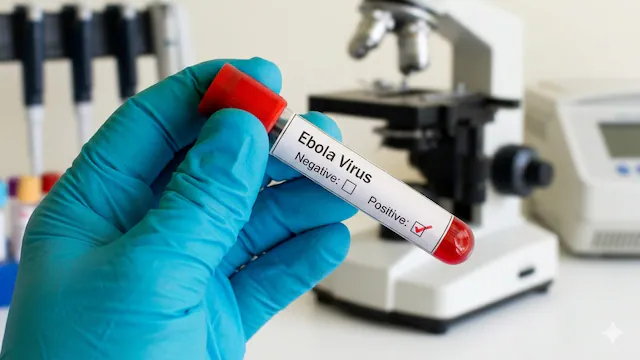
Laboratory work has been extensive but strained. By 27 May, a total of 774 samples had been collected, with 648 of them analyzed. Of those, 125 tested positive, producing a test positivity rate of 19.2%. Officials caution that this figure likely understates the true rate, since more than 100 samples remained untested and had been sent to Kinshasa for further analysis.
Contact tracing has also expanded significantly, with 2,635 contacts listed across Ituri and North Kivu provinces as of 27 May.
Mounting Operational Challenges
The response is being hampered by serious obstacles on the ground. Security incidents targeting health facilities and pockets of community resistance have emerged as major operational hurdles in Ituri province. Three recent incidents were reported in the Mongbwalu and Rwampara health zones alone.
These disruptions carry real consequences. They raise the risk of undetected transmission, interfere with response operations, and underscore the urgent need to strengthen community protection and engagement.
The Situation in Uganda
Uganda has seen its own escalation, adding seven confirmed cases since the 21 May update. As of 29 May, the country had recorded nine confirmed cases, including one death, concentrated in Kampala and Wakiso.
The recent cases reveal clear chains of transmission. They include a Ugandan driver who transported the first reported case, a Congolese health worker linked to the index case, a Congolese woman who travelled to Uganda seeking medical care, and two Ugandan health workers connected to an earlier confirmed case.
To contain the spread, Ugandan authorities had identified 436 contacts under follow-up as of 26 May, including both household and hospital contacts.
Understanding Bundibugyo Virus Disease
Bundibugyo virus disease, or BVD, is a severe and frequently fatal form of Ebola caused by the Bundibugyo virus, one of the Orthoebolavirus species. It is a zoonotic disease, with fruit bats suspected to be its natural reservoir.
Human infection is thought to begin through close contact with the blood or secretions of infected wildlife, such as bats or non-human primates. From there, it spreads between people through direct contact with blood, secretions, organs, or other bodily fluids, as well as contaminated surfaces. Transmission is especially amplified in two settings: healthcare environments where infection prevention measures fall short, and unsafe burial practices involving direct contact with the deceased.
The incubation period ranges from 2 to 21 days, and importantly, individuals are not infectious until symptoms appear. The early symptoms are deceptively non-specific, which makes diagnosis difficult and can delay detection. These include:
- Fever and fatigue
- Muscle pain and headache
- Sore throat
As the disease progresses, it can lead to gastrointestinal symptoms, organ dysfunction, and in some cases haemorrhagic manifestations. Past BVD outbreaks in Uganda and the DRC in 2007 and 2012 carried case fatality rates ranging from roughly 30% to 50%.
One of the central challenges is that BVD is hard to distinguish from other common febrile illnesses, such as malaria, without laboratory confirmation. Because no approved vaccines or specific treatments currently exist, control depends entirely on rapid case identification, isolation, contact tracing, safe burials, and strong community engagement.
The Public Health Response
Health authorities in both countries, working alongside the WHO and partner organizations, are mounting a comprehensive response. This effort includes deploying rapid response teams, delivering medical supplies, strengthening surveillance, ensuring laboratory confirmation, implementing infection prevention and control measures, establishing optimized treatment centers, and engaging affected communities.
In a notable show of high-level attention, WHO Director-General Dr Tedros Adhanom Ghebreyesus traveled to the DRC on 28 May to support the ongoing response.
WHO Risk Assessment and Guidance
On 22 May, the WHO assessed the outbreak’s risk as very high at the national level within the DRC, high at the regional level, and low at the global level. This assessment is being continuously reevaluated as new information becomes available.
On the governance front, the WHO Director-General convened the first meeting of the IHR Emergency Committee on 19 May. The committee issued temporary recommendations on 22 May, emphasizing coordinated outbreak control, stronger cross-border collaboration, and sustained surveillance to prevent further regional spread.
Importantly, the WHO has advised against imposing any travel or trade restrictions on the DRC or Uganda based on the currently available information, though it continues to monitor and verify any travel and trade measures related to the outbreak.
Looking Ahead
The Bundibugyo virus outbreak represents a serious and fast-moving public health emergency, one defined by rapid case growth, dangerous operational conditions, and the persistent threat of cross-border spread. With no vaccine or specific treatment available, the burden falls heavily on traditional containment measures and the courage of frontline workers operating in difficult and sometimes hostile environments.
As the response continues and the WHO reassesses the situation in the coming days, the trajectory of this outbreak will depend largely on how effectively authorities can overcome the security challenges, community resistance, and logistical strains that currently stand in the way of containment.
This is a developing public health situation, and the figures cited here reflect the most recent available data as of late May 2026.
Author