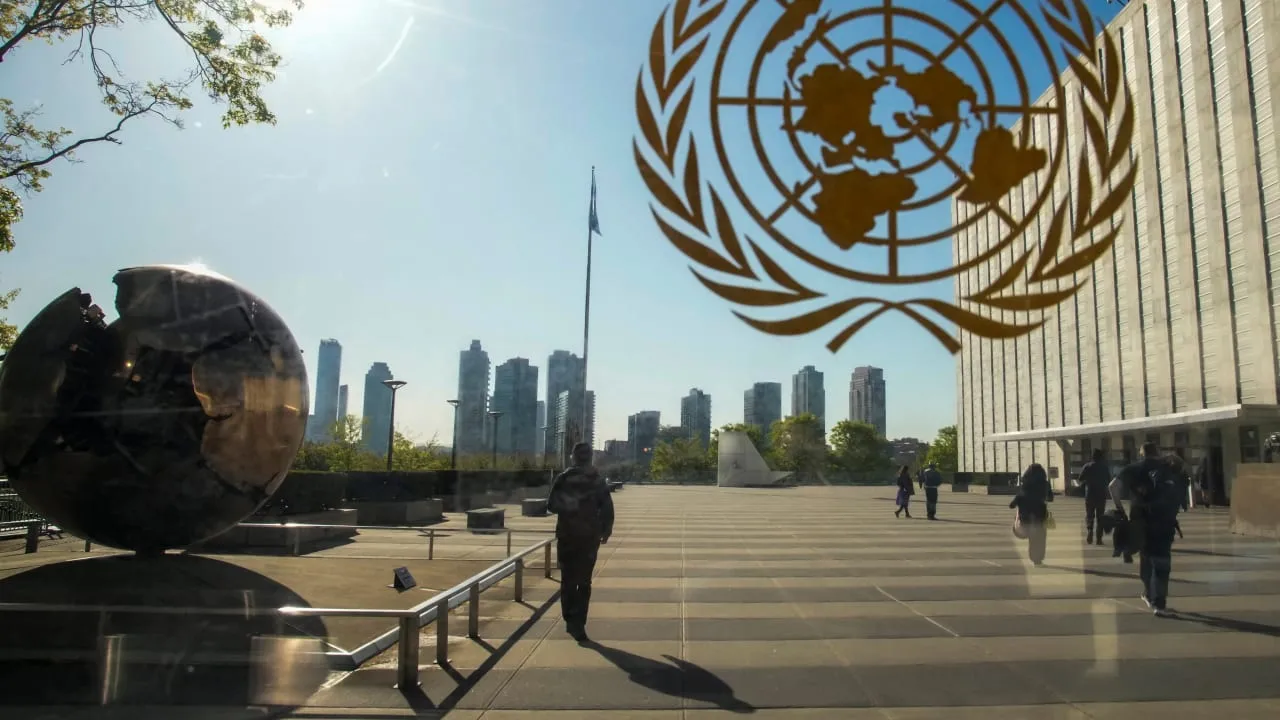
The UN sexual violence blacklist has expanded to include both Israel and Russia, marking a significant and damning development in how the international body holds states accountable for abuse in conflict. The decision rests on documented sexual violence committed by the security forces of both governments, including the rape of male detainees, and on the way both nations have actively obstructed UN investigators.
The Case Against Israel
The UN verified sexual abuse against 31 Palestinian men, women, and children from the Gaza Strip and the occupied West Bank between 2023 and 2025. According to the report, Israeli attacks included repeated gang-rapes and the use of sexual violence as a deliberate form of torture.
The catalog of documented violations is harrowing. It includes rape with objects, attempted rape, attacks on genitals, the targeted shooting of genitals, unwanted touching of breasts and genitals, forced nudity, and threats of rape.
Crucially, the report stresses that these cases represent patterns and indicative incidents rather than a complete accounting. The reason is straightforward: Israel placed heavy restrictions on UN investigators. Authorities barred UN experts from detention centres, blocked travel into Gaza, and reportedly threatened Palestinian detainees with consequences if they reported abuse after their release.
The Case Against Russia
Russia faced similar findings and similar accusations of obstruction. The UN said Moscow obstructed investigations into what it described as systemic sexual violence against Ukrainians, denying monitors access to both prisoners of war and civilians held in detention.
Despite these barriers, investigators still managed to verify 310 cases of Russian abuse. These included rape and gang-rape, genital mutilation, and the application of electric shocks to genitals. Notably, most of the victims were men, though 26 women and four girls were also among those abused.
The findings build on earlier UN conclusions that Russia had deployed systematic sexual torture against Ukrainians, both civilians and prisoners of war, in almost all detention centres. The report detailed the scale of the cruelty:
- In two-thirds of cases, Russian forces used multiple forms of sexual violence.
- More than half of survivors endured repeated sexual attacks.
- Most survivors were interviewed in Ukrainian-held territory after their release.
Denials and Diplomatic Fallout
Both Israel and Russia deny that their militaries have used sexual violence. The Israeli response was particularly sharp. Danny Danon, Israel’s ambassador to the UN, announced that the country had cut ties with UN Secretary General António Guterres over the blacklisting.
In a social media post, Danon claimed that Israel had submitted evidence, documents, and detailed responses to every allegation. However, he did not make any of that evidence public. It is also worth noting that Israel has not permitted the International Committee of the Red Cross to visit detainees since October 2023.
Interestingly, details of the report, which lists 77 countries and armed groups, were circulated by Israeli diplomats at the UN before its official release, and the full document was later posted online by a U.S. news site.
A Global Trend, With a Disturbing Divergence
Looking at the wider picture, the report found that conflict-related sexual violence rose sharply from 2024, characterized by extreme brutality and overwhelmingly directed at women and girls.
Israel and Russia, however, stand apart from this global pattern in a particular way: both also systematically targeted men. The UN documented nine cases of rape by Israeli forces, most involving men or boys from Gaza who were targeted in detention centres or during interrogation.
One especially troubling attack reportedly occurred in a police station in the Gush Etzion settlement in the occupied West Bank. According to the report, the perpetrators included Israeli soldiers, prison officers, and members of an elite police counter-terrorism unit.
A Culture of Impunity
The UN pointed to a systemic lack of accountability as a key factor enabling these abuses. To illustrate the problem, the report cited the assault and rape of a detainee from Gaza, an incident that was captured on security cameras and reported to police by Israeli medics.
The political response to that case proved telling. Prime Minister Benjamin Netanyahu described the alleged perpetrators as heroic and characterized the failed attempt to prosecute them as criminal. The victim, meanwhile, was never charged or tried and has since been released.
This sits within a broader pattern. Over the past three years, abuse including rape, extreme hunger, and humiliation has reportedly become normalized in Israeli jails. Rights groups have gone so far as to describe these detention centres as torture camps for Palestinians.
The Ben-Gvir Controversy
Adding to the controversy, Israel’s far-right national security minister, Itamar Ben-Gvir, who has boasted of leading a prison revolution, triggered a diplomatic crisis recently. He published footage showing Israeli security forces abusing international activists who had been detained while attempting to sail to Gaza with aid.
The forms of abuse seen in that video mirror what has reportedly been routinely inflicted on Palestinian prisoners. After their release, at least 15 of the activists said they had been sexually assaulted in custody, including one reported rape.
A Broader Accounting
The blacklist is not limited to state actors. The UN had previously added Hamas to the sexual violence blacklist over the October 7 attacks in Israel and the abuse of hostages held in Gaza. The militant group has not acknowledged any cases of sexual violence or held any alleged perpetrators accountable.
The report also did not spare Ukraine. Ukrainian forces were found to have committed conflict-related sexual violence as well, with 31 verified incidents since 2022, including the beating of genitals, the application of electric shocks, and forced nudity. Most of these occurred before 2025.
There was, however, a notable distinction in Ukraine’s case. The Ukrainian government had allowed access to independent monitors and lawyers and was taking steps to strengthen its laws to address sexual violence, a cooperative posture that stands in stark contrast to the obstruction documented in Israel and Russia.
Why This Matters
The expansion of the UN sexual violence blacklist carries weight beyond the immediate headlines. It places two powerful states alongside armed groups and other actors accused of grave abuses, and it does so despite their deliberate efforts to block scrutiny.
The recurring theme throughout the report is obstruction. In both the Israeli and Russian cases, the documented figures are explicitly described as partial, limited by restricted access. This suggests that the true scale of abuse may be considerably greater than what investigators were able to verify.
Ultimately, the report frames accountability, or its absence, as central to the problem. Where impunity prevails and oversight is blocked, abuses are more likely to continue. The blacklisting is intended as a tool of pressure, but as the defiant responses from both governments show, translating that pressure into genuine accountability remains a formidable challenge.
Author