Chevron Deepens Iraq Push With Oilfield Deals and Plans to Bypass the Strait of Hormuz
Chevron is moving to significantly expand its footprint in Iraq, signing preliminary agreements that could open the door to two major oilfields while also exploring ways to route Iraqi crude around a dangerously contested waterway. The Chevron Iraq oilfields deals reflect a broader strategic push to strengthen US-Iraqi energy ties at a moment when war in the region is threatening the flow of oil to global markets.
The developments come as Iraq’s new government courts American investment, and as the ongoing conflict with Iran adds fresh urgency to finding safer export routes.
Two Major Oilfields in Play
At the center of the announcement are memorandums of understanding that Chevron is set to sign with the Iraqi government. According to a senior Chevron executive, these agreements aim to advance the company’s potential entry into two significant oilfields: West Qurna 2 and Nassiriya.
The stakes are substantial. West Qurna 2 ranks among the world’s largest oilfields and currently produces about 460,000 barrels per day, making it a prized asset for any energy major. The preliminary agreement is intended to progress commercial terms and pave the way toward a final deal that would allow Chevron to take over the field.
The path to this point has been building for months. In February, Chevron entered exclusive talks with Iraq over West Qurna 2. Notably, Iraq had nationalized the field earlier this year to avoid disruptions stemming from US sanctions on Russia’s Lukoil, which had previously operated it. That move cleared the way for a US company to step in.
Nassiriya, the second field, is also part of the picture. Chevron and Iraq signed an agreement in principle last August to develop the Nassiriya oilfield project, which includes four exploration blocks alongside the development of other producing fields.
A Push to Bypass the Strait of Hormuz
Perhaps the most strategically significant element of Chevron’s involvement lies not in the oilfields themselves, but in how the oil will reach the world. The company is continuing talks with Iraq to produce technical studies and evaluate potential pipeline routes that would transport crude out of the country while bypassing the Strait of Hormuz.
The reasoning is urgent and clear. The strait serves as a chokepoint for the bulk of Iraq’s crude exports, and the ongoing US-Israeli war with Iran continues to threaten shipping through it. Finding alternative routes has become a priority not just for Iraq, but for the stability of global oil supplies.
Chevron isn’t pursuing this alone. A consortium including Chevron and Qatar’s UCC signed an agreement with Iraq’s state-owned Basra Oil Company on July 4 to compare potential pipeline routes. The effort would prove crucial as Iraq works to both raise its oil output and diversify how it gets that oil to market.
Washington Lends Its Support
The pipeline ambitions have drawn backing from the highest levels of the US government. A State Department official indicated this week that the Trump administration supports efforts by Iraq and Syria to revive a pipeline connecting the two countries.
That route, the Kirkuk-Baniyas pipeline, has been mostly dormant since suffering damage during the 2003 US-led invasion of Iraq. Reviving it would offer Iraq yet another avenue to move its crude while sidestepping the vulnerable strait, aligning neatly with both Baghdad’s economic goals and Washington’s strategic interests.
High-Level Diplomacy Behind the Deals
The oilfield agreements and pipeline studies are unfolding against a backdrop of intensive diplomacy, part of a broader campaign by Iraq’s new government to deepen energy ties with the United States.
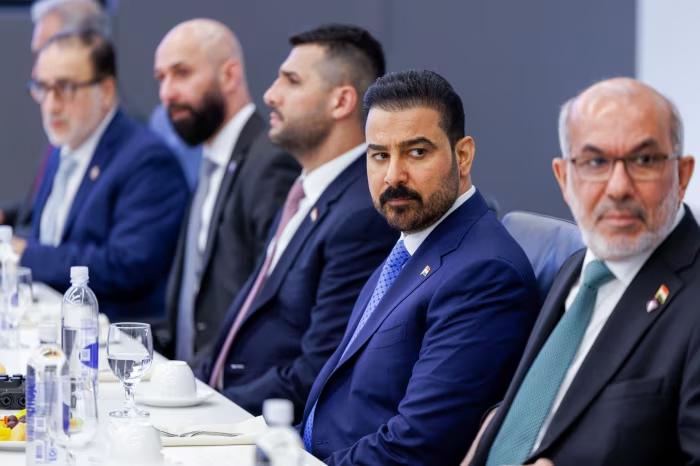
Iraqi Prime Minister Ali al-Zaidi, who took office in May, brought that agenda directly to Chevron. He visited the company’s Houston headquarters on Thursday as part of a five-day trip to the US, a visit that also included a meeting with President Donald Trump earlier in the week.
The Iraqi delegation’s goals were explicit. During the trip, the government sought to secure US partnerships to help boost the country’s oil output. Both the prime minister and the oil minister met with Chevron Vice Chairman Mark Nelson to advance those discussions.
Chevron, for its part, welcomed the engagement. Upstream president Clay Neff said the company appreciated the chance to meet with Iraqi leaders and discuss how its expertise in building large oil and gas projects around the world could support Iraq as it further develops its abundant energy resources.
Why This Matters
The convergence of oilfield deals, pipeline planning, and high-level diplomacy points to a significant realignment in the region’s energy landscape. Several factors make these developments especially consequential:
- West Qurna 2’s massive output would give Chevron a major stake in one of the world’s largest oilfields
- Bypassing the Strait of Hormuz addresses a critical vulnerability amid regional conflict
- The deals strengthen US-Iraqi ties at the expense of previous Russian involvement
- Diversifying export routes supports Iraq’s ambitions to raise production
Looking Ahead
Chevron’s expanding role in Iraq represents more than a corporate expansion; it reflects the shifting currents of energy, geopolitics, and security in a volatile region. As the company works to finalize its entry into West Qurna 2 and Nassiriya while studying safer ways to move crude, its moves could reshape both Iraq’s economic future and the flow of oil to global markets.
With the war against Iran keeping the Strait of Hormuz under threat, the search for alternative pipeline routes carries stakes that extend well beyond any single company or country. For now, the memorandums set to be signed mark an important step in a partnership that Baghdad and Washington both appear eager to build. Whether these preliminary agreements translate into lasting deals, and whether the pipeline plans can deliver the security Iraq seeks, will unfold in the months to come as the region navigates an uncertain and rapidly changing energy environment.
Author