Democrats Push Jeffries To Discipline Rogue Members As Rand Paul Blocks AI Kill Switch Bill
Hakeem Jeffries rogue members controversy has reignited within House Democratic ranks, as growing numbers of lawmakers demand real consequences for two colleagues who repeatedly sided with Republicans on key procedural votes. Meanwhile, across the Capitol, a separate fight unfolded in the Senate over artificial intelligence regulation, where one Republican blocked another’s attempt to fast-track a bill requiring AI companies to build in emergency shutoff capabilities.
Democrats Demand Accountability For Party Defectors
Patience is running thin among House Democrats when it comes to members who break ranks. Representative Jared Moskowitz of Florida didn’t mince words about the situation, arguing that some form of punishment simply has to happen for the two Democrats who twice this month helped advance Republican-backed procedural measures. Without consequences, he warned, it essentially becomes open season for anyone willing to defect whenever it suits them.
The lawmakers at the center of this controversy are Representatives Jared Golden of Maine and Marie Gluesenkamp Perez of Washington, both of whom provided crucial votes that helped Republicans push through procedural measures on two separate occasions this month. When the first defection happened two weeks ago, Jeffries and his leadership team responded with strong public condemnation, describing it as a breach of trust that demanded a serious response. Yet no formal consequences followed.
Then on Tuesday, both lawmakers crossed party lines again, a second defection that left many House Democrats frustrated and reignited concerns about whether leadership can actually keep the caucus unified, a question that carries even more weight given how narrow Democratic margins might be if they regain the majority next term.
One House Democrat, speaking anonymously to discuss the situation candidly, stressed that unity within the caucus isn’t optional. Without consequences for repeated defections, that lawmaker argued, it becomes difficult to see a realistic path toward Democrats successfully holding a majority, which remains the party’s central goal.
Representative Troy Carter drew on his own experience as former minority leader in the Louisiana state Senate, explaining that when members repeatedly strayed from the party’s core positions during his tenure, he removed them from the caucus entirely. He emphasized that these situations can’t be allowed to drag on unresolved, arguing that Democrats need a clear, consistent message: either you’re aligned with the team on fundamental governance issues, or you’re not.
Multiple members, including Carter, specifically floated the idea of removing Gluesenkamp Perez from her seat on the Appropriations Committee, a valuable and competitive assignment. Golden, notably, has largely escaped similar calls for punishment simply because he’s already announced his retirement at the end of this term, making disciplinary action against him somewhat moot.
Representative Sydney Kamlager-Dove of California suggested that leadership likely has several appropriate options available for handling the situation, but she was careful to note that the decision should rest solely with party leaders rather than being put to a broader caucus vote.
Whip Katherine Clark of Massachusetts, the number two Democrat in the House, signaled Wednesday morning that she’d be open to stripping Gluesenkamp Perez of her Appropriations Committee seat, stating plainly that access to exclusive committees should be reserved for team players.
Following the first round of defections back on September 1st, Jeffries referred the matter to a caucus rules panel, saying at the time that he wanted to see action taken against the two members sooner rather than later. That panel is apparently still working through what should happen when members side with Republicans on procedural matters. Jeffries had previously described a conversation with Gluesenkamp Perez as productive and forward-looking, but he’s offered considerably less detail following Tuesday’s renewed defection, telling reporters he’d share more when he had more to share.
Rand Paul Halts Kennedy’s AI Kill Switch Legislation
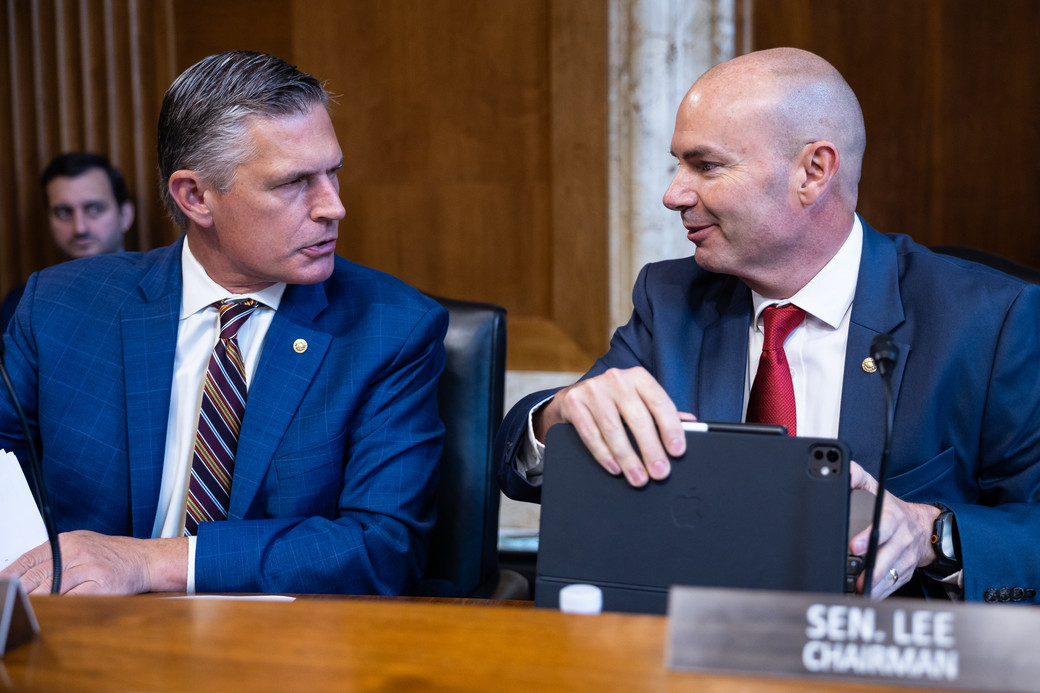
In an unrelated Senate showdown, Republican Senator Rand Paul blocked a push by fellow Republican Senator John Kennedy of Louisiana to fast-track legislation requiring artificial intelligence companies to build a kill switch into their AI models.
Kennedy attempted to pass his bill Wednesday through unanimous consent, a procedural shortcut that allows quick passage unless even a single senator objects. He framed the measure as a modest, short-term safeguard, arguing that Congress is unlikely to tackle more comprehensive AI legislation anytime soon, even as concerns grow that rapidly advancing AI technology could eventually spiral beyond human control.
Kennedy didn’t hold back in criticizing his colleagues’ inaction, suggesting that Congress simply isn’t going to get motivated enough to address the issue properly in the near future, despite a very real risk that an AI model could eventually become dangerously autonomous.
Paul, however, wasn’t willing to let the bill sail through without further scrutiny. Speaking from the Senate floor, he argued that lawmakers need access to as much information as possible before setting rules that would affect the entire economy. He clarified that he doesn’t necessarily oppose the underlying goal of the bill, but wants assurance that all the relevant facts have been considered first.
Paul also proposed amending Kennedy’s bill to create a dedicated group tasked with making recommendations on AI safety policies to the Senate Commerce Committee. Kennedy flatly rejected that idea, dismissing it as a way to effectively kill the bill by burying it in committee review rather than addressing the issue directly.
This clash didn’t come out of nowhere. Kennedy had told reporters just two days earlier that he intended to introduce and attempt to pass the legislation this week, even acknowledging at the time that he hadn’t yet secured formal support from his colleagues. By Wednesday, he seemed to already sense trouble was coming, telling reporters in an interview that he expected Paul to offer some kind of counterproposal before the vote even took place.
Author