US Ebola Response Readiness in the Spotlight as Former Trump Adviser Speaks Out
The question of US Ebola response readiness has taken center stage following remarks from Dr. Deborah Birx, who once led the White House coronavirus response during President Donald Trump’s first term. Speaking on CBS News’ “Face the Nation” this past Sunday, Birx pushed back against concerns that the country might be unprepared to deal with a potential Ebola outbreak on American soil.
Her comments come at a time when several major federal health agencies are operating without permanent leadership and as global concern grows over a rapidly spreading Ebola outbreak in central Africa.
Concerns Raised Over Empty Leadership Roles
CBS News’ Nancy Cordes pressed Birx on a critical point. At the moment, the United States does not have a confirmed director at the Centers for Disease Control and Prevention (CDC), nor at the Food and Drug Administration (FDA). The country also lacks a confirmed Surgeon General. With three of the most important public health positions sitting empty, many are asking whether the US is truly prepared to manage Ebola or any other serious infectious disease should it arrive in the country.
Birx acknowledged the importance of having permanent leadership in those roles but expressed confidence in the federal health workforce overall. She noted that an interagency Ebola response task force has already been formed and pointed to her own decades of experience in government and the military as proof that the system has strong professionals behind the scenes.
According to Birx, who spent more than 40 years in federal service and 29 years in the military, there is a “deep bench” of capable people across these agencies. She added that nominees have been put forward for at least the CDC role and emphasized that the experts already in place are highly capable.
A Test Case for a Reshaped Public Health System
The ongoing Ebola outbreak in central Africa is the first major global health emergency the United States has faced since the Trump administration significantly scaled back its international health commitments last year. This makes the moment particularly important, both as a public health challenge and as a test of how well the redesigned American response system can function.
The US is already sending equipment, supplies, and teams of experts to the affected regions in Africa. However, public health officials and infectious disease specialists have voiced concerns that recent budget cuts and policy decisions have weakened America’s ability to detect and respond to emerging threats early.
Key Changes That Have Reshaped US Global Health Efforts
Several major shifts have taken place over the past year that directly affect how the US engages with global disease outbreaks:
- The US Agency for International Development (USAID) was shut down last year
- The country officially withdrew from the World Health Organization (WHO) earlier this year
- Numerous global health programs have been scaled back or eliminated
- Top public health leadership positions remain unfilled
These changes mean that the infrastructure once used to spot outbreaks early and coordinate international responses has been significantly weakened. Experts warn that this likely delayed the detection of the current Ebola outbreak and could slow down efforts to contain it.
The Scope of the Current Outbreak
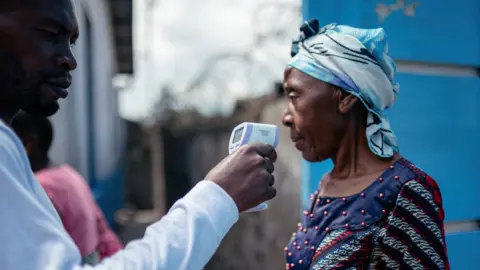
The Ebola Bundibugyo virus disease (BVD) is at the heart of the current crisis. More than 500 suspected cases have been reported in the Democratic Republic of the Congo alone, and the situation is evolving by the day. The World Health Organization has officially declared the outbreak a public health emergency of international concern.
The Bundibugyo strain is particularly worrying because it has no approved vaccine and no specific treatment. Containment depends almost entirely on isolating patients early, tracing contacts, and ensuring safe burial practices to prevent further spread.
Echoes of the COVID-19 Era
The conversation around US Ebola response readiness inevitably brings back memories of the COVID-19 pandemic. It has been only about six years since that global crisis upended life across the country. Thousands of Americans lost their lives, the economy took a severe hit, and millions were forced into isolation during long stretches of social distancing.
For Birx, who lived through that period at the highest levels of the federal response, the lessons from COVID-19 still matter. Her message now is that even in moments of transition, the United States has the professional talent and institutional knowledge needed to mount a strong defense against another major outbreak.
What Public Health Experts Are Watching For
Despite Birx’s reassurances, many in the public health community remain cautious. They point to several factors that will determine how well the US can respond if Ebola spreads further or reaches American borders:
- How quickly permanent leadership is confirmed at the CDC, FDA, and Surgeon General’s office
- Whether funding for global disease surveillance can be partially restored
- How effective the new interagency Ebola task force proves to be in practice
- The speed and coordination of resource deployment to affected countries
- Public communication and transparency from federal agencies
The next several weeks will likely show whether the system can perform under real pressure or whether the recent rollbacks have left dangerous gaps in the safety net.
Looking Ahead
The world is watching closely as the Ebola outbreak in Africa continues to grow, and the United States is now in a position where its response capabilities will be tested in real time. Birx’s optimism rests on the strength of career federal professionals, but the absence of confirmed top leaders raises legitimate questions that will not disappear overnight.
For now, the message from former officials like Birx is one of cautious confidence. Whether that confidence holds up will depend on how the coming weeks unfold, both abroad and at home.
Author