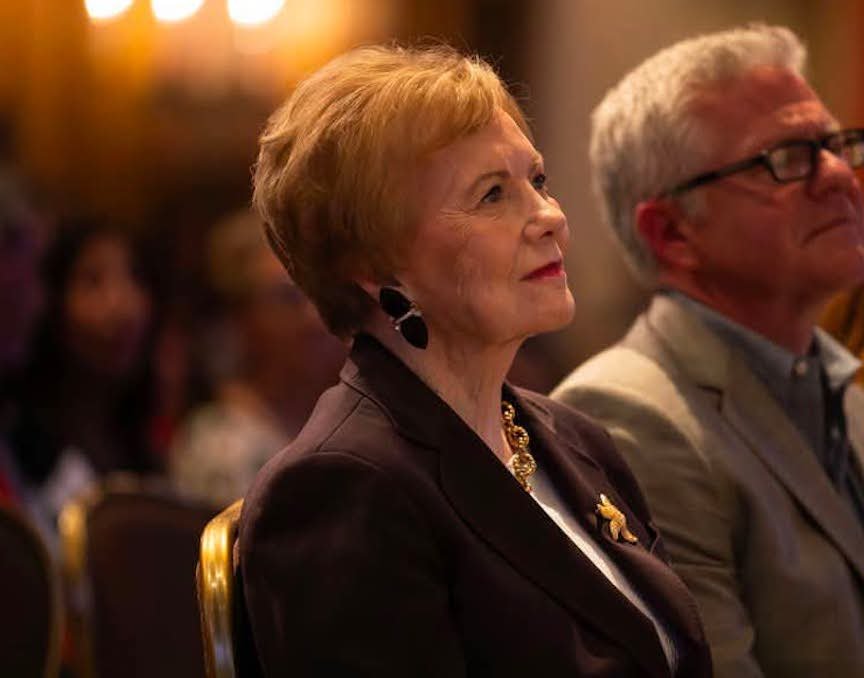
Kay Granger dies at 83, closing a chapter in Texas political history that stretched from a Fort Worth classroom to some of the most consequential rooms in Washington. The former congresswoman, who broke ground as her city’s first woman mayor before spending nearly three decades in the U.S. House, was remembered Sunday evening in tributes from House Speaker Mike Johnson and Fort Worth Mayor Mattie Parker.
A Career Built in Stages
Granger’s rise was not sudden. It accumulated.
She was born in Greenville, in Hunt County, Texas, in January 1943, and grew up in Fort Worth. After graduating from Eastern Hills High School and Texas Wesleyan University, she taught school and later opened her own insurance agency.
That combination of teaching and business ownership shaped how she operated later. Johnson noted that she gave her life to serving her Fort Worth community across every role she held, from the zoning commission to the City Council to nearly thirty years in Congress.
Her progression through local government followed a familiar path for civic-minded Texans of her generation: zoning commission first, then a council seat, then the mayor’s office.
Making History in Fort Worth
Granger served as Fort Worth mayor from 1991 to 1995, becoming the first woman to hold the position. She did not treat the milestone as incidental.
At the time, she spoke about her affection for the city and her excitement at the role, adding that being its first woman mayor was a genuinely enjoyable distinction and that history was being made.
Her tenure coincided with real economic anxiety. The closure of Carswell Air Force Base struck at a significant source of local employment and identity. The site was subsequently reopened in 1994 as the Naval Air Station Joint Reserve Base, preserving a military presence that would matter to the region for decades.
That experience arguably previewed the defence-focused work that would define her congressional career.
Washington and the Power of Appropriations
Granger entered the U.S. House in 1997, representing Texas’ 12th Congressional District and succeeding former Rep. Pete Geren. She was the first Republican woman from Texas to serve in the chamber.
Rather than chase visibility, she pursued leverage. Over time she became one of a small group of members who genuinely directed federal spending, building her influence through the Appropriations Committee.
Defence projects became her particular domain. That focus translated directly into protection for jobs at major Fort Worth employers, Lockheed Martin foremost among them. In a district where aerospace manufacturing underpins the local economy, that mattered in concrete terms.
Colleagues described her as blunt and formidable. Directness was part of her reputation rather than a departure from it.
Never Quite Leaving the Mayor’s Office Behind
Beyond defence, Granger consistently delivered on infrastructure. The most prominent example late in her career was the Central City Flood Control Project, an effort to reroute the Trinity River that is now generally known as the Panther Island project.
Rep. Marc Veasey captured something essential about her approach when reflecting on her tenure around the time of her retirement, observing that she never truly set aside the mayor’s role when she arrived in Washington.
It was an apt description. Her congressional work read less like national ambition and more like municipal governance conducted from a larger platform.
Stepping Back
Granger announced in November 2023 that she would not seek reelection. The following March, she stepped down from her leadership position on the Appropriations Committee.
In December 2024, near the close of her time in office, she disclosed that she had been facing health challenges that had worsened over preceding months. Her son, Brandon Granger, told The Dallas Morning News that she had been dealing with dementia-related issues and was living at a senior living facility in Fort Worth.
Tributes From Across Texas Politics
Mayor Parker, who once worked as a Granger aide, called her a trailblazer and a tenacious leader. She spoke of learning from Granger’s spirit, work ethic, and sustained personal sacrifice, describing her as both a mentor and a friend.
Sen. Ted Cruz characterised her career as a life defined by historic firsts. Rep. Roger Williams, a Republican from Willow Park, described her as a patriot who grasped what public service actually requires.
The volume of tributes Sunday evening reflected a career long enough that many current Texas officials had worked alongside her at some point.
What Her Career Represented
Several threads run through Granger’s public life:
- A steady climb through local institutions rather than a parachute entry into politics
- Influence built through committee expertise rather than media presence
- Sustained attention to a single region’s economic interests over decades
- A series of genuine firsts for women in Texas Republican politics
The last point deserves weight. When Granger entered the House in 1997, the path she took did not exist for Republican women from Texas. She created it by walking it.
A Lasting Fort Worth Legacy
Much of what Granger secured is physical and permanent. The reserve base that survived a closure. The flood control work reshaping the Trinity River. The manufacturing jobs sustained through defence appropriations year after year.
Those things will outlast the news cycle surrounding her death, which is perhaps the truest measure of the kind of politician she chose to be. She spent her career on the unglamorous machinery of governance, and Fort Worth carries the results.
Author
-
Lucienne Albrecht is Luxe Chronicle’s wealth and lifestyle editor, celebrated for her elegant perspective on finance, legacy, and global luxury culture. With a flair for blending sophistication with insight, she brings a distinctly feminine voice to the world of high society and wealth.