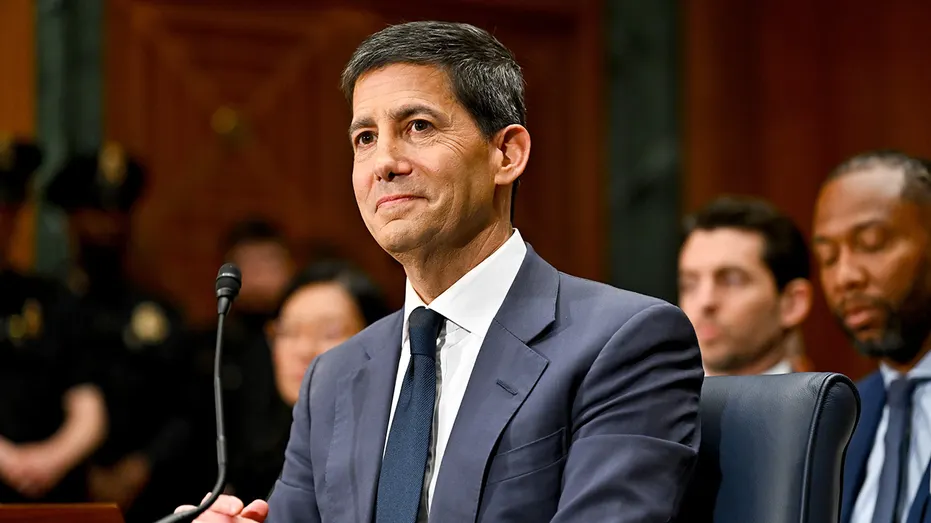
Kevin Warsh’s Fed chair debut sent a clear signal to financial markets this week, and investors didn’t like what they heard. In his first meeting leading the Federal Reserve, Warsh struck a notably hawkish tone that rattled stocks, pushed Treasury yields higher, and offered the clearest glimpse yet into how he intends to steer the central bank.
A Rocky Start for Markets
The market reaction to Warsh’s debut was swift and telling.
Treasury yields jumped while the S&P 500 slipped 1.2 percent, with the sell-off intensifying as Warsh spoke during his press conference. Even SpaceX, a relatively new entrant to public markets, experienced its first stumble since debuting, falling 5 percent. Despite that dip, the company managed to hold onto its remarkable position as the fifth most valuable listed company in the United States.
But the real story wasn’t the market wobble, it was what Warsh revealed about his approach.
Four Questions, Four Answers
Heading into the meeting, there were four pressing questions observers wanted answered. By the end, all four had been addressed, though some far more satisfyingly than others.
The key questions centered on:
- Whether Warsh genuinely believes an AI productivity boom justifies pre-emptive rate cuts, or whether that was simply political positioning
- How he would handle inflation running stubbornly above target
- His plans for shrinking the Fed’s balance sheet
- How he would implement a more austere communication policy
Each answer offered a window into the kind of Fed chair Warsh intends to be.
Hawk or Dove? The AI Question
Perhaps the most important question was whether Warsh would govern as a hawk or a dove under current conditions.
This mattered because Warsh has occupied both camps at different points in his career. Before securing the chairmanship, he had argued that a future AI-driven productivity boom justified cutting rates pre-emptively, a stance that raised eyebrows.
When asked directly whether AI was currently adding more to demand or supply, Warsh hedged somewhat, noting that supply is difficult to measure. However, he conceded that higher demand might be the larger effect at present. That admission made it far less likely that he is, as some feared, an ideologically committed dove, a relief to those worried about runaway dovishness.
A Firm Stance on Inflation
Warsh’s handling of the uncomfortable reality of core inflation proved encouraging to hawkish observers.
He stated bluntly and repeatedly that inflation remains too high, attributing the excess to poor monetary policy decisions. He made clear that the Federal Open Market Committee would now work to correct course, only gesturing toward the employment side of the Fed’s mandate when specifically prompted.
The market took notice. Combined with the fact that half the committee penciled in a rate increase in their projections, this was enough to convince investors the Fed is shifting in a hawkish direction. The policy-sensitive two-year Treasury yield leapt as much as 17 basis points following the meeting.
The Cracks in the Hawkish Armor
Despite the convincing hawkish signals, Warsh’s performance wasn’t entirely airtight.
When asked whether rates were currently restrictive, he gave a nuanced answer: it depends. In the housing market, yes; in the stock market, clearly not. He suggested that two different Fed tools, interest rates and balance sheet policy, might be influencing different parts of the economy.
Yet this reasoning invites scrutiny. If Warsh is implying that the soaring stock market is a product of a large Fed balance sheet, and can therefore be excluded from rate discussions, he would need to explain a puzzling fact: when the balance sheet shrank from $8.7 trillion to $6.8 trillion between 2023 and 2025, the stock market still rose roughly 50 percent.
Balance Sheet Plans: No Rush, But Change Is Coming
On the question of the Fed’s balance sheet, Warsh offered measured signals rather than dramatic shifts.
The committee’s statement reaffirmed its commitment to an “ample reserves” regime early on. Meanwhile, Warsh announced that one of five new reform task forces he is establishing would specifically address balance sheet policy.
The underlying message was clear: there’s no immediate rush, but meaningful change is likely on the horizon.
A Decisive Shift in Communication
The communication question received the most definitive answer of all.
Warsh moved decisively to strip away the Fed’s traditional forward guidance. Specifically, he:
- Removed all forward guidance from the committee’s statement
- Refused, during the press conference, to discuss what the Fed’s “reaction function” might be under his leadership
- Declined to contribute his own “dot” to the committee’s economic projections, setting a deliberately sparse example
This represents a significant departure from how the Fed has communicated in recent years.
The Flaw in Warsh’s Reasoning
While the move toward leaner communication may be defensible, Warsh’s justification for it was shaky.
He argued that financial markets need to react to information directly, rather than through the filter of anticipating the Fed’s interpretation. This filter, he claimed, left the Fed “blind” to what was really happening in the economy.
The problem is that markets will inevitably continue interpreting new information in light of what they expect the Fed to do. The central bank’s likely response remains just as important as ever. The only real difference is that markets may now have less information about the Fed’s inclinations.
A More Charitable Reading
There is, however, a more generous interpretation of Warsh’s approach.
As Brij Khurana of Wellington Management suggested, Warsh may be trying to dismantle the assumption that the Fed will suppress market volatility by implicitly promising certain policy responses. In other words, this could be a small step toward removing the so-called “Fed put.”
If that’s the true intent, it carries merit. When markets remain artificially calm day to day, it can breed false confidence, distort the cost of capital, and encourage reckless behavior. A bit more genuine volatility might actually serve markets well.
The Unanswered Question
Still, the withdrawal of forward guidance can conveniently double as cover for dodging difficult questions.
Warsh was pressed twice on a pointed issue: if inflation is too high, and if inflation is solely a function of monetary policy, why not raise rates immediately? This question targets past decisions and deserved a direct response, especially given Warsh’s otherwise hawkish posture.
Instead, he treated the question as an attempt to trap him into discussing future plans and offered no real answer, an unconvincing deflection that left a notable gap in his otherwise assertive debut.
The Bottom Line
Kevin Warsh’s Fed chair debut painted the picture of a central banker leaning hawkish, determined to tame inflation, and eager to reshape how the Fed communicates with the world. His firm stance on inflation and decisive break from forward guidance signaled real change, even as some of his reasoning left questions unanswered.
For markets, the message was unmistakable: the era of a more predictable, volatility-suppressing Fed may be drawing to a close. Whether Warsh’s approach ultimately delivers the stability he seeks, or introduces new uncertainty, will become clearer in the meetings ahead. For now, his hawkish opening act has firmly captured Wall Street’s attention.
Author