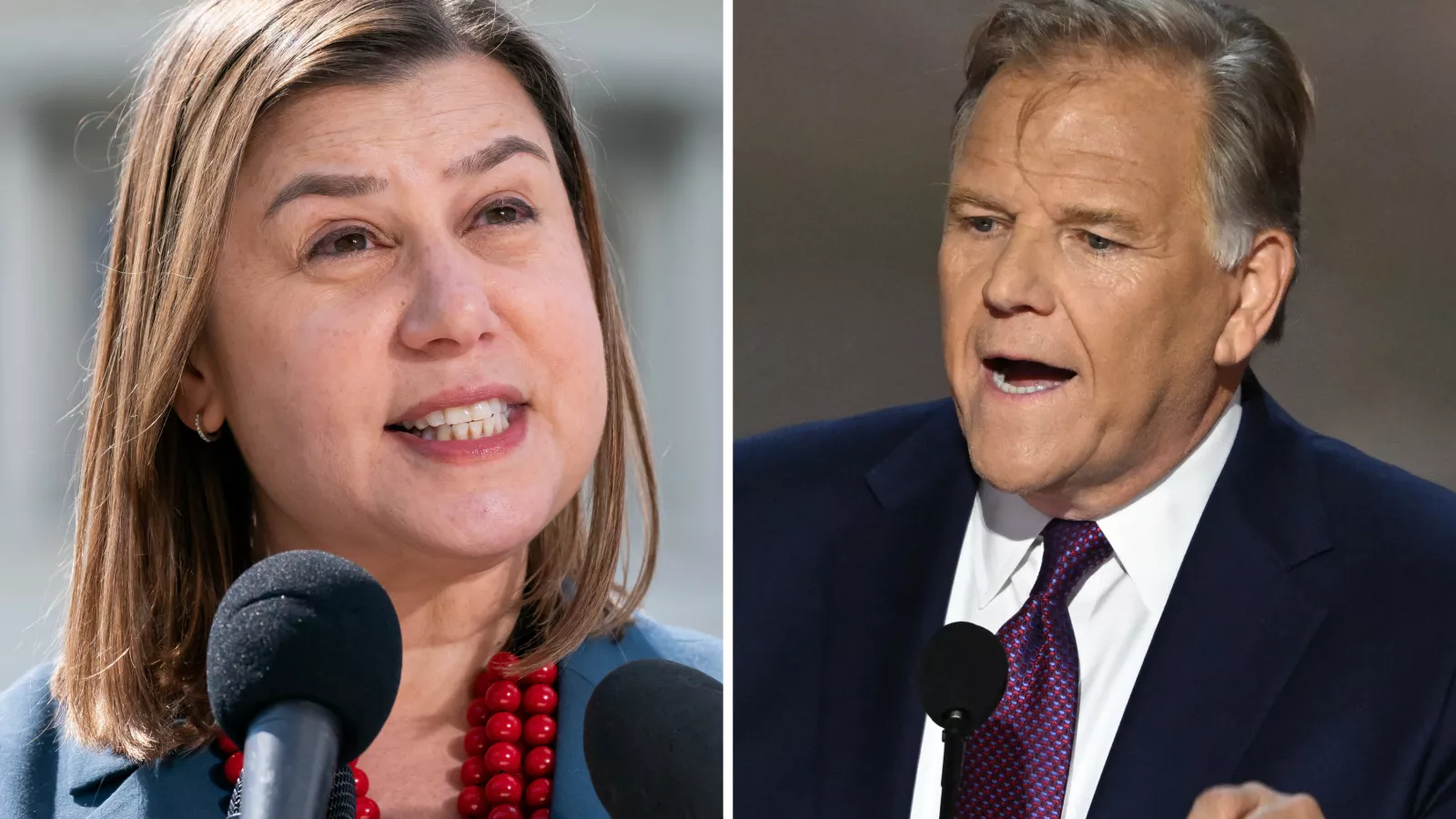
The Michigan Senate race took a dramatic turn as Democrat Mallory McMorrow announced she is stepping away from a heated primary campaign. Her departure clears the way for a direct showdown between two very different visions of the Democratic Party: the progressive energy of former public health official Abdul El-Sayed and the moderate, establishment-backed appeal of Congresswoman Haley Stevens.
The End of a Center-Left Campaign
McMorrow entered the contest hoping to keep the seat currently held by retiring Democrat Gary Peters in the party’s centrist-progressive middle ground. For a while, it looked winnable. Early in the campaign, the three-way race was tightly contested, with all three candidates running neck and neck.
But momentum can be unforgiving in politics. In the closing weeks, McMorrow’s numbers slipped sharply while El-Sayed surged ahead of both her and Stevens to become the clear frontrunner.
In a video announcing her exit, McMorrow made it clear she wasn’t walking away from her values, only from the ballot. She said she was suspending her campaign but not abandoning the larger fight, adding that meaningful change happens when everyday people get involved.
A Familiar Democratic Divide
With McMorrow out, the August primary now mirrors a storyline that has played out across the country in recent election cycles: an establishment favorite squaring off against a challenger from the party’s left flank.
Here’s where the two remaining candidates stand:
- Abdul El-Sayed — A vocal supporter of Medicare for All who, if elected, would become the first Muslim to serve in the US Senate. He has earned endorsements from some of the most recognizable names on the American left, including Senator Bernie Sanders and Congresswoman Alexandria Ocasio-Cortez, who backed him just last week.
- Haley Stevens — A moderate with strong institutional support, most notably from Senate Democratic leader Chuck Schumer. Her campaign has also benefited from more than $16 million in outside spending, including from pro-Israel organizations such as AIPAC.
The Israel Question
Much of the tension in this Michigan Senate race centers on foreign policy, specifically the candidates’ positions on Israel. El-Sayed has drawn criticism, and significant opposition spending, for declining to affirm Israel’s right to exist as a Jewish state.
In a recent television interview, he acknowledged that Israel exists but framed the real debate around US spending priorities. He argued against sending money abroad to support what he described as harmful policies, saying those resources would be better invested in American children and communities at home.
That stance has made him a target for pro-Israel groups, while simultaneously energizing his progressive base.
Why the Establishment Is Nervous
Party leaders like Schumer are backing Stevens for a strategic reason: they believe a moderate stands a better chance of defeating Republican Mike Rogers in November’s general election.
Yet recent history complicates that bet. Across the country, from New York to Colorado, Democratic voters have repeatedly favored leftwing challengers over more established figures. The establishment’s preferred playbook hasn’t been winning primaries lately, and El-Sayed’s rise in Michigan fits squarely into that pattern.
McMorrow’s Rise and Fall
McMorrow wasn’t a minor player in this contest. She first captured national attention in 2022 with a powerful, widely shared speech pushing back against Republican attacks that labeled her a “groomer” for defending LGBTQ+ rights. That moment turned her into a rising star, and her Senate bid drew support from well-known Democratic senators including Elizabeth Warren and Chris Murphy.
So what changed?
Her decline appeared to coincide with her public criticism of El-Sayed. Earlier in the campaign, El-Sayed appeared alongside Hasan Piker, a popular leftwing streamer who has faced accusations of antisemitism and once made a controversial remark suggesting America “deserved” the September 11 attacks, a comment he later apologized for and described as a poorly judged joke.
McMorrow was sharply critical, comparing Piker to a prominent white nationalist and describing him as someone who says deliberately offensive things to chase attention and clicks.
But the attack didn’t land the way she may have hoped. Her polling numbers, which had her roughly even with her rivals in early April, dropped to a distant third by May, and she was polling in single digits across multiple June surveys.
A Movement Welcomes New Supporters
After McMorrow suspended her campaign, El-Sayed responded with a message of gratitude, thanking her and her supporters for their commitment to democracy.
He didn’t hold back on the broader political fight, though. El-Sayed accused party insiders of pressuring anyone who dares to challenge their preferred candidate, and he openly invited McMorrow’s supporters to join his movement, one focused on reducing the influence of money in politics, putting money back into ordinary people’s pockets, and passing Medicare for All.
In a follow-up video, he acknowledged that McMorrow would fight for families and children, including his own daughters. But he reframed the central question of the race around who really gets to decide the nominee, warning against allowing wealthy interests, large corporations, and party leadership to control the outcome.
What’s at Stake in November
The importance of this Michigan Senate race extends far beyond state lines. For Democrats to have any realistic shot at retaking control of the US Senate in the 2026 midterms, holding onto this seat is essential.
Whoever emerges from the August primary won’t just be carrying their own campaign, they’ll be shouldering a piece of their party’s national strategy. And with progressive and establishment forces so clearly divided, Michigan voters are about to send a message that the rest of the country will be watching closely.
Author