The federal government is holding back $867.5 million in California Medicaid funds, and the fight over whether that’s a fraud investigation or a political maneuver started within hours of the announcement.
Health and Human Services Secretary Robert F. Kennedy Jr. said Tuesday that his agency had withheld the money over fraud concerns. Minnesota got hit too, with $199 million deferred for similar reasons.
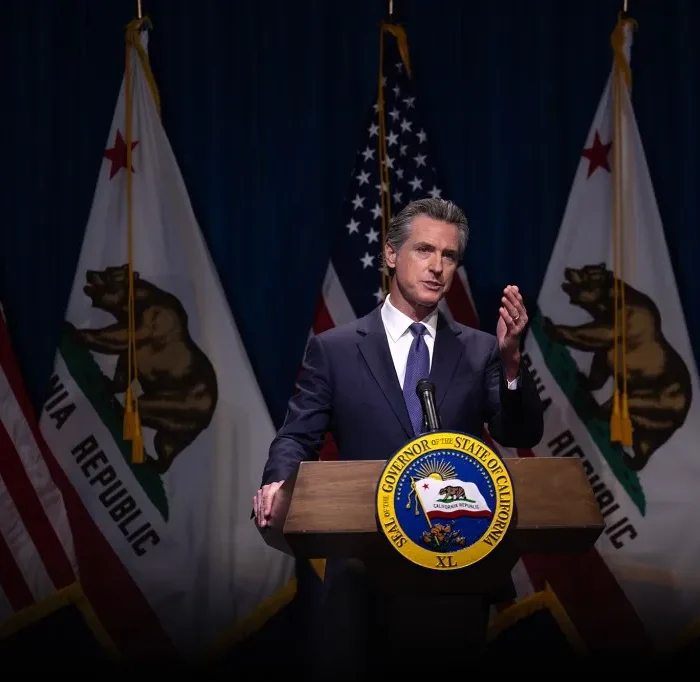
Gov. Gavin Newsom’s office responded by calling the whole thing recycled.
Kennedy’s Terms
Kennedy framed the freeze as something the states can resolve themselves, and quickly.
“If Gov. Gavin Newsom or Gov. Tim Walz wants this funding released, all they have to do is provide basic documentation showing that these services are legitimate and not fraudulent,” he said at a news conference.
That’s a straightforward-sounding condition. Whether it’s actually simple depends entirely on what documentation the agency considers sufficient, and that question hasn’t been publicly answered.
Where the Money Was Going
The withheld California funds break into two main categories.
Just under half relates to in-home health services. Dr. Mehmet Oz, administrator of the Centers for Medicare and Medicaid Services, said California’s spending in that area grew at more than twice the national rate over the past two fiscal years.
“That doesn’t make sense,” Oz said.
Roughly another quarter involves care delivered to people described as having unsatisfactory immigration status, meaning their eligibility to be in the country and to receive those services is in question. Oz called that an ongoing massive problem for the state.
Not the First Time
Tuesday’s announcement follows a similar action two months earlier, when Vice President JD Vance said the administration would defer $1.3 billion in Medicaid payments to California over fraud concerns tied largely to hospice care and in-home services.
That pattern is central to how Newsom’s office is framing the latest freeze.
Sacramento Fires Back
Newsom’s office called the move a recycled political stunt in a social media post and rejected the premise outright.
“California isn’t being targeted because Trump has evidence of fraud,” the post said. “We are being targeted for political reasons, and because Dr. Oz doesn’t understand that we are SAVING taxpayers money by keeping seniors and people with disabilities out of far more expensive nursing homes.”
That last point is the substantive counterargument buried in the rhetoric. In-home care is generally cheaper than institutional care. Rising spending in one column can mean falling spending in another.
The governor’s office also said California stands ready to collaborate with CMS in good faith efforts to combat fraud, leaving the door open even while attacking the motive.
Legal Review Underway
California Attorney General Rob Bonta’s office said it is examining both the deferral and the underlying fraud allegations.
“We have not hesitated to challenge unlawful actions by the Trump administration, and we will continue to act whenever Californians’ rights or access to critical services are threatened,” the office said.
Given the history between Sacramento and Washington over the past year, litigation seems more likely than not.
The Part Newsom Doesn’t Emphasize
Here’s where the story gets more complicated than either side’s talking points allow.
California’s own state auditor has repeatedly flagged eligibility discrepancies in Medi-Cal, the state’s Medicaid program, exposing it to billions of dollars in questionable payments. Those findings came from within California, not from federal officials.
That doesn’t validate the specific figures Kennedy announced Tuesday. But it does mean the underlying concern about eligibility verification isn’t purely an invention of the current administration.
The State’s Defense on In-Home Care
California Department of Health Care Services spokesperson Anthony Cava pushed back specifically on the in-home care allegations.
He noted that a 2020 state audit of the program found no program integrity concerns and actually recommended expanding it as a way to cut spending on institutional care.
Cava also pointed out that the federal government had previously signed off on California’s approach to in-home services, which raises an obvious question: what changed, the program or the reviewer?
A Feud With History
Newsom and Oz have collided before, and not politely.
In January, Newsom filed a civil rights complaint against Oz after Oz posted a video from Van Nuys accusing what he called the Russian Armenian mafia of driving $3.5 billion in hospice and home-care fraud. Newsom described the remarks as baseless and racist.
That episode colors how Sacramento reads everything Oz says about California healthcare spending now, fairly or not.
The Wider Campaign
Tuesday’s action fits into a broader federal push against suspected Medicaid fraud in multiple states. California and Minnesota are the current targets, but they are not the only ones under scrutiny.
Both are led by Democratic governors who have clashed with the administration, which is precisely why the political-motive argument has traction, and precisely why it can’t be proven either way from the outside.
What Actually Matters Next
Strip out the press-conference language and a few practical questions remain.
The first is what documentation CMS wants. Kennedy framed compliance as simple. If the requested records are routine, this could resolve fast. If they involve auditing eligibility case by case across a program serving millions, it won’t.
The second is who feels the gap. Deferred federal funds don’t automatically stop services, but they create pressure on state budgets, and in-home care serves seniors and people with disabilities who have limited alternatives.
The third is whether this ends in court. Bonta’s statement reads like a preview rather than a possibility.
For now, nearly $1.1 billion across two states is sitting frozen while both sides argue about whether the problem is fraud or politics. The likely answer, as usual, is that there’s some of each.
Author
-
Lucienne Albrecht is Luxe Chronicle’s wealth and lifestyle editor, celebrated for her elegant perspective on finance, legacy, and global luxury culture. With a flair for blending sophistication with insight, she brings a distinctly feminine voice to the world of high society and wealth.