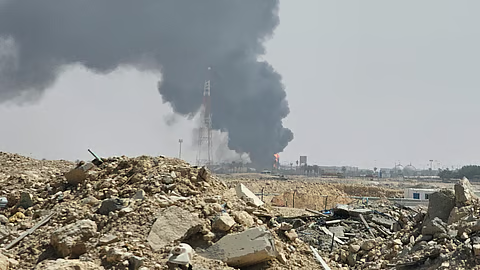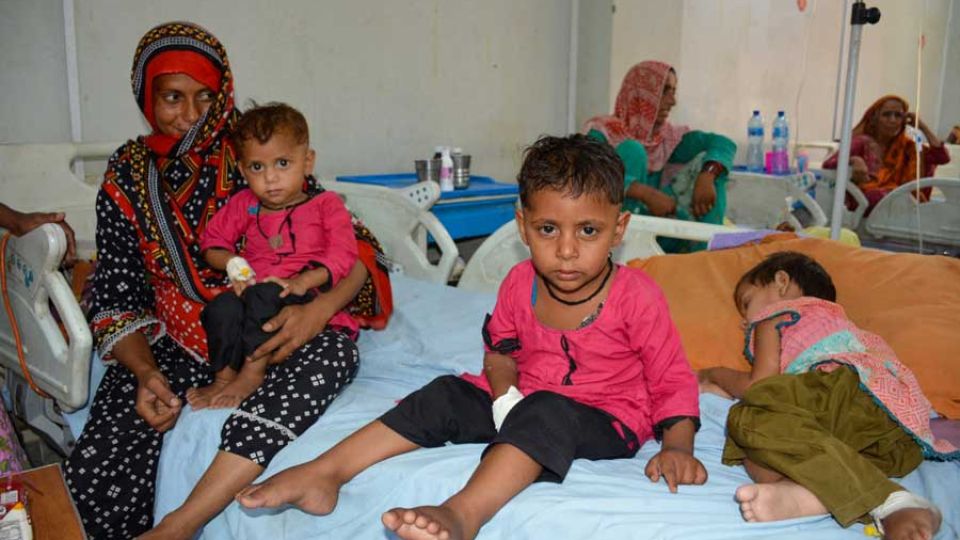
A Pakistan hospital nursery fire has killed at least 14 newborns in Islamabad, in what ranks among the deadliest hospital fires the country has recorded.
Prime Minister Shehbaz Sharif confirmed the toll and ordered an investigation into how it happened.
What Occurred
The fire broke out on Wednesday on the third floor of the Mother and Child Centre at the Pakistan Institute of Medical Sciences, a government-run facility in the capital, according to media reports.
Local broadcaster Geo TV, citing hospital sources, placed the number of deaths at 15.
The blaze began shortly before 7 a.m. local time and has since been extinguished. According to the same report, only one infant was rescued from the nursery.
That detail is the one that lingers. A neonatal unit is filled with babies who cannot move, cannot cry loudly enough to be located in smoke, and depend entirely on equipment and adults to survive. Whatever happened in that room happened faster than anyone could respond to it.
The Suspected Cause
Rescue sources cited by Geo TV indicated the fire was likely triggered by a short circuit in a malfunctioning air conditioning unit.
If that holds, it points to a maintenance failure rather than anything exotic. Faulty wiring and overloaded electrical systems are among the most common ignition sources in buildings across Pakistan, and air conditioning units running continuously through hot months place heavy demands on infrastructure that is frequently outdated.
The Government Response
In a statement posted on X, Sharif expressed his deepest condolences to the bereaved families and directed authorities to open an immediate investigation.
He also pledged that those found responsible would face the strictest action.
Whether that promise translates into accountability is the question families will be watching. Investigations after disasters of this kind have a mixed record in Pakistan, and the pattern of recurrence suggests findings have rarely produced systemic change.
A Recurring National Problem
Building fires are common across Pakistan, where safety regulations and construction codes are frequently ignored or enforced only loosely.
The scale of that failure was demonstrated earlier this year. In January, at least 65 people died when a large fire tore through a crowded shopping complex in the southern port city of Karachi.
Two catastrophic fires in the same year, in different cities, in buildings full of people who had no reason to expect danger, describes something closer to a structural condition than a series of accidents.
The Healthcare Dimension
There is a second layer to this tragedy specific to where it happened.
Pakistan’s government provides subsidised medical care through public hospitals, which makes treatment accessible to families who could not otherwise afford it. That system is genuinely important.
But the state sector remains severely underfunded, poorly managed and badly overcrowded. Facilities operate beyond capacity with equipment that is aging and maintenance budgets that do not keep pace.
Fire safety tends to be among the first things to suffer under those conditions. Sprinkler systems, functioning alarms, clear evacuation routes and regular electrical inspections all cost money that competes directly with staffing and medicine.
Why Neonatal Units Are Particularly Vulnerable
Several factors compound risk in a nursery specifically.
The patients cannot self-evacuate. Every infant must be individually carried out by staff, and in a unit holding a dozen or more babies, the arithmetic of rescue is brutal even with adequate personnel.
Many newborns are attached to equipment. Incubators, monitors and ventilators mean the density of electrical devices in a small space is unusually high, and disconnecting a critically ill infant carries its own risks.
Smoke reaches infants faster. Small bodies and developing lungs mean even brief exposure can be fatal, well before flames arrive.
What Comes Next
The investigation Sharif ordered will need to address more than the immediate cause.
Whether functioning fire detection and suppression systems were present in the unit. Whether staff had received evacuation training for this specific scenario. When the electrical systems and air conditioning units were last inspected. And whether warnings about the building’s condition had been raised previously and not acted upon.
Those answers will not return fourteen children to their families. They may determine whether the next nursery is safer than this one was.
Author