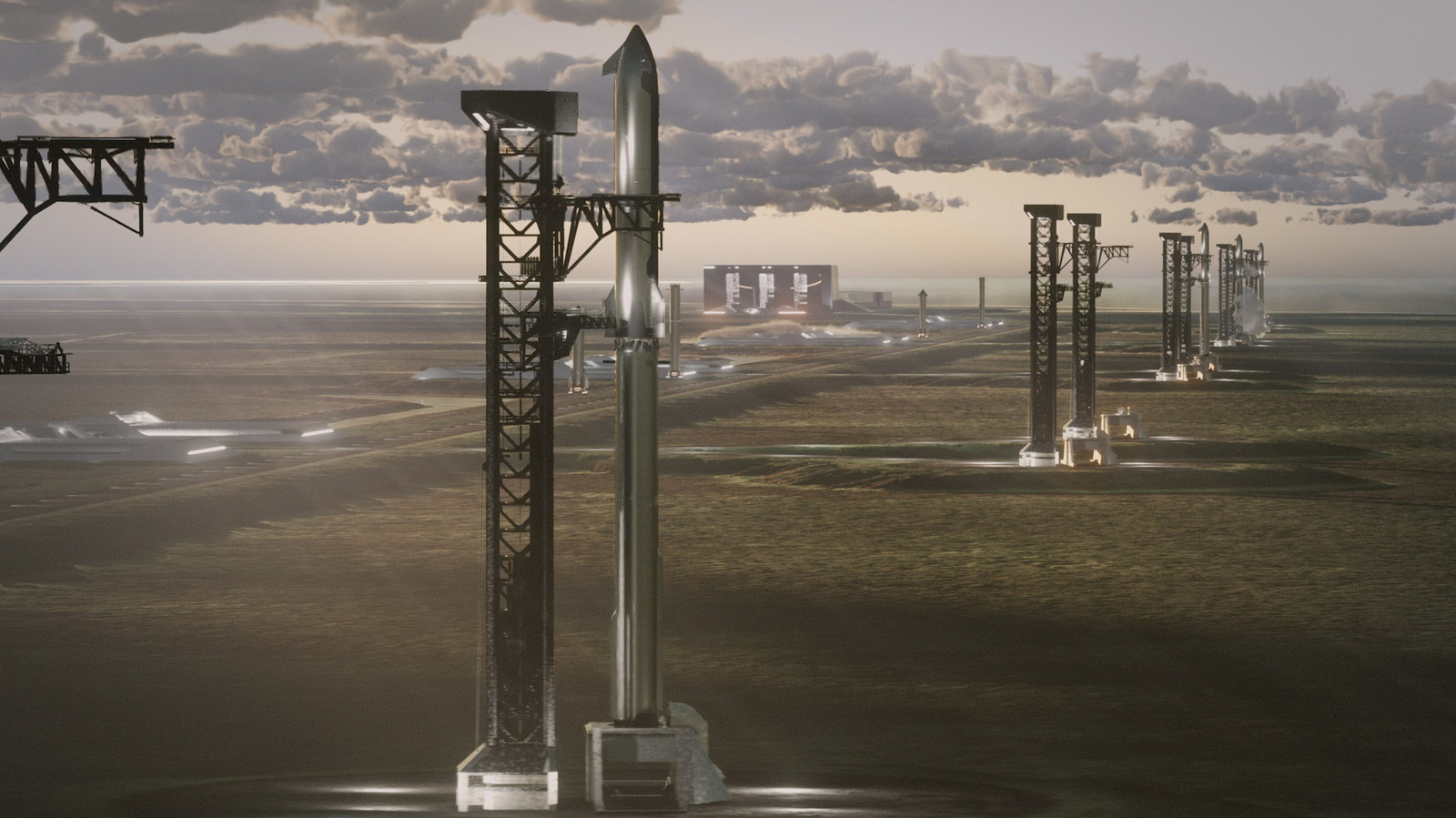
The SpaceX Louisiana launch site marks the most ambitious infrastructure commitment the rocket company has ever made. Elon Musk’s firm confirmed this week that it will build its largest spaceport to date in the southern US state, at a projected cost of around 100 billion dollars, or roughly 73 billion pounds.
The project carries the name Starbase, Louisiana. Groundbreaking is scheduled for next year, and the finished complex will sprawl across roughly 125,000 acres, equivalent to about 50,585 hectares. That footprint dwarfs anything SpaceX currently operates and pushes the company well beyond its established bases in Texas and Florida.
A Site Built for Volume, Not Occasion
What separates this facility from a conventional spaceport is the intended cadence. SpaceX has framed the site as capable of supporting thousands of Starship flights annually, with missions heading to Earth orbit, the Moon, Mars, and destinations beyond.
That number is worth sitting with for a moment. Historically, orbital launches have been rare, carefully choreographed events. Building infrastructure designed around thousands of departures a year reflects a fundamentally different philosophy, one closer to how an airport operates than a traditional rocket range.
The first Starship launch from Louisiana is targeted for 2029, giving the company several years to construct pads, propellant infrastructure, manufacturing capacity, and the logistics network required to sustain that pace.
What It Means for the Region
The economic pitch has been aggressive. SpaceX expects the facility to create more than 3,000 direct positions. Louisiana Economic Development, the state agency involved, projects an additional 8,100 or so indirect jobs generated across the surrounding economy.
The wage figures explain much of the enthusiasm. According to the agency, average pay at the site will run about 192 percent above the current regional average. In a part of the country where high-skill technical employment has been scarce, that gap is transformative rather than incremental.
The agency describes the development as a historic opportunity to position Louisiana as a global centre for next-generation aerospace, with the physical capacity and infrastructure needed to raise launch frequency dramatically and widen access to space.
Two Places Named Starbase
The naming will inevitably cause some confusion. SpaceX already has a Starbase, located at the southern tip of Texas.
In 2025, residents living in a stretch of Cameron County, home to the company’s testing and development operations, voted to incorporate that land as an official city called Starbase. The Louisiana facility will now share the name, effectively turning Starbase into a brand for SpaceX territory rather than a single location.
The Backdrop: A Company Newly Answerable to Shareholders
The timing of this announcement is significant. In June, SpaceX shares began trading on the Nasdaq in what became the largest stock market debut ever recorded anywhere in the world.
Going public changed the company’s situation considerably. Ambitions that once needed only Musk’s conviction and private capital now face quarterly scrutiny from investors who expect a credible path to profit.
That pressure is already visible in the share price. The stock has fallen more than 30 percent from the peak it reached shortly after listing, though it remains above the 135 dollar offer price. Investors appear enthusiastic about the long-term vision while remaining uncertain about the cost of getting there.
Announcing a 100 billion dollar construction programme against that backdrop is a bold move. It signals confidence, but it also raises the stakes on execution.
The Wider Musk Machine
The Louisiana site is one piece of a much larger set of interlocking ambitions. Musk has outlined plans for SpaceX that stretch well past launching cargo and satellites, including reaching Mars, developing artificial intelligence systems, and eventually placing data centres in orbit.
In August, SpaceX and Tesla jointly announced a 16.8 billion dollar semiconductor manufacturing complex in Texas known as the Terafab. The facility is intended to supply the enormous computing capacity both companies expect to need as they push further into AI and robotics over the coming years.
Viewed together, the strategy becomes clearer. Rockets, chips, AI models, and orbital infrastructure are being treated as components of a single system rather than separate businesses. Louisiana supplies the launch capacity. Terafab supplies the silicon.
Why 2029 Matters
The gap between now and the first Louisiana launch gives SpaceX time, but it also creates a long window of spending without revenue from the site. Investors will be watching how much capital flows into the project each year and whether the timeline holds.
Large aerospace construction projects have a well-documented habit of slipping. SpaceX has generally moved faster than the industry norm, but a complex of this scale involves environmental review, workforce recruitment, supply chain development, and regulatory coordination that no amount of engineering speed can fully compress.
The Bigger Picture
If the facility performs as described, it would fundamentally alter the economics of reaching orbit. Frequent, routine launches from a purpose-built high-volume site could lower costs in a way that opens space to customers currently priced out entirely.
If it underdelivers, it becomes an expensive monument to optimism at a moment when the company can least afford one.
Either way, Louisiana has just been placed at the centre of a story about where humanity goes next, and thousands of jobs in the region now depend on how that story unfolds.
Author