





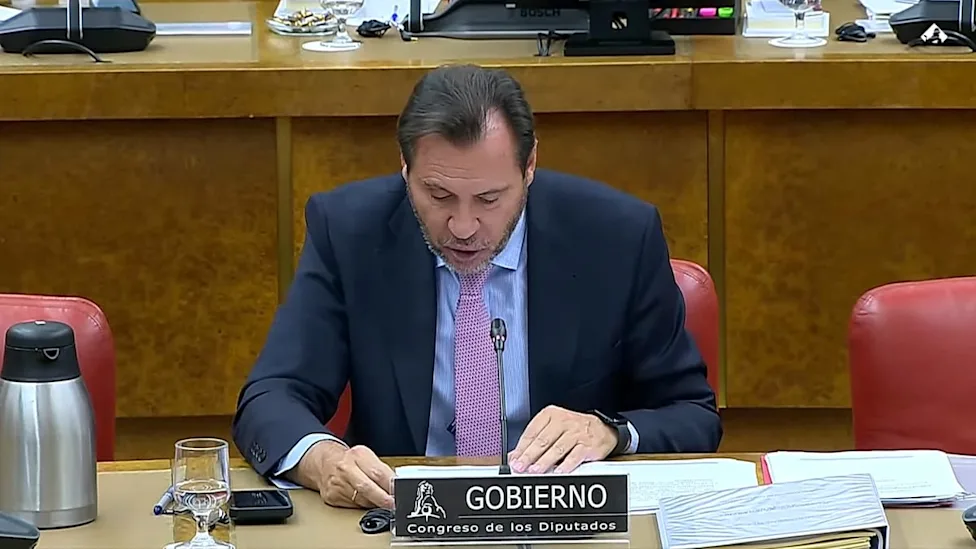
Óscar Puente resignation as Spain’s transport minister came on Tuesday evening, six days after a high-speed train slammed into the back of a stationary service near the town of Urda, killing at least 69 people and injuring dozens more. Puente announced his decision in Congress at the close of a gruelling session in which he had presented new safety measures and faced intense questioning from opposition lawmakers.
A Second Disaster in Under a Year
In explaining his departure, Puente said a transport minister in a country like Spain could not stay in office after two accidents of such gravity within a single year. He was referring to a crash in January on the same line that claimed 46 lives. Taken together, the two disasters have left more than 100 people dead and shaken public confidence in a rail network that Spain has long held up as a model of modern infrastructure.
Last week’s collision ranks among the worst in modern European rail history and is Spain’s deadliest since 2013.
Stepping Away From Politics Entirely
Puente went further than simply leaving the ministry. He announced that he was also withdrawing his name from the candidate lists for the early general election scheduled for November 29, removing himself from frontline politics altogether. He framed the decision as a matter of political dignity.
The announcement caught many by surprise. Only days earlier, Puente had indicated he intended to remain in his post, and his sudden reversal suggests the pressure had become untenable.
Mounting Pressure From All Sides
Calls for Puente’s resignation began almost immediately after the October 28 crash. The conservative People’s Party and the far-right Vox led the demands, but they were joined by some of the government’s own allies. Critics argued that the minister bore responsibility for a high-speed system that many Spaniards now consider unsafe.
Even Prime Minister Pedro Sánchez acknowledged that the credibility of the network was “broken,” an admission that underscored the depth of the crisis.
Puente also drew criticism for appearing to attribute the accident to human error, which opponents characterised as an attempt to deflect attention from systemic failures under his watch.
The Prime Minister’s Response
Sánchez praised his departing minister, saying Puente had confronted the situation, offered answers and solutions, and then stepped aside. He described the resignation as an act of dignity taken voluntarily and out of respect for the victims.
The warm words could not disguise the political damage. Puente and Sánchez had faced an unenviable choice: refusing to resign risked appearing callous in the face of mass casualties, while stepping down could be read as an admission of fault by the government. Puente chose the latter.
An Election Transformed
The timing could hardly be worse for the Socialist-led government. With the general election less than four weeks away, the disaster and its fallout have handed the opposition a powerful argument. Many analysts believe the crash makes it virtually impossible for Sánchez to overcome unfavourable polling and secure another term.
What Went Wrong
The accident involved a Renfe train operated by the state, carrying 397 passengers, and a stationary Iryo service run by a private operator with 147 people aboard. A reported computer failure in the automatic signalling system had forced all trains on the affected section to stop.
Leaked audio recordings published by Spanish media shortly after the crash have raised serious questions about decisions made in the minutes before the collision. The recordings capture exchanges between Madrid’s control centre and the drivers of both trains.
In one, a controller instructs the Renfe driver, who had been experiencing technical difficulties, to continue the journey under the Lateral Signalling Block, a backup procedure used when automatic systems fail, and to proceed at normal speed. The driver queries the instruction, asking whether normal speed is correct, and the controller confirms it.
In another recording, the Iryo driver reports that communication with the train control system has been lost and that the train is stopped in front of the entry signal at Urda. The driver is told to resume the journey. A subsequent recording captures the Iryo driver contacting the control centre again to say the train cannot be started because the security system will not release control, and that it therefore remains stationary at the signal.
That final exchange suggests controllers had been informed the Iryo train was still stopped on the track, roughly 25 kilometres ahead of the approaching Renfe service, before the collision occurred. Iryo has stated that its carriages were struck from behind.
Questions for Investigators
The recordings point to a possible breakdown in coordination at the control centre during a period when the normal safety systems were offline. Investigators will need to establish why the Renfe train was cleared to proceed at full speed when a stationary train was known to be on the line, and whether the backup procedures were followed correctly.
The role of the signalling failure itself, and whether it was related to the January accident on the same line, will also be central to the inquiry.
Restoring Faith in the Railways
Puente’s successor inherits a system in which public trust has collapsed. Spain’s high-speed network is extensive and has been a source of national pride, but two mass-casualty accidents in less than a year have exposed vulnerabilities that no amount of political reassurance can paper over.
The new minister will need to demonstrate rapid, concrete improvements in safety oversight, control centre procedures and the reliability of signalling systems. Whether that is achievable before the November election, and whether voters will give the government credit for trying, remains to be seen.
Author