Swiss glaciers ice loss has reached a near-record level this year, and scientists are calling the numbers deeply troubling. Fresh figures show that blistering summer heatwaves have stripped the Alps of an enormous amount of ice in just twelve months, leaving experts worried about what comes next.
A Year of Extraordinary Melting
Over the past year, Switzerland has lost more than 5 percent of its remaining glacier ice. Researchers estimate the figure at around 5.5 percent, which they describe as extraordinary.
To put that in perspective, glaciologists working in the Alps once treated a 2 percent annual loss as extreme. This year has blown well past that mark.
Experts say the shrinking itself is no shock, given how quickly the planet is warming. The main driver is the burning of fossil fuels. What stands out is the speed. Dr Matthias Huss, who leads Glacier Monitoring Switzerland, the group behind the report, put it bluntly: it is simply disastrous.
Why This Summer Hit So Hard
The trouble began before summer even arrived. A mild winter left the glaciers with less snow than usual. Then early, intense heatwaves in May and June swept away much of what little cover there was.
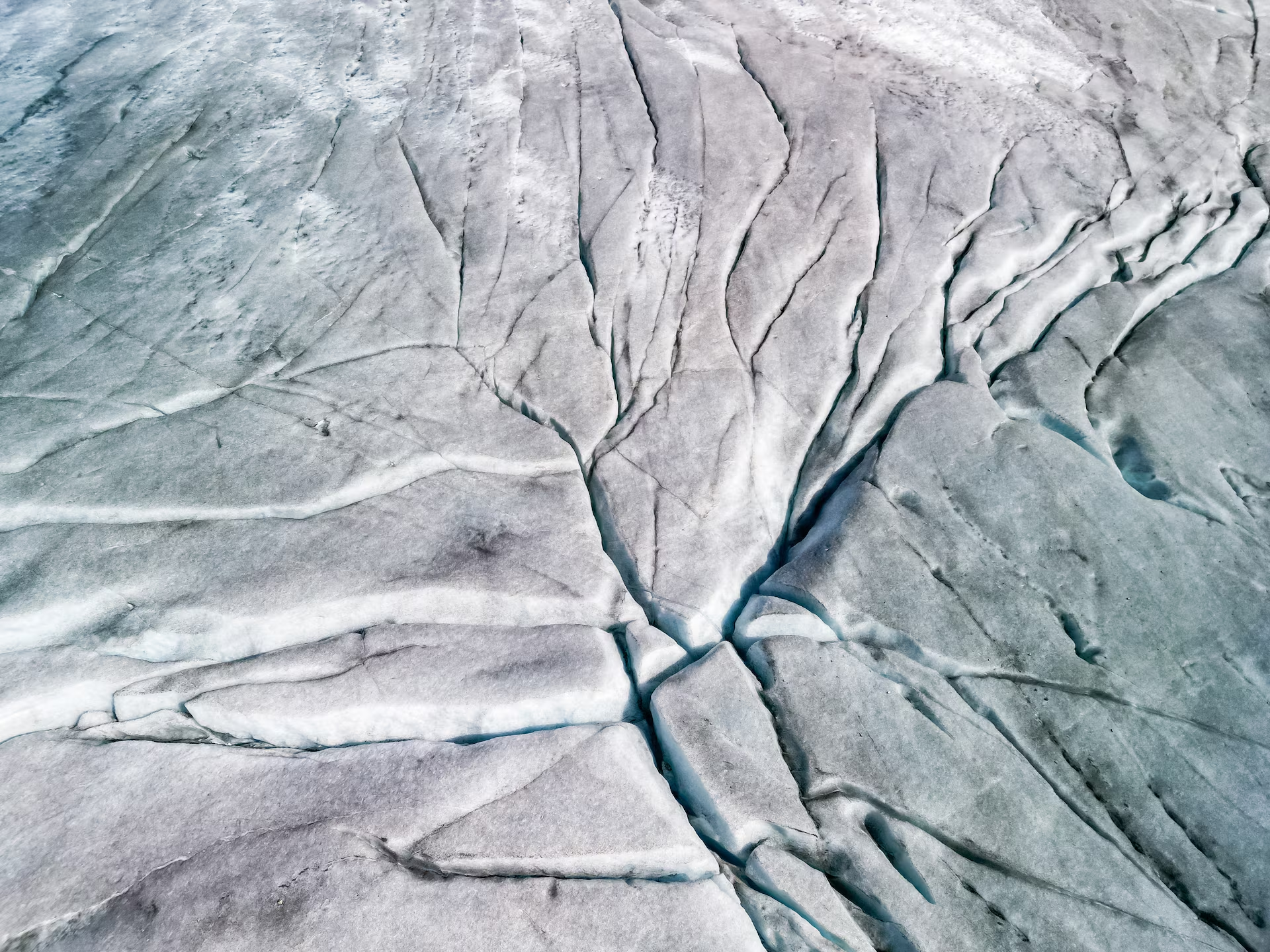
Once the snow vanished, bare ice was exposed. Dark ice reflects less sunlight than fresh snow, so it soaks up more of the Sun’s energy. That created a vicious cycle, with each new heatwave melting the glaciers faster than the last.
Dr Fabien Maussion, a glaciologist at the University of Bristol who was not part of the Swiss study, said he would never have imagined such rapid losses a decade ago. He called the summer extremely distressing, yet added that climate scientists saw it coming.
The Highest Peaks Are Not Safe Either
Perhaps the most worrying discovery came from the loftiest measurement sites. These spots are the coldest, and glaciers there are normally buried under thick snow.
This year, even at 3,500 metres above sea level, researchers found no snow left by the end of summer. At some glaciers, the highest points lost around four metres of ice, in places that should have been protected by several metres of winter snow.
This matters because snow acts like food for a glacier. Under stable conditions, some of it compacts into new ice over time. Without surviving snow, nothing replaces what melts lower down. The glacier starves, shrinks, and eventually disappears.
Maussion offered a simple image: it is as if an ice cube has been taken out of the fridge and is melting before our eyes. Some glaciers, such as Plattalva in eastern Switzerland, have already vanished completely.
What It Means for Water Supplies
Glacier meltwater is a lifeline during hot, dry spells. It supports farming, powers hydroelectric plants, and even helps keep river transport moving.
Between July and September, Swiss glaciers released an estimated 2.2 trillion litres of meltwater. That helped soften water shortages this summer, but there is a catch. It also drained the stored supply at a rapid rate.
Huss explained that the water flowing off during heatwaves is essentially old water, locked into the ice over decades or centuries. It is helping now, but it cannot last. As glaciers get smaller, they will not be able to top up rivers the way they once did, and that reserve may not be there for the next heatwave.
Rising Risks in the Mountains
The consequences go beyond water. When glaciers thin and frozen ground thaws, mountain slopes can become less stable. That raises the chance of landslides in some areas, and in extreme cases these can trigger flash floods.
Nepal saw such an event in August, when a large section of bedrock and glacier ice collapsed. Several factors played a part, but scientists believe long-term glacier thinning and thawing permafrost likely made the risk worse.
Not All Hope Is Lost
Despite the grim news, researchers insist the story is not over. Deep cuts to carbon emissions could still protect a large share of the world’s glacier ice.
This is especially true for the Himalayas and the polar regions, where most of the planet’s ice is stored. Huss stressed that real progress is still possible there by protecting the climate.
Saving or stabilising those vast ice masses would also help limit sea level rise, which threatens billions of people living along coastlines.
The Bottom Line
The past year shows how fast things can change. Alpine glaciers are now struggling in a climate that is simply too warm for many of them to survive. Still, the choices made on emissions in the coming years will decide how much ice the world keeps, and how many communities will be affected.
Author