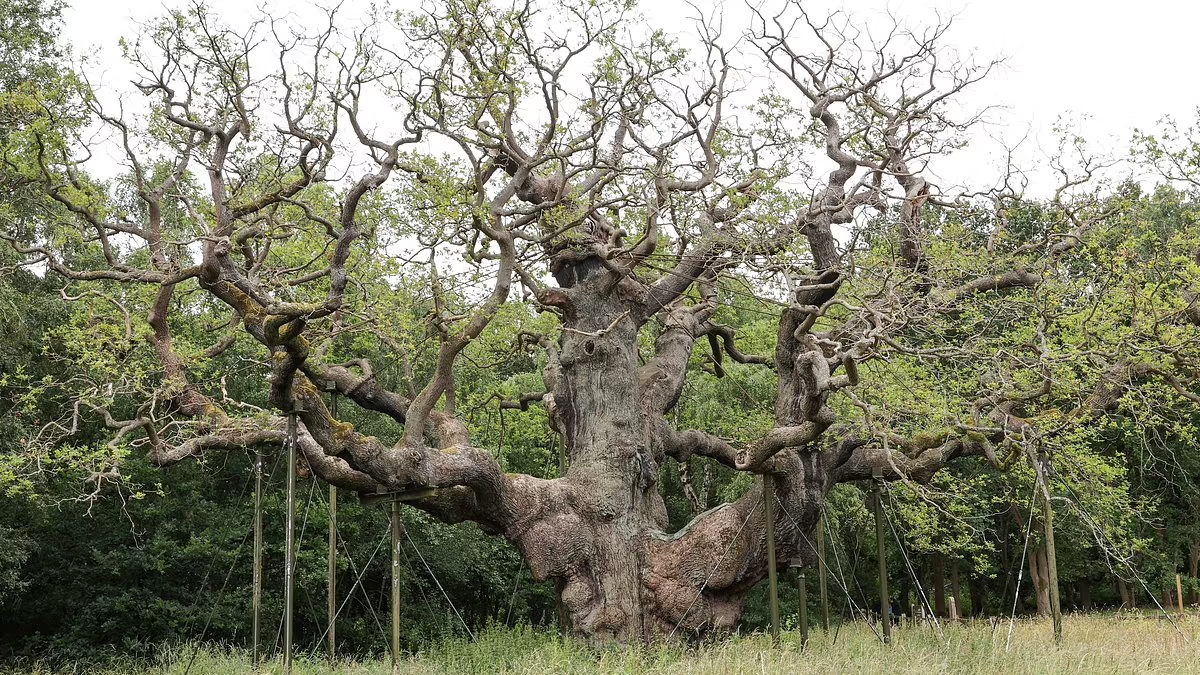
The Major Oak Robin Hood tree, one of Britain’s most beloved natural landmarks, has died after standing for an astonishing 1,200 years in Sherwood Forest. The ancient oak, long associated with the legendary outlaw said to have sheltered beneath its sprawling branches, may ultimately have been loved to death by the millions who came to admire it.
The End of an Era
For centuries, the Major Oak stood as a living symbol of English folklore. Now, that chapter has come to a close.
The Royal Society for the Protection of Birds (RSPB) confirmed on Thursday that the tree is believed to have died after it failed to sprout leaves this spring. Located in Nottingham, the oak had endured countless seasons, but this year its branches remained bare, a silent sign that the ancient giant had finally succumbed.
Hollie Drake of the RSPB described the loss as deeply painful, calling the tree’s failure to produce leaves “heart-breaking for everyone.”
A Tree Steeped in Legend
What made the Major Oak so cherished wasn’t just its age or size, but the story woven around it.
According to legend, the tree sheltered Robin Hood, the famed 13th-century outlaw who robbed from the rich to give to the poor. As the tale goes, he and his band took refuge in Sherwood Forest while evading the pursuit of the sheriff of Nottingham.
The oak earned its name much later, after being featured in a 1790 book on oaks written by Major Hayman Rooke. That mention sparked the first wave of admirers who began flocking to the forest to see it for themselves.
Loved to Death
Ironically, the very affection that made the Major Oak famous may have contributed to its demise.
Over the past two centuries, the steady stream of visitors took a quiet but serious toll. The conservation group explained that the footsteps of millions compressed the soil around the tree, making it increasingly difficult for rainwater to reach its roots.
Several factors combined to weaken the ancient oak:
- Soil compaction from centuries of foot traffic
- Interventions like cables and poles used to support its enormous limbs
- Climate change, which brought heat waves and prolonged drought
When tree experts examined it, they discovered a root system that had been effectively strangled and starved, unable to sustain the towering canopy above.
False Alarms Over the Years
This wasn’t the first time the Major Oak’s death had been reported.
The forest itself has faced threats for years, and rumors of the tree’s demise had circulated before, only for the RSPB to confirm each time that it was still clinging to life. This time, however, the outcome is different. The beloved oak is gone.
A Warning for Britain’s Ancient Trees
The death of the Major Oak has drawn attention to a broader and often overlooked crisis facing the country’s oldest trees.
Ed Pyne of the Woodland Trust offered a striking comparison, describing ancient trees like the Major Oak as the “conservation white rhinos of the U.K.” Yet unlike endangered animals, their decline tends to go unnoticed.
He emphasized that protecting these trees is vital to the health of the wider environment, lamenting that most ancient trees vanish quietly, without the recognition or care the Major Oak received. Its high profile, in that sense, made it an exception rather than the rule.
More Than Just Folklore
Sherwood Forest’s significance extends well beyond the Robin Hood legend.
The forest’s mighty oaks have played a tangible role in British history. Sherwood timber helped build the ships of Vice Admiral Horatio Nelson’s Royal Navy in the late 18th and early 19th centuries. The same robust wood was also used in the roof timbers of St. Paul’s Cathedral in London.
The Major Oak, however, was spared the saw. Recognized for its importance, it has been protected by a surrounding fence since the 1970s, allowing it to grow undisturbed in its later years.
A Monument That Will Remain
Even in death, the Major Oak is not destined to disappear.
The RSPB has made clear that the tree will continue to stand at the heart of Sherwood Forest as a natural monument for visitors to come and see. Drake noted that the oak will live on in the legend of Robin Hood while continuing to support the forest’s ecosystem, providing as much value in death as it did in life.
In practical terms, fallen and decaying trees often become havens for insects, fungi, and wildlife, meaning the Major Oak’s contribution to its environment is far from over.
The Bottom Line
The passing of the Major Oak Robin Hood tree marks the end of a remarkable 1,200-year journey, one that intertwined nature, history, and legend. While its death is a genuine loss, it also serves as a powerful reminder of the fragility of Britain’s ancient trees and the quiet threats they face from human pressure and a changing climate.
As it stands silently in Sherwood Forest, the Major Oak will remain a monument to the past, forever linked to the outlaw who, according to legend, once found shelter beneath its branches. Its story may have ended, but its legacy, like the tale of Robin Hood itself, is likely to endure for generations to come.
Author