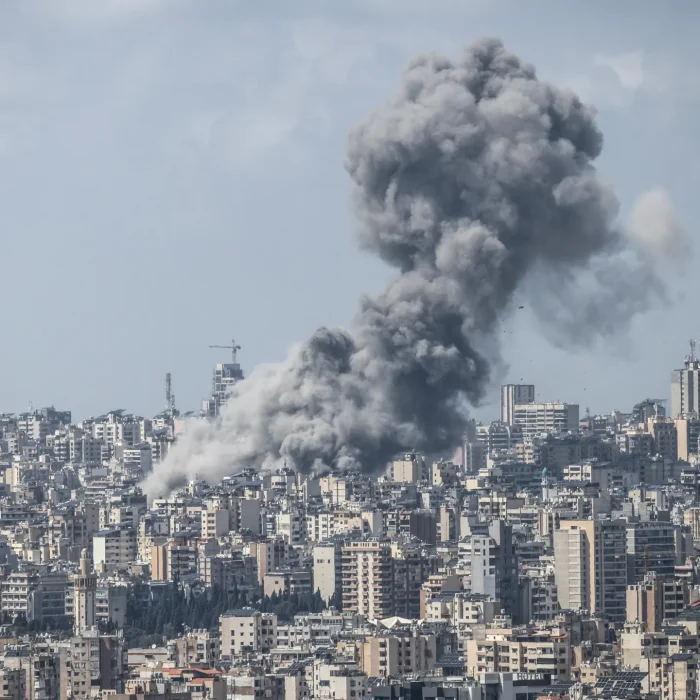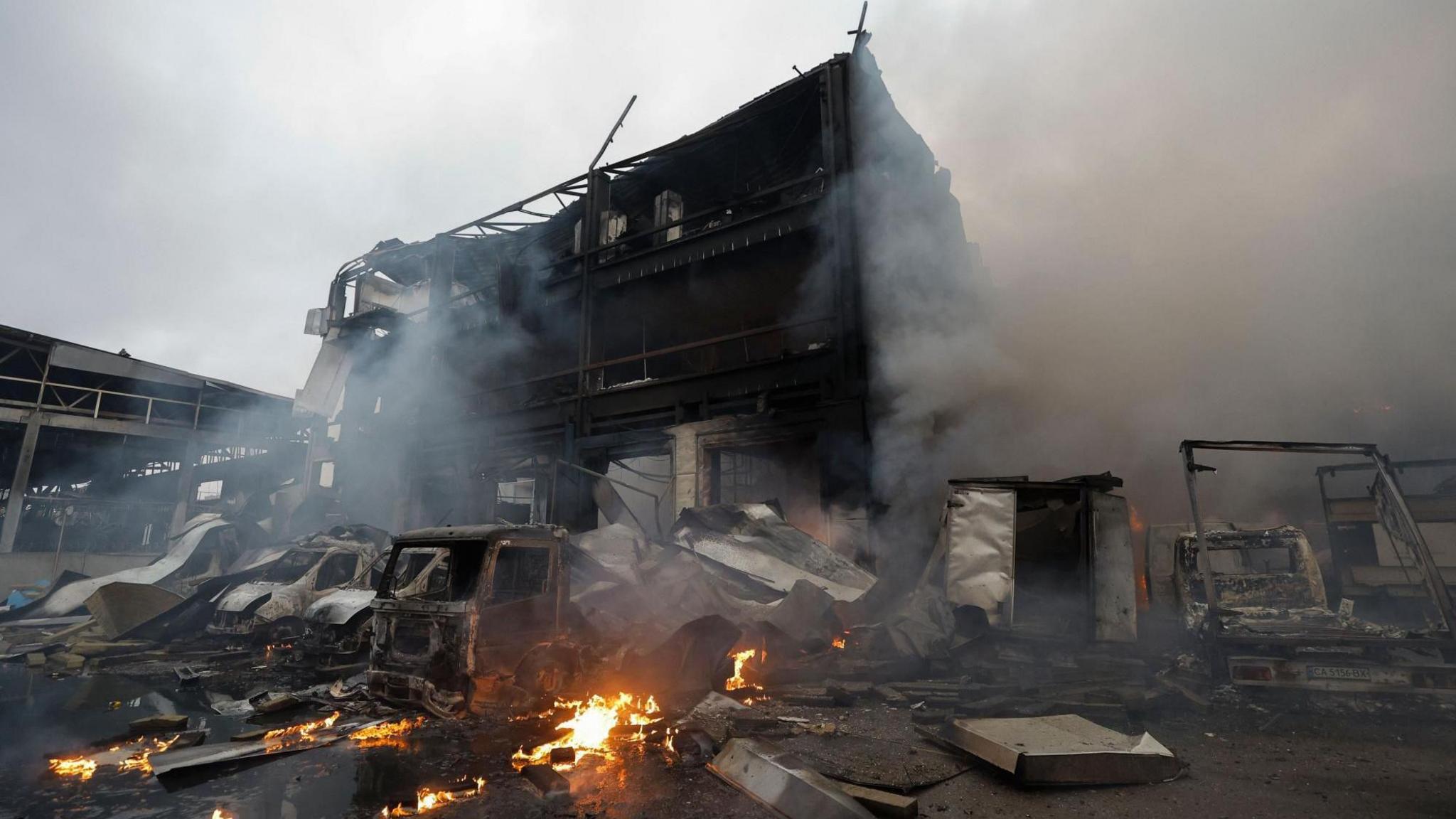
Russian strikes killed three people, one of them a child, in the region surrounding Kyiv on Saturday, as explosions shook the capital and fires broke out across parts of the city.
The attack landed at a moment when Ukraine’s ability to defend its cities is visibly deteriorating, and when Washington has just moved to tighten economic pressure on Moscow.
What Happened
Three separate locations in the Boryspil district, immediately outside Kyiv, were hit, according to regional administration head Tymur Tkachenko. Three additional people were wounded.
Inside the capital, an air raid alert sounded early in the morning, followed by fires in two districts. Residents in central Kyiv described explosions powerful enough to shake nearby buildings.
The Widening Defensive Gap
The strike illustrates a problem Ukrainian officials have been describing with increasing urgency. Russia’s capacity to attack cities is growing while Kyiv’s capacity to stop those attacks shrinks.
The physics of the threat explain part of the difficulty. Russian ballistic missiles travel at several times the speed of sound and descend on such a steep trajectory that defenders frequently have only seconds between detection and impact.
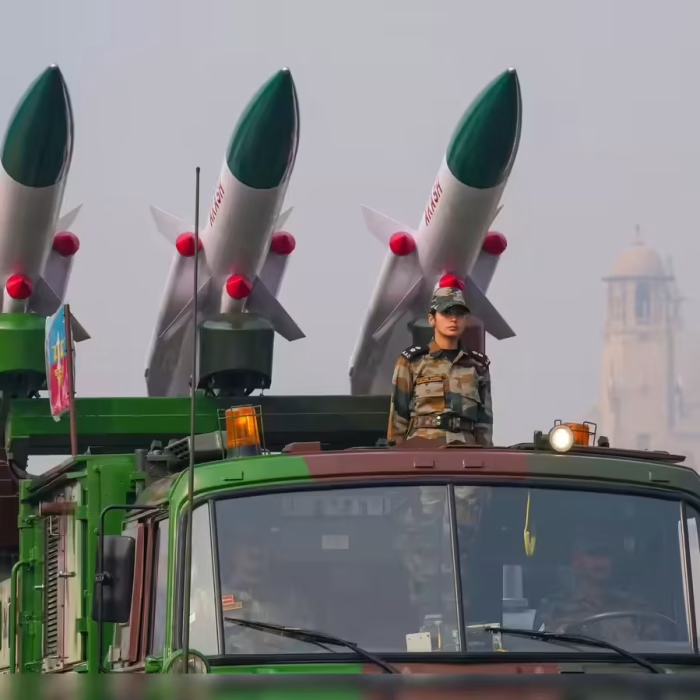
Only one system in Ukraine’s inventory can reliably intercept them: the American-supplied Patriot. Ukrainian officials say they possess nowhere near enough batteries or interceptor missiles to provide meaningful coverage of their urban centres.
Supply Cut by a Different War
President Volodymyr Zelenskyy said earlier this week that Ukraine received roughly one third as many air defence missiles in the first half of this year as it did during the same period in 2025.
He attributed the shortfall to the US and Israeli war on Iran, which has drawn heavily on global stockpiles of interceptors. Air defence munitions cannot be produced quickly, and when demand spikes in one theatre, supply contracts everywhere else.
The numbers Ukrainian advisers cite make the arithmetic stark:
- Russia can currently launch approximately 100 ballistic missiles per month
- Ukrainian interceptor deliveries have fallen to a third of last year’s pace
- Officials expect Moscow to escalate the campaign once winter arrives
That last point carries particular weight. Previous winters have seen concentrated strikes on energy infrastructure, timed to maximise civilian hardship during freezing months.
Ukraine’s Own Campaign
Kyiv has not been passive. Ukrainian forces have repeatedly struck targets well inside Russian territory, including two oil refineries within the past 24 hours.
Long-range drones also hit a warehouse belonging to the online retailer Wildberries in Ekaterinburg. Ukrainian officials have framed attacks on such facilities as part of a deliberate effort against logistics infrastructure they say supports Russian military operations.
Separately, the governor of Russian-occupied Crimea reported Friday that a Ukrainian drone struck an apartment building, killing two people.
The Sanctions Vote in Washington
The strikes came a day after the US Senate approved a substantial new sanctions package aimed at Russian energy revenue.
The bill passed 86 to 11 and carries the name of the late Senator Lindsey Graham, who had long pushed for harder measures against Moscow. Its central provision imposes tariffs of up to 100 percent on countries continuing to purchase Russian oil and gas.
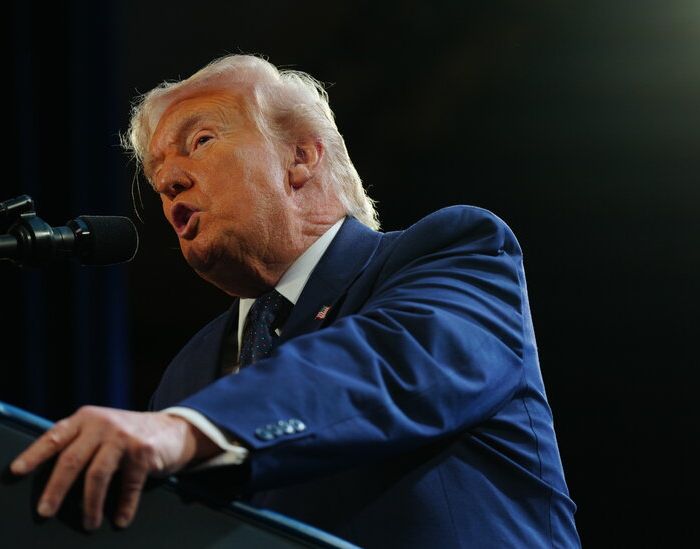
The measure is not yet law. It must clear the House of Representatives and receive President Donald Trump’s signature before taking effect.
Zelenskyy welcomed the vote. European Commission President Ursula von der Leyen said the legislation would help drain Russia’s capacity to sustain a war she argued cannot be won.
Two Kinds of Pressure
The juxtaposition of Saturday’s casualties with Friday’s Senate vote captures the central tension in Western support for Ukraine.
Sanctions operate slowly. Their theory is that constricting energy revenue eventually limits what Moscow can spend on weapons production, which in turn reduces the volume of missiles reaching Ukrainian cities. That chain of effects unfolds over months or years.
Interceptors operate immediately. A Patriot battery with sufficient munitions stops a missile tonight.
Ukraine has been asking for both, but the requests are not interchangeable. A sanctions bill passed in Washington does not put an interceptor over Boryspil, and the shortage Zelenskyy described this week is a supply problem rather than a political one.
What Comes Next
The immediate question is whether interceptor deliveries can recover before winter, when Ukrainian officials expect the bombardment to intensify.
That depends heavily on factors outside Kyiv’s control, including production rates and how long competing demands elsewhere continue drawing down stockpiles.
In the meantime, the pattern established Saturday is likely to repeat: missiles that arrive faster than defences can respond, casualties in districts surrounding the capital, and a gap that widens each month it goes unaddressed.
Author
-
Lucienne Albrecht is Luxe Chronicle’s wealth and lifestyle editor, celebrated for her elegant perspective on finance, legacy, and global luxury culture. With a flair for blending sophistication with insight, she brings a distinctly feminine voice to the world of high society and wealth.