The Vienna museum diamond necklace theft has triggered an international manhunt for two men who walked into an exhibition as paying visitors and left with a piece of royal history worth more than $4 million.
They did not wear masks. Security cameras captured their faces clearly, and Austrian police have released the images publicly while appealing for anyone with information to come forward.
How It Happened
The theft took place Thursday afternoon at the Vienna Museum of Applied Arts, known as MAK.
Police say the two suspects purchased tickets for the exhibition, entered like any other visitors, then smashed a glass display case and seized the platinum and diamond necklace inside.
One of the men is believed to have been carrying what officers describe as a genuine firearm.
After taking the necklace, the pair fled south toward the Vienna Stadtpark, the large public park just below the museum.
The Necklace Itself
The stolen piece carries more than monetary value.
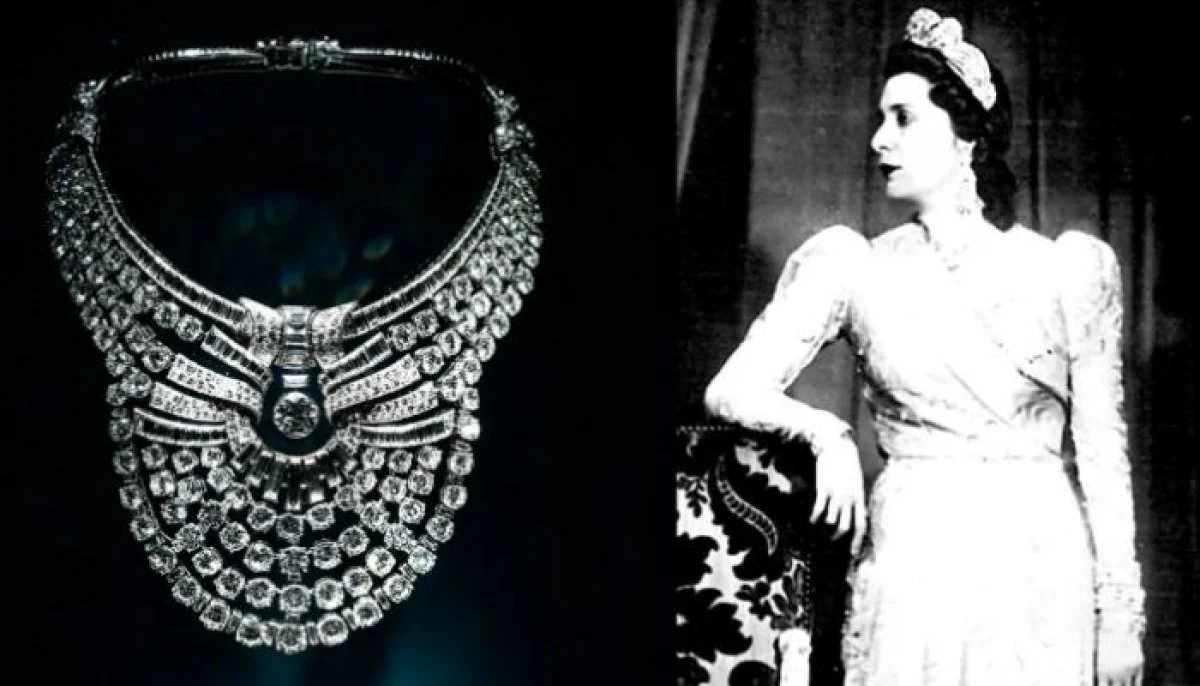
It was created by Van Cleef & Arpels for the Egyptian royal family and worn by Queen Nazli in 1939 at the wedding of her daughter Fawzia to Mohammad Reza Pahlavi, who would later become Shah of Iran.
The jeweller describes it as a triumph of white jewellery. Its diamonds — more than 600 of them — total over 200 carats.
When the necklace last came to auction a decade ago, estimates placed its value between $3.6 million and $4.6 million.
It formed part of an exhibition dedicated to Van Cleef & Arpels, scheduled to run at MAK through September.
The Museum Responds
MAK general director Lilli Hollein said the loss of such a valuable piece had hit the institution hard.
She emphasized that MAK had built a security plan specifically for this exhibition in cooperation with Van Cleef & Arpels, stating that security concerns were taken seriously and every measure was carefully prepared.
Hollein said staff remained calm during what she called an armed incident and followed established procedures. Nobody was injured.
She also noted that the museum had conducted a thorough review of its security arrangements before the exhibition opened, specifically in response to incidents at major museums over recent years.
The exhibition has since reopened.
A Pattern Across Europe
The Vienna theft is not an isolated event. It joins a sequence of high-profile museum robberies that has unsettled cultural institutions across the continent.
On the same Thursday, one of the most significant collections of prehistoric jewellery and artefacts was taken from a Spanish museum.
Earlier this month, four Renaissance paintings disappeared from a museum in Sicily. Earlier in the year, works by Renoir, Cézanne and Matisse worth millions of euros were stolen from a museum in Parma.
All of this follows the audacious daylight raid on the Louvre in Paris last October, when a masked group made off with priceless jewels.
What Europol Sees
The pattern has attracted attention from European law enforcement, and the assessment is concerning.
Europol has stated that museum thefts are growing increasingly aggressive, with a shift toward violent and forceful methods. The agency suggested this change may point to the involvement of new criminal networks entering the field.
That characterization marks a departure from the traditional image of art crime as quiet, technical, and carefully planned around avoiding confrontation. Smashing cases in daylight while armed represents a different operating model entirely.
The Security Dilemma
MAK’s situation illustrates a problem facing museums everywhere.
Institutions exist to display objects publicly. Every protective measure — thicker glass, greater distance, fewer viewing angles — reduces the experience the museum is built to provide.
Loaned pieces from luxury houses arrive with negotiated security arrangements, as Hollein described. But those arrangements are designed around a set of assumed threats, and the current wave of robberies appears to be operating outside those assumptions.
The unmasked faces in this case are particularly striking. It suggests either confidence about escaping identification, indifference to it, or a plan that involves leaving the country quickly.
The Investigation
Police dog units have been deployed across Vienna and into the province of Lower Austria.
Forensic specialists are examining physical evidence from the scene alongside CCTV footage from the museum and surrounding area.
The clear facial images give investigators an advantage that many art theft cases lack. Whether that translates into arrests depends largely on how fast the suspects moved after leaving the park.
What Happens to Stolen Jewellery
The uncomfortable reality for recovery efforts is that jewellery is not a painting.
A famous canvas is unsellable through legitimate channels and difficult to move even illegitimately, which is why stolen art sometimes resurfaces years later intact.
A necklace can be dismantled. Stones can be recut, remounted, and dispersed into ordinary commerce where they become effectively untraceable. Platinum can be melted.
That possibility is why the first days of an investigation like this matter more than anything that follows, and why the historical significance of the Queen Nazli necklace may not survive its theft.
Author