Iran attacks on UAE have set off a wave of international outrage, with leaders across the Gulf, Europe, and North America rushing to condemn the strikes and call for urgent de-escalation. The new round of violence is being widely described as a dangerous turning point in an already fragile situation, with fears growing that the region is sliding back toward open conflict.
What Happened in the UAE
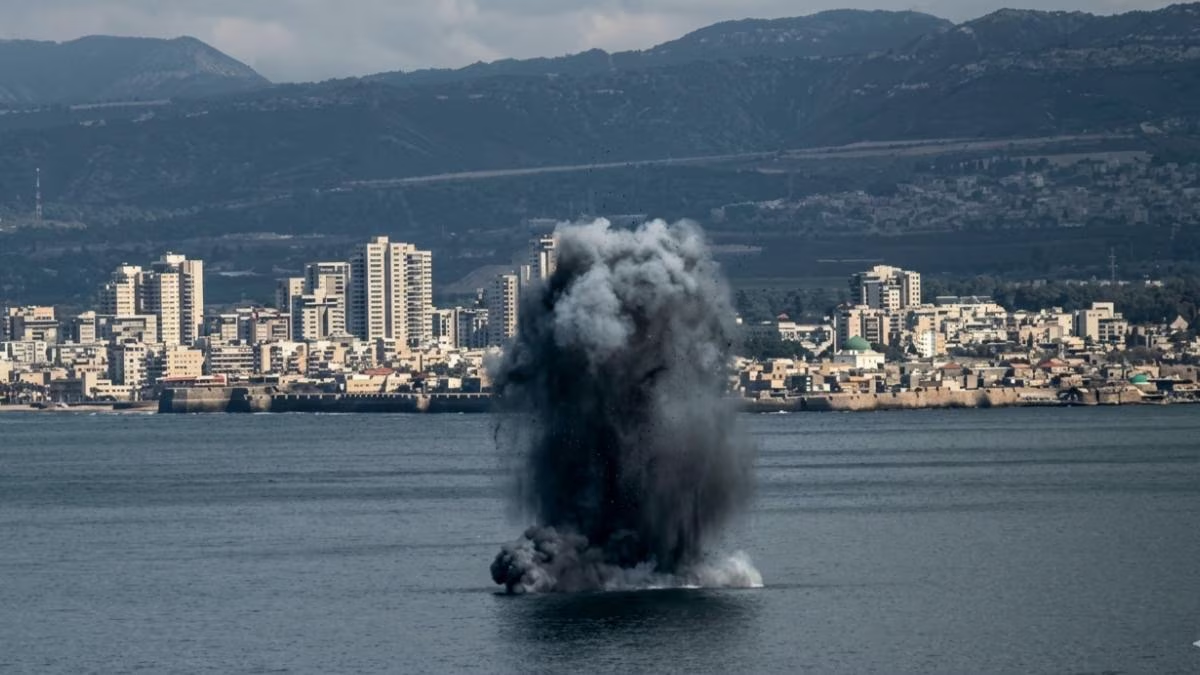
Tensions in the Gulf flared once again on Monday after the United Arab Emirates said it had intercepted 15 missiles and four drones fired from Iran. UAE officials called the assault “treacherous” and warned that the country reserves the right to respond as it sees fit.
This is the first time the UAE has come under direct attack since Iran and the United States agreed to a ceasefire on April 8. The strikes have effectively shattered the cautious calm that had held since then.
According to UAE authorities:
- One drone attack triggered a large fire at the Fujairah Petroleum Industries Zone
- Three Indian nationals were wounded in the incident
- An empty crude oil tanker linked to the UAE’s state oil company was struck while attempting to pass through the Strait of Hormuz
Iran has denied the accusations. While there has been no formal government statement, Iranian state media blamed what it called “US military adventurism” for the situation, signalling the political narrative Tehran is pushing internally.
Saudi Arabia: Strong Solidarity With the UAE
The Saudi Ministry of Foreign Affairs offered some of the most forceful language in response. The kingdom condemned the targeting of civilian and economic facilities in the UAE in the strongest terms, including the strike on the Emirati oil vessel.
Riyadh affirmed that it stands fully with its Gulf neighbor and called on Iran to halt the attacks immediately. The statement reinforced the long-standing security partnership between Saudi Arabia and the UAE, two of the most influential nations in the region.
Qatar: A Blatant Violation of Sovereignty
Qatar also weighed in quickly, strongly condemning what it described as renewed Iranian aggression. Qatari officials said the strikes amount to a clear violation of UAE sovereignty and a serious threat to the wider stability of the region.
Coming from Qatar, which has often played a mediator role in regional disputes, the firm response signals just how seriously Gulf states are taking the situation.
Kuwait: A Threat to Maritime Navigation
Kuwait’s Ministry of Foreign Affairs called the attacks “reprehensible aggression,” highlighting the danger they pose to maritime traffic in the Strait of Hormuz. Officials warned that targeting an oil tanker and using drones in such a critical waterway breaches the principle of freedom of navigation.
Kuwait stressed that global supply lines are at risk and pledged full support to the UAE in whatever measures it chooses to take. The country also urged an immediate end to the violence.
Bahrain: A Call for UN Action
Bahrain went a step further, labeling the incidents “Iranian terrorist attacks” and calling them a dangerous escalation with broad implications for regional stability. The Bahraini foreign ministry urged the United Nations Security Council to adopt firm and deterrent measures against repeated Iranian attacks.
This kind of pointed appeal to global institutions reflects how Gulf states are looking beyond regional responses to seek wider international pressure on Tehran.
Jordan Joins the Chorus
Jordan’s Foreign Minister Ayman Safadi held a direct conversation with UAE Foreign Minister Abdullah bin Zayed Al Nahyan to express full solidarity. Jordan described the strikes as a serious violation of international law and the UN Charter, posing a clear threat to the UAE’s security and the safety of its citizens and residents.
Germany: Tehran Must Return to Talks
European leaders quickly added their voices. German Chancellor Friedrich Merz issued a strong condemnation and demanded that Iran return to the negotiating table.
Merz emphasized several priorities:
- Iran must end its blockade of the Strait of Hormuz
- Iran must not acquire a nuclear weapon
- Iran must stop threatening or attacking partner nations
His statement reflected growing impatience in Europe over what is seen as Tehran’s repeated willingness to destabilize the region.
Canada Stands With the UAE
Canadian Prime Minister Mark Carney’s office made it clear that Canada strongly condemns the unprovoked missile and drone strikes. Carney called for diplomacy and de-escalation while commending efforts to protect civilians and infrastructure.
Canada’s position aligns with broader Western support for the UAE and the call for sustained negotiations to bring stability back to the Gulf.
France: Unjustified and Unacceptable
French President Emmanuel Macron added his voice, calling Iran’s strikes “unjustified and unacceptable.” He reaffirmed France’s commitment to standing with its allies in the Gulf and supporting the defense of their territory.
Macron’s statement reinforces France’s long-standing security ties with the UAE and underscores the seriousness with which European powers view the latest developments.
United Kingdom: A Call for Diplomatic Engagement
UK Prime Minister Keir Starmer condemned the strikes and pressed Iran to engage meaningfully in negotiations. He emphasized the need for the ceasefire in the Middle East to hold and for a long-term diplomatic settlement to be reached.
Starmer’s remarks balance solidarity with the UAE and a clear push for diplomacy, reflecting Britain’s interest in stabilizing the region without further military escalation.
The Gulf Cooperation Council Speaks Out
The Gulf Cooperation Council, which represents the region’s major Arab states, denounced the attack on the Emirati oil tanker. Secretary-General Jassim Mohammed Al Badawi voiced full support for any actions the UAE may take to defend its sovereignty.
Al Badawi also described the continued attacks on shipping as piracy and an extortion of the security of sea lanes, signalling that the GCC views these strikes as a direct threat to global commerce.
The European Union: A Threat to Europe Too
EU Commissioner Ursula von der Leyen described the strikes as unacceptable and a clear violation of international law. She extended her full solidarity to UAE President Sheikh Mohamed bin Zayed Al Nahyan and warned that instability in the Gulf has direct consequences for Europe.
Von der Leyen reaffirmed that the EU will continue working with partners on de-escalation and seeking a diplomatic resolution to end what she called the Iranian regime’s brutal actions, both abroad and at home.
Why This Moment Feels Different
The collective international response makes one thing clear. The Iran attacks on UAE have shifted the global mood from cautious hope around the ceasefire to growing concern about a wider conflict. The widespread condemnation is not just diplomatic noise. It signals that countries from the Gulf to Europe to North America believe the region is entering a more volatile phase that requires immediate attention.
If the situation continues to escalate, the impact could spread far beyond the Gulf, affecting global oil markets, shipping routes, diplomatic alignments, and even broader security arrangements involving NATO and key allies.
For now, the world is watching carefully, hoping that Iran returns to the negotiating table and that the fragile ceasefire can somehow be restored before the region tips fully into another major confrontation.
Author