Russia troop mobilization Ukraine concerns are mounting after President Volodymyr Zelensky warned that Moscow is likely to call up another 300,000 soldiers later this year, as it works to complete its long-sought capture of eastern Ukraine.
In wide-ranging remarks released Sunday, Zelensky predicted Russia would end the year controlling roughly the same amount of Ukrainian territory it held at the start, despite what he described as staggering personnel losses.
The Scale of Russian Losses
Zelensky claimed Russia has lost 267,000 personnel since the beginning of the year, including approximately 155,000 killed. While the figure cannot be independently verified, Zelensky noted it aligns with estimates from Western officials tracking the conflict.
Why a New Mobilization Looms
Russian parliamentary elections are scheduled for next month, and speculation has grown around whether a fresh mobilization wave will follow. Russia’s 2022 draft triggered widespread protests and prompted a significant exodus of young men seeking to avoid conscription, a precedent that likely shapes how and when Moscow times any new call-up.
Zelensky expressed confidence that mobilization would follow the elections, though he predicted it would largely bypass major cities, a pattern consistent with how Russia managed the political fallout from its previous draft.
He suggested Putin would deploy the newly mobilized troops based on conditions in eastern Ukraine, and said Russian generals had been instructed to complete the occupation of Donetsk by year’s end.
Zelensky was blunt about his expectations for that effort, predicting that Ukrainian forces would destroy the newly mobilized troops sent into that fight.
The Situation in Donetsk
Ukrainian forces currently hold roughly 20% of Donetsk, including a cluster of strategically important industrial towns such as Sloviansk and Kramatorsk.
Zelensky argued that a complete Russian capture of the Donetsk region remains unachievable under current conditions. He also raised the possibility that Russia might attempt incursions into the northern Ukrainian regions of Kharkiv and Sumy, noting that while Russian troops are not yet positioned in the bordering Bryansk region, military equipment has been observed accumulating along the border.
A Shrinking Air Defense Pipeline
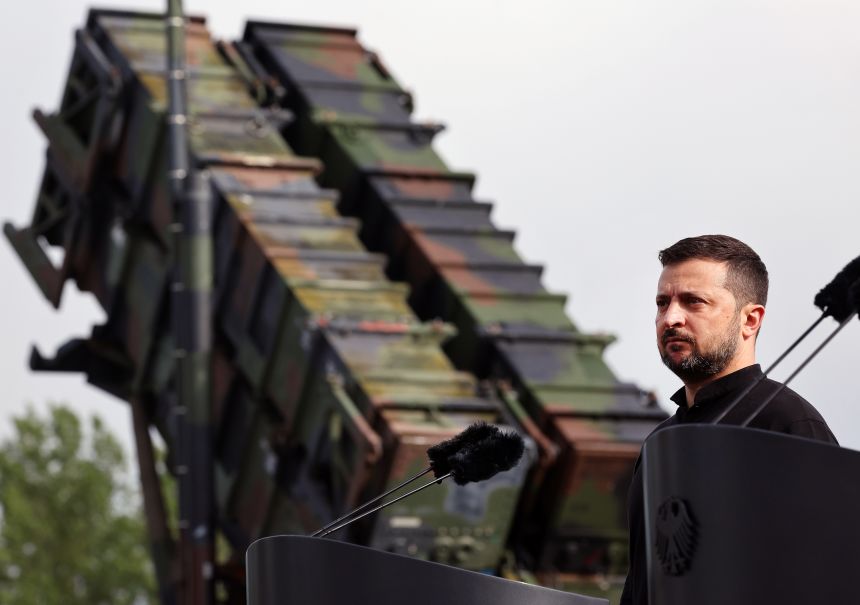
Zelensky highlighted a troubling trend in Patriot missile supplies, contrasting the 675 units Ukraine received in 2023 with a forecast of just 264 for this year.
That decline matters significantly because ballistic missile attacks have driven up both civilian casualties and infrastructure damage across Ukraine, and Patriot systems remain the primary means of intercepting them. Zelensky attributed the downward trend primarily to decisions on the American side.
The issue has been complicated by shifting signals from Washington. Last month, President Trump suggested Ukraine might be permitted to manufacture Patriot missiles under license domestically, an idea he later walked back.
Zelensky proposed an alternative arrangement: if the United States supplied up to 10% of its existing Patriot stockpile to Ukraine, Kyiv would pay for the missiles itself. He argued such a commitment could meaningfully save lives while also carrying diplomatic significance.
A similar shortage affects Aster air defense missiles from Europe, despite a recent pledge of support from French President Emmanuel Macron. Zelensky said production simply hasn’t kept pace with demand, though he suggested a licensing agreement could help accelerate deliveries going forward.
A Boost From Britain
Ukraine’s long-range missile capabilities are set to receive support Monday when new British Prime Minister Andy Burnham makes his first official visit to the country. London has agreed to let defense firm MBDA release classified information regarding UK-made components, assistance intended to help Ukraine build its own long-range SCALP missiles, the French-produced counterpart to Britain’s Storm Shadow system.
Targeting Russian Missile Production
Zelensky said Ukraine is actively working to identify and target the sites within Russia from which ballistic missiles are launched. He estimated that Russian military industry may be capable of producing roughly 1,300 ballistic missiles annually, and described specific objectives tied to striking military targets alongside broader anti-ballistic measures.
Ukraine has meanwhile built out its own arsenal of long-range drones and cruise missiles, weapons now being used against an expanding range of targets inside Russian territory.
The Starlink Question
Zelensky also addressed Kyiv’s ongoing effort to secure permission for using Starlink satellite imagery covering Russian territory.
According to Zelensky, Elon Musk, who owns Starlink, expressed concern that granting such access could lead to significant escalation on Ukraine’s part against Russia. Musk reportedly indicated he favored ending the war rather than extending it, and Zelensky said discussions with Washington on the matter remain ongoing.
A Narrowing Window for Negotiations
On the diplomatic front, Zelensky suggested that the realistic opportunity for ending the war extends through the end of next summer, after which the U.S. presidential election cycle would likely make substantive negotiations far more difficult.
He described difficulties facing American envoys Steve Witkoff and Jared Kushner, who have struggled to identify a negotiating framework Russia would accept that doesn’t require Ukraine to withdraw from Donbas or accept other terms Kyiv considers unacceptable.
Zelensky said he, Kushner and Witkoff had agreed to consolidate their discussions into a single summary document outlining realistic options for ending the war, material intended to form the basis of further conversations between the Americans, Ukraine and Russia.
What It All Adds Up To
Taken together, Zelensky’s remarks paint a picture of a war entering a critical stretch: Russia preparing for another major mobilization wave even after enormous losses, Ukraine’s air defense pipeline narrowing at a dangerous moment, and a diplomatic window that both sides seem aware is finite. How each of these threads develops over the coming months, troop deployments in Donetsk, missile deliveries from Western allies, and the shape of any negotiating framework, will likely determine whether the war’s trajectory shifts meaningfully before that window closes next summer.
Author