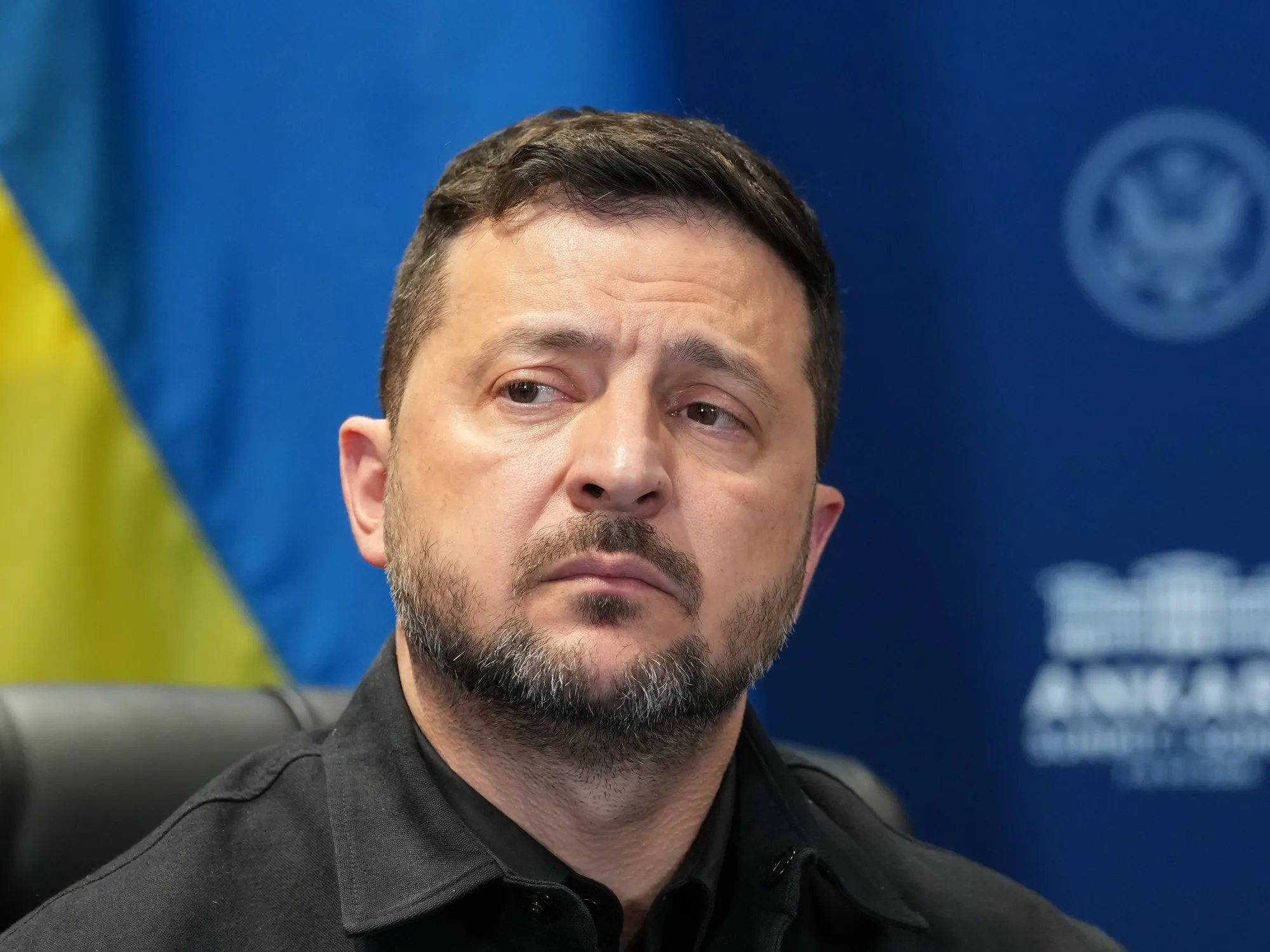
Zelenskyy Speaks From Belgrade as Kyiv Buries a Three-Year-Old and Interceptors Run Short
The Ukraine interceptor shortage moved from a technical concern to a stated emergency this weekend, as President Volodymyr Zelenskyy spoke from Belgrade about diminishing Patriot supplies while his capital absorbed another night of missile and drone attacks.
Four people were killed in overnight strikes on Kyiv and the surrounding region. One of them was a child.
A House Reduced to Rubble
The most devastating strike hit the Brovary district, northeast of the capital.
Multiple Russian drones destroyed a family home there, killing a three-year-old boy and his grandparents, according to local officials.
Three other members of the same family were hospitalised, along with a neighbour who ran to help. The house was flattened, and outbuildings and vehicles on the property were wrecked.
Zelenskyy said at least one additional person died in what he described as a strike involving six ballistic missiles aimed at civilian infrastructure in the capital.
Ukraine’s air force reported downing or intercepting 135 of 151 drones launched overnight. The barrage also included six ballistic missiles and other guided munitions.
Russia continues to insist its forces strike only military targets, a claim contradicted repeatedly by the pattern of destruction in residential areas.
The Numbers Behind the Shortage
Zelenskyy was unusually direct about the supply problem.
Deliveries of Patriot interceptors, the only weapon in Ukraine’s arsenal capable of destroying ballistic missiles, have slowed noticeably compared with a year earlier.
He put it plainly: there are fewer of these missiles in 2026 than there were in 2025, in terms of monthly supply.
The broader air defence picture reflects the strain. Ukraine’s defence ministry said Friday that its systems shot down roughly 5,300 drones and missiles last month, just under 60 percent of the approximately 9,000 launched against the country in that period.
That leaves more than 3,000 weapons reaching their targets.
Moscow is exploiting the gap directly, and the timing is not accidental. Patriot ammunition has become scarcer worldwide following the Iran war, which consumed enormous quantities of interceptors.
Paperwork Standing in the Way
One potential solution is already agreed in principle but stalled in practice.
Zelenskyy said Washington has consented to let Ukraine manufacture its own Patriot interceptors domestically. The problem is bureaucratic.
They are, in his words, stuck dealing with paperwork, with the licensing process taking a long time.
For a country losing civilians nightly, administrative delay carries a cost measured in lives rather than months.
He has also sought permission from Elon Musk to use the Starlink satellite communications system to guide strikes inside Russia against missile launchers, an approach that would address the problem at its source rather than intercepting weapons already in flight.
Following the latest attacks, Zelenskyy posted on X calling for expanded sanctions to prevent the production of ballistic missiles, alongside requests for anti-ballistic capabilities and interceptor missiles.
An Unusual Choice of Venue
The remarks came during Zelenskyy’s first official visit to Serbia, a country that has kept friendly relations with Moscow throughout the invasion.
He arrived in Belgrade on Friday. It was the first visit by a Ukrainian president in eight years.
Serbian President Aleksandar Vucic described Ukraine as a friendly nation and said he was honoured to receive his counterpart.
Vucic occupies an awkward position. He has maintained close ties with Moscow and declined to impose sanctions over the invasion, drawing sustained pressure from the European Union to change course.
At the joint news conference, he reiterated that Serbia respects Ukraine’s territorial integrity and said that position would not change.
The two leaders discussed their respective paths toward EU membership, bilateral relations, and opportunities to deepen cooperation.
That Serbia hosted the visit at all suggests a degree of hedging, and that Zelenskyy accepted the invitation suggests Kyiv sees value in engaging even reluctant European partners.
Ukraine Hits Back at Russian Fuel
While Kyiv absorbed attacks, Ukrainian forces struck deep inside Russia.
Six people were wounded when a fire broke out at the Ilsky Oil Refinery in the southern Krasnodar region, caused by debris from a falling drone, according to local officials.
Ukraine’s General Staff said its forces struck that facility along with the Syzran Oil Refinery in the Samara region, more than 800 kilometres, roughly 500 miles, inside Russian territory.
Vyacheslav Fedorishchev, governor of the Samara region, acknowledged that drones had hit an industrial enterprise but did not identify the refinery.
The Campaign That Is Working
Ukraine’s long-range strike programme has become one of its more effective instruments.
Using domestically developed weapons, Ukrainian forces have hit Russian oil facilities on an almost daily basis for months. The cumulative effect has produced a fuel crisis inside Russia that has proven politically awkward for the Kremlin.
It is a notable asymmetry. Ukraine struggles to obtain foreign-made interceptors to defend itself, but has built its own capability to strike targets hundreds of kilometres away.
Where This Leaves Kyiv
The situation Zelenskyy described from Belgrade is stark. Attacks continue nightly, defensive stocks are thinning, the domestic manufacturing fix is trapped in licensing, and the fourth year of full-scale war grinds on.
His request has narrowed to three specific items: sanctions targeting missile production, anti-ballistic capability, and interceptor missiles.
The offensive campaign against Russian refineries gives Ukraine leverage it did not previously have. Whether that translates into pressure sufficient to change anything at the negotiating table remains, as always, uncertain.
For the family in Brovary, none of it arrived in time.
Author
-
Lucienne Albrecht is Luxe Chronicle’s wealth and lifestyle editor, celebrated for her elegant perspective on finance, legacy, and global luxury culture. With a flair for blending sophistication with insight, she brings a distinctly feminine voice to the world of high society and wealth.