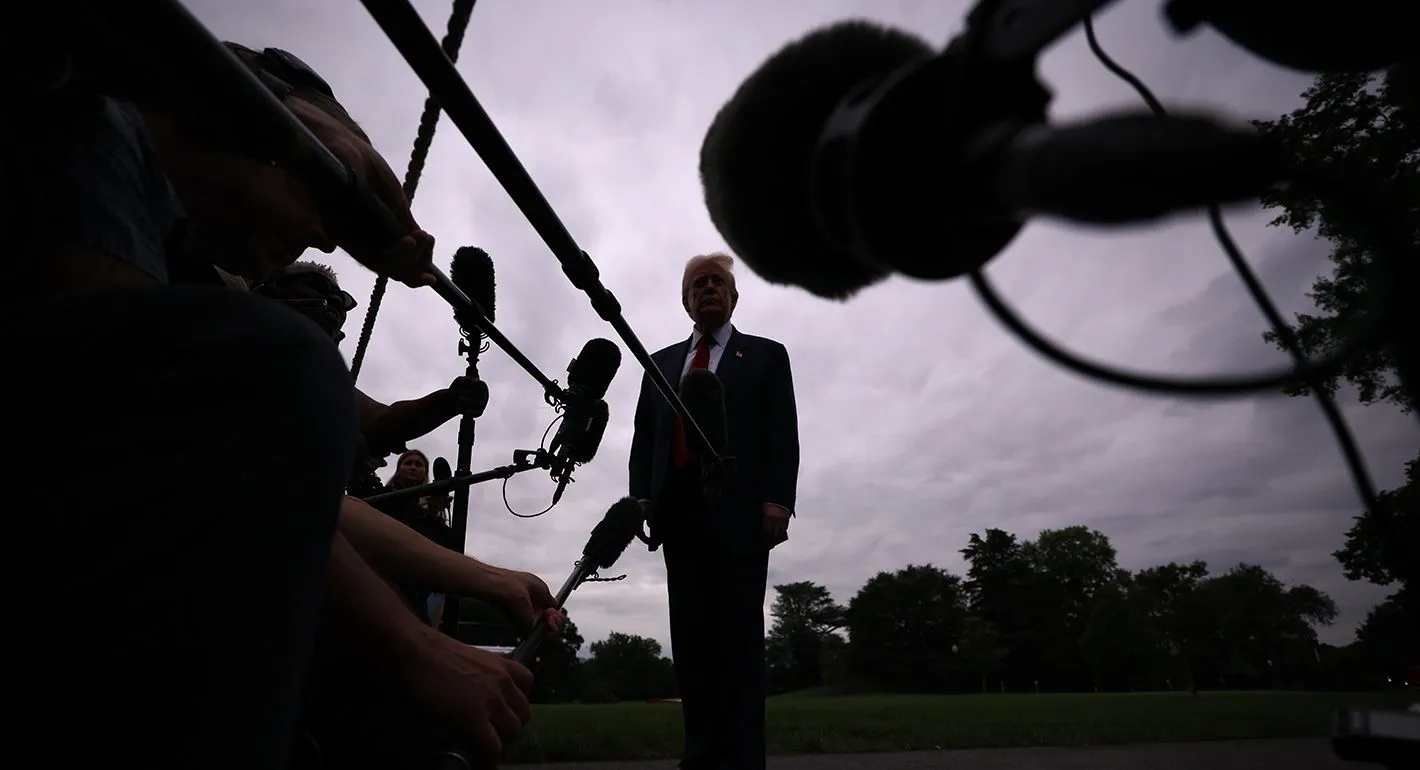
The Election Assistance Commission — the small, bipartisan federal body that certifies the machines Americans vote on — has effectively been frozen. President Trump removed its leadership on Thursday, and according to four people familiar with internal discussions, that decision followed months of quiet effort inside the White House to work around the agency entirely.
The proposals under consideration were not modest. They included declaring a national emergency and standing up a federal task force with the authority to compel states to overhaul their voting systems, bypassing the commission altogether.
What Happened This Week
Trump dismissed the commission’s two Democratic commissioners and permitted its sole Republican member to resign. A fourth commissioner had already departed back in April.
The practical consequence is significant. The agency still exists on paper and its staff can continue routine work, but without a quorum it cannot take up any new business. That means no changes to voting procedures, no updates to the national mail voter registration form, and no new policy decisions — all with the November midterms approaching and control of Congress on the line.
It remains unclear why the president acted now, or whether he intends to name replacements.
The White House justified the removals by pointing to a Supreme Court ruling issued in June that expanded presidential authority to fire members of independent agencies. In a statement, officials said the president reserves the right to remove people who may not be fully aligned with the mission of securing elections.
The Emergency Powers Proposal
The most striking detail to emerge concerns what was being discussed behind closed doors long before the firings.
As far back as last fall, White House officials reviewed a recommendation originating from the Office of the Director of National Intelligence. The idea: declare a national emergency, then create a federal task force empowered to force states to address perceived vulnerabilities in their voting equipment — no commission involvement required.
The ODNI did not respond to requests for comment.
At the time, the intelligence office was wrapping up an investigation into voting machines it had seized from Puerto Rico. According to two sources, ODNI officials concluded the machines contained flaws they suspected might exist in other jurisdictions as well.
That conclusion has been met with skepticism. Election experts note that Puerto Rico — a territory that does not participate in presidential elections — has historically lagged behind the states in adopting current voting system standards, making it a questionable basis for national inferences.
The report was never released publicly. The emergency proposal was never executed. But internal frustration with the commission persisted.
The Underlying Grievances
According to sources familiar with the discussions, officials from Homeland Security, ODNI and the White House met with commission leaders to air a list of concerns.
Chief among them:
- The commission was moving too slowly to update guidelines for state voting machine systems
- Some states, officials argued internally, were still running outdated software
- The agency had not added a proof-of-citizenship requirement to the national mail voter registration form
- Officials raised claims about flaws they believed contributed to irregularities in 2020 — assertions that have been extensively debunked
The president has continued to insist, without evidence, that the 2020 election was stolen from him, while he and his allies push Congress toward sweeping nationwide voting changes.
Is the Commission Actually Too Slow?
Election administration specialists say the criticism misunderstands how the process is designed to work.
Voting systems are technically complex. The technology keeps evolving. And any policy change involves lengthy rounds of public comment and review — by design, not by accident.
Matt Weil, vice president of governance at the Bipartisan Policy Center and a former commission staffer, pushed back directly on the framing.
“The voting system guidelines haven’t been updated too frequently because the process takes a long time,” he said. “So yes, there is slowness, but that is not a bug, that’s a feature of the system.”
In other words, deliberation is the point. A federal body that can rewrite voting machine standards on short notice would be a very different — and to many, a far more alarming — institution.
Democrats Sound the Alarm
The reaction from Democratic lawmakers was immediate and blunt.
Senate Minority Leader Chuck Schumer described the removals as a brazen effort to seize control of the electoral process before a single midterm ballot has been cast. He accused the administration of gutting the independent agency responsible for certifying voting systems and supporting the officials who administer elections at the state and local level.
The underlying constitutional point matters here. In the United States, elections are run by the states, not the federal government. Critics see the firings — combined with the earlier emergency powers discussions — as an attempt to centralize authority that was deliberately dispersed.
What the Commission Still Does
Even without a functioning board, the remaining staff retain some capabilities. They can continue to:
- Test and certify voting equipment
- Publish research and reports
- Distribute federal grant funding to states
That last function is not trivial. Congress appropriated $45 million to the commission for fiscal year 2026 to help states improve their election systems. Since 2018, the agency has channeled more than $1.4 billion toward election administration nationwide.
The White House Response
Asked about the internal discussions on circumventing the commission, the White House offered a general defense of its record, saying it has worked across agencies and with local partners to protect elections from fraud and abuse, and to build durable infrastructure ahead of the midterms.
What Comes Next
The commission is operational but paralyzed. Whether Trump names replacements — and who those replacements might be — will determine how much of its authority is restored, and to what end.
For now, the country heads toward a consequential midterm election with the federal body that certifies its voting machines unable to make a single new decision.
Author