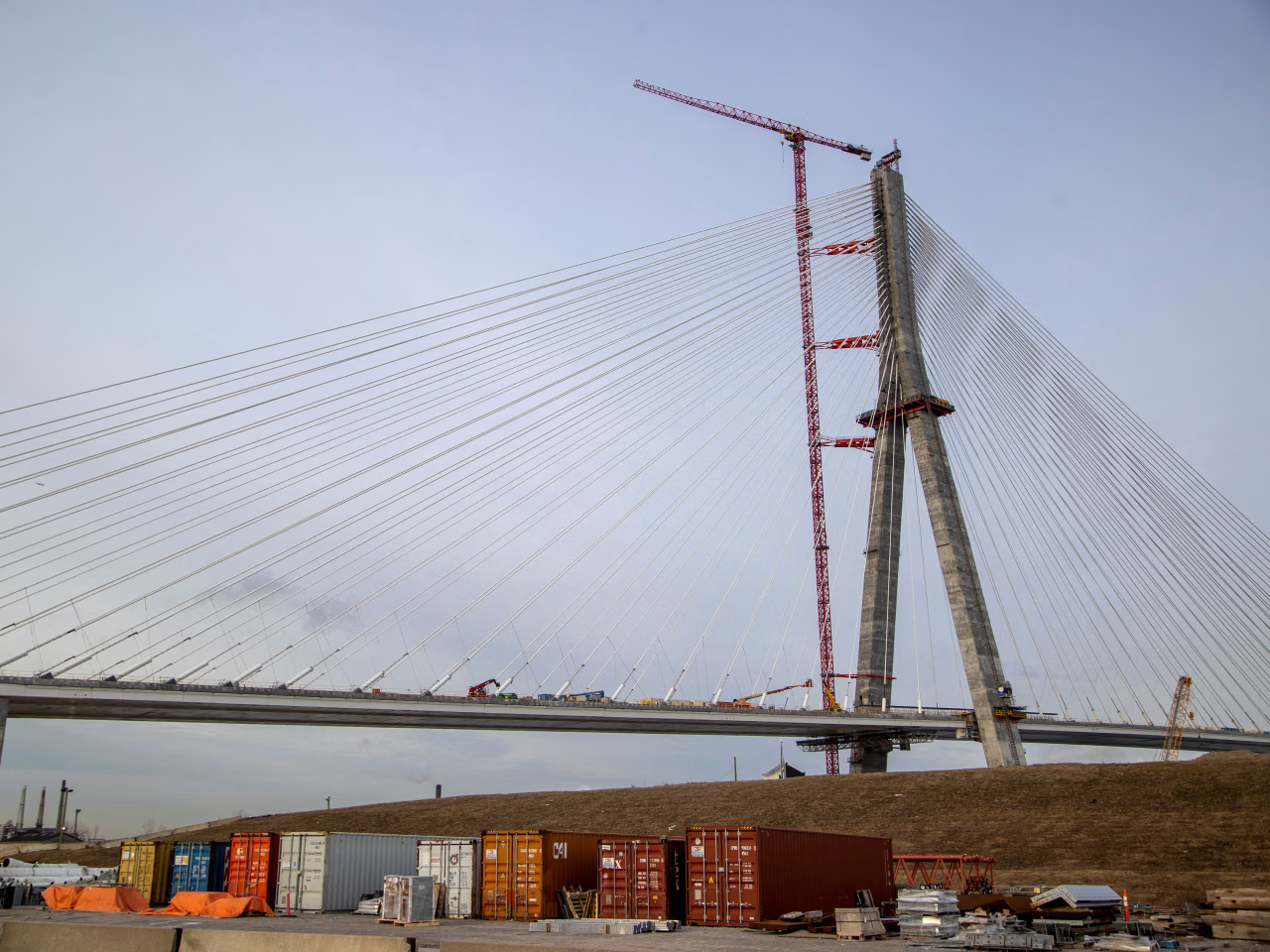
After years of construction, months of political friction, and one indefinite delay, the Gordie Howe International Bridge finally has an opening date.
Canada and Michigan have agreed to open the crossing to the public on July 27, with the backing of the United States government, according to a statement released Friday by Canada’s Ministry of Infrastructure.
For a project that President Trump publicly threatened to block entirely, that announcement carries more weight than a typical ribbon-cutting.
What Officials Said
The Canadian statement was direct about both the timing and the stakes.
The bridge, it said, will serve as a vital economic link between the two countries — one expected to generate billions of dollars in economic activity for decades to come.
That framing is not marketing. The Detroit-Windsor corridor is among the busiest commercial border crossings in North America, and the volume of goods moving across it shapes supply chains far beyond either city.
The Delay Nobody Fully Explained
The road to July 27 was not smooth.
Last month, Canadian Prime Minister Mark Carney disclosed that the bridge’s inauguration had been postponed indefinitely — at the request of the United States, and citing “technical issues.”
That explanation raised eyebrows. Indefinite delays on completed infrastructure are unusual, and “technical issues” is a phrase that tends to obscure more than it reveals.
Friday’s announcement effectively resolves the standoff, though without much public accounting of what changed.
Trump’s Threat
The more explosive chapter came in February.
Trump threatened to block the bridge outright, arguing that the United States had been treated unfairly in its construction. His specific complaint centered on ownership: he insisted the crossing should be “at least half” American-owned.
That position collided with the actual structure of the deal.
Who Actually Owns and Paid for It
According to a fact sheet from the Windsor-Detroit Bridge Authority, the arrangement is straightforward — and unusually generous on Canada’s side.
- Canada financed the bridge in its entirety
- Ownership is shared jointly between Canada and the US state of Michigan
In other words, Canada covered the cost and still agreed to split ownership. The United States pays nothing and holds half.
That context makes Trump’s fairness argument difficult to parse. Michigan already holds joint ownership of an asset it did not fund.
The Symbolism, and the Irony
The bridge carries the name of Gordie Howe — the Canadian-born hockey legend who spent the bulk of his storied career with the Detroit Red Wings.
The choice was deliberate. Howe belonged to both countries in a way few figures ever have: born and raised in Canada, beloved in Detroit, a fixture of a sport that binds the two nations together.
Naming the crossing after him was intended as a gesture of unity, a physical and symbolic connection between neighbors.
That a bridge conceived as a monument to cooperation became a flashpoint in a trade dispute is an irony no one involved seems eager to dwell on.
Why the Crossing Matters
Beyond the politics, the practical case for the bridge has never been seriously contested.
The existing Detroit-Windsor infrastructure has long strained under traffic volume. Delays at the border translate directly into costs for manufacturers, particularly in the automotive sector, where components cross the frontier multiple times before a vehicle is finished.
A new crossing means:
- Reduced congestion at existing chokepoints
- Faster movement of commercial freight
- Greater resilience if one crossing is disrupted
- Support for integrated supply chains across the auto industry and beyond
For businesses on both sides, the opening is not symbolic. It is operational.
What Happens Next
On July 27, the bridge opens to the public. Traffic begins flowing. The billions in projected economic activity start, slowly, to materialize.
What remains less clear is whether the underlying tension has actually been resolved, or merely set aside. Trump’s objections concerned ownership and fairness — questions the opening date does not answer.
For now, though, a completed bridge will function as a bridge. After the threats, the delays and the diplomatic silence, that may be achievement enough.
Author