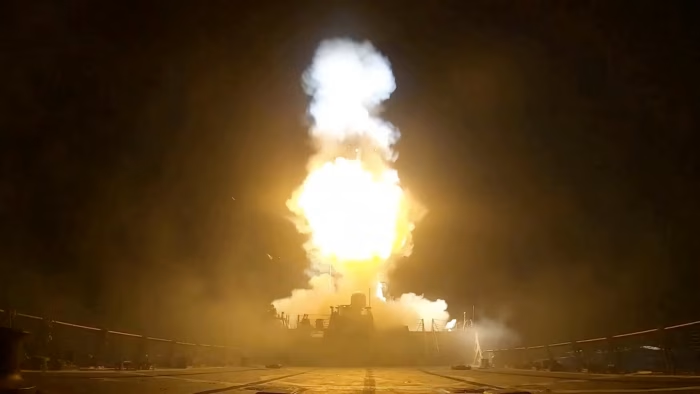
The United States and Iran now each claim to control the Strait of Hormuz.
Both cannot be right. Neither will back down. And the shipping companies whose vessels must actually pass through it have largely stopped trying.
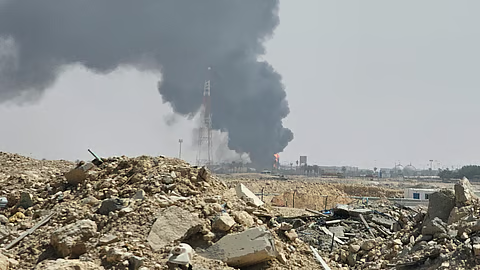
After a weekend of heavy strikes stretching across the Middle East, the war that was supposed to be ending is instead accelerating.
The Competing Claims
US Central Command was blunt after Monday’s strikes.
“The Strait of Hormuz is a vital maritime corridor for global trade,” it said. “Iran does not control it.”
Iran’s Revolutionary Guard — which commands the country’s ballistic missile arsenal and stands as a central power bloc within the theocracy — responded in kind.
“The Strait of Hormuz is our territory, and we will not allow a rogue and child-killing army from the other side of the world to continue its illegal interference in it,” the Guard said.
The European Union weighed in through its top diplomat, Kaja Kallas, who called for the strait to be reopened as it was before the war. “Freedom of navigation has to be respected,” she said.
The Legal Dispute Underneath
This is not merely a contest of force. It is a genuine disagreement about law.
Iran argues it has the right to manage traffic through the strait — and potentially charge fees — under an interim peace deal reached last month.
The United States rejects this entirely, citing international law on freedom of navigation, and has worked to establish an alternative route beyond Iranian control.
That alternative runs along Oman’s coastline. Iran has attacked ships using it repeatedly.
The Ships Have Voted
Whatever either government claims, the market has rendered its own verdict.
Traffic through the Oman route dropped over the weekend “to minimal levels, indicating that operators continue to prioritize perceived security over more direct transit options,” according to ship-tracking service MarineTraffic.com.
When a strait is contested by two militaries, commercial vessels simply do not enter it.
What Triggered This Round
Iran attacked a container ship in the strait on Sunday.
The US response was overwhelming. Central Command reported striking roughly 140 targets early Sunday — missile and drone launch sites, ammunition dumps, communications equipment. It was substantially heavier than the two previous rounds of strikes that week.
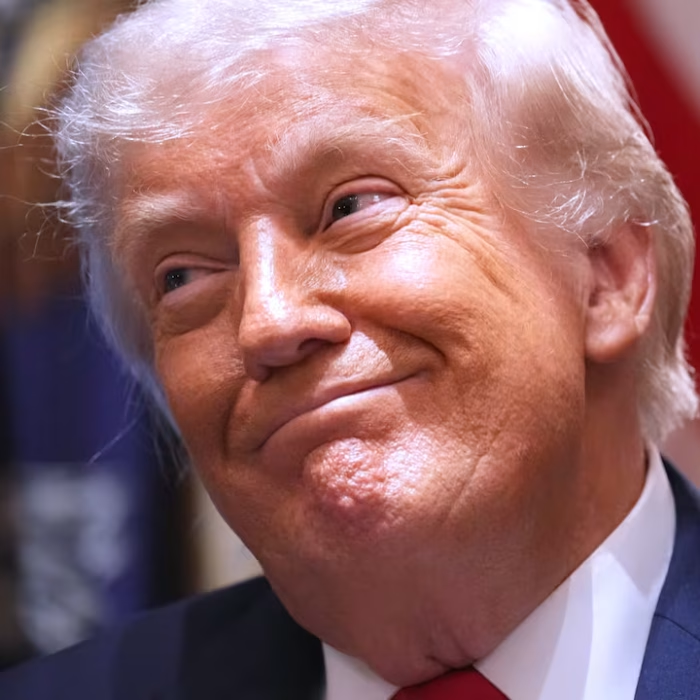
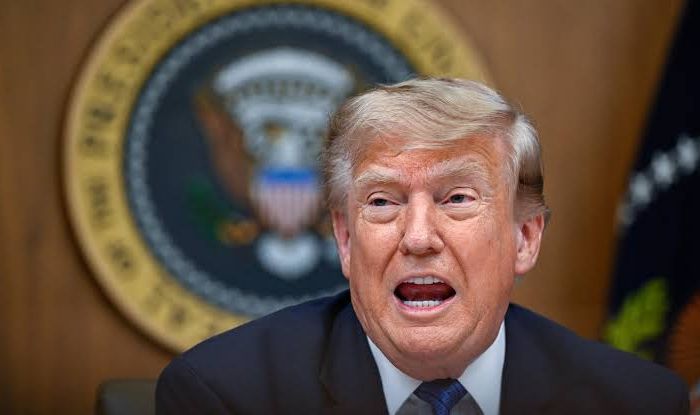
“We bombed the hell out of them last night,” President Trump told NBC’s “Meet the Press.”
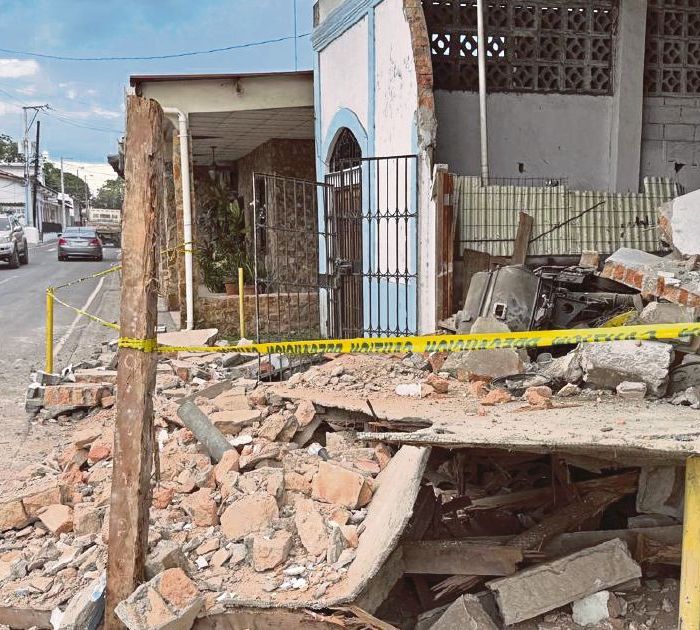
Monday brought another wave, hitting dozens of sites including air defense systems, radar installations, missile and drone equipment, and small boats.
Iran reported attacks across Hormozgan, Khuzestan and Markazi provinces, with at least two people killed, according to state-run IRNA. Semiofficial outlets also reported strikes in Sistan and Baluchestan on the Gulf of Oman coast.
The Gulf Absorbs the Retaliation
Iran’s response has fallen on countries that host American forces — not on America itself.
Monday’s toll across the region:
- Bahrain: Missile alert sirens sounded three times. It hosts the US Navy’s 5th Fleet.
- Kuwait: Reported intercepting hostile fire.
- Jordan: Shot down four Iranian missiles, with the military reporting “zero casualties or material damage.”
Sunday’s attacks extended further — to Qatar and even Oman, which shares the strait with Iran and has long served as an intermediary between Tehran and the West.
Oman summoned an Iranian diplomat to protest.
The Unclaimed Strikes
There is an unexplained element to this conflict.
Attacks on Iran have continued hours after US strikes concluded, with no one claiming responsibility. Similar unclaimed attacks occurred on Thursday.
The obvious inference is that Gulf Arab states may be retaliating independently — a development that would fundamentally alter the shape of the war.
Separately, a base belonging to an Iranian Kurdish opposition group in Iraq’s Kurdistan region came under drone attack Monday. Local commander Rebaz Sharifi confirmed the strike without detailing casualties. No group claimed it. Iran backs several powerful militias in Iraq.
The Clock Nobody Is Watching
Iran and the US are nearly halfway through a 60-day window in which they were meant to negotiate a permanent end to the war and resolve the nuclear question.
Instead, they are exchanging fire almost daily.
UN Secretary-General António Guterres issued a stark warning: “A return to full-scale hostilities would have catastrophic consequences.”
The Nuclear Wall
Iran’s Foreign Ministry spokesperson Esmail Baghaei blamed Washington for the collapse.
Citing the interim memorandum’s fourteen clauses, he said the Americans had “in one way or another, slaughtered its various components.”
He also confirmed Iran will not permit International Atomic Energy Agency inspectors to visit the nuclear sites bombed by the US in 2025 — where Tehran’s stockpile of highly enriched uranium is believed to remain.
That refusal effectively forecloses the central issue any final deal would need to address.
The Markets
Oil jumped nearly 5% Monday before retreating.
US benchmark crude, which touched nearly $120 a barrel at the war’s peak, traded around $72.92. Markets were mixed.
The relative calm suggests traders still expect the strait to reopen. That expectation is doing considerable work.
Diplomacy, Barely Breathing
Trump suggested last week that the interim deal was “over.”
Mediators disagree. Pakistan, Qatar and Egypt continue pressing for a final agreement. A regional official involved in the talks said efforts to shore up the ceasefire continued Sunday. Pakistan’s foreign minister spoke by phone with his Iranian counterpart and urged de-escalation.
The Man Who Hasn’t Appeared
Iran’s new supreme leader, Ayatollah Mojtaba Khamenei, has not been seen publicly since the war began.
On Saturday, he vowed to avenge his father and predecessor, Ayatollah Ali Khamenei, killed in the US and Israeli strikes that started this.
That promise sits over everything. Vengeance is not a negotiating position. It is a commitment — and it is difficult to see how any deal accommodates it.
Author