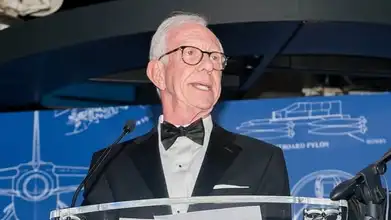
Sully Sullenberger Alzheimer’s diagnosis has brought a deeply personal turn to the story of one of America’s most celebrated aviation heroes. Captain Chesley “Sully” Sullenberger, the pilot who famously landed a crippled plane on the Hudson River in 2009, has revealed that he is living with early-stage Alzheimer’s disease, sharing the news in a heartfelt statement.
A Candid Announcement
In a message posted to his website, the 75-year-old spoke openly about his diagnosis and what it means for his daily life. He explained that he had recently learned he has Alzheimer’s disease and that it remains in the early stage.
For now, Sullenberger said, the condition manifests in relatively subtle ways. A name might not come to him easily, he may forget a story he recently told, or he might not sleep as well as before. Still, he acknowledged that he is only at the beginning of what he described as a long journey.
Understanding Alzheimer’s Disease
Sullenberger’s diagnosis sheds light on a condition that affects millions. According to the Centers for Disease Control and Prevention, Alzheimer’s is a progressive brain disorder that causes irreversible damage to the brain’s nerve cells.
The scope of the disease is significant. The CDC notes that Alzheimer’s affects roughly 7 million people in the United States, making it the most common form of dementia and the seventh-leading cause of death among American adults.
Early warning signs typically emerge after age 60 and can include:
- Memory loss
- Difficulty solving problems or completing everyday tasks
- Decreased judgment
- Misplacing items
- Changes in mood or personality
While there is currently no cure, the CDC points out that various treatment options, including prescription medications, may help patients maintain brain health, delay the onset of symptoms, or manage them as they arise.
The Man Behind the Miracle
Sullenberger’s name became synonymous with heroism 17 years ago, though his career spanned far more than a single flight. An Air Force veteran, he went on to become a commercial pilot and later an accident investigator.
His defining moment came on January 15, 2009, in what became known as the “Miracle on the Hudson.” That day, Sullenberger and co-pilot Jeff Skiles were flying US Airways Flight 1549 when the aircraft struck a flock of Canadian geese. With the plane disabled, the pilots executed an emergency water landing in the Hudson River near Midtown Manhattan, saving all 150 passengers and five crew members aboard.
Turning a Diagnosis Into Advocacy
True to the spirit that made him a national figure, Sullenberger framed his diagnosis as a new opportunity to serve. In the years after Flight 1549, he became a proud advocate for aviation safety, work he said he hopes to continue.
He described this chapter of his life as a challenge to his understanding of what it means to be of service, concluding that the answer is to speak up. By sharing his story, he expressed hope that other families living quietly with the disease might feel empowered to step forward as well.
Sullenberger also returned to a theme that defined his public legacy: hope. He recalled how many people told him that the outcome of Flight 1549 gave them hope, and shared that his partner of 37 years, Lorrie, believes everyone could use a little of that hope right now.
Part of a Larger Conversation
Sullenberger joins a growing list of public figures who have recently shared their own Alzheimer’s diagnoses, helping to bring greater visibility to the disease. Others include veteran New York City news anchor Bill Ritter and longtime actor Danny Glover.
In his statement, Sullenberger embraced this sense of shared experience, writing that he is now part of a larger community and that, together, they will face the road ahead with courage.
Facing the Future With Courage
Captain Sullenberger’s willingness to speak openly about his diagnosis reflects the same steadiness and grace that defined his actions over the Hudson. By choosing transparency over silence, he is once again offering something meaningful to others, this time in the form of solidarity and encouragement for those navigating the same difficult path. As he begins this new journey, his message is clear: no one has to face it alone.
Author