The Mamdani Netanyahu arrest question, one of the most talked-about pledges of last year’s New York City mayoral race, got its answer on Tuesday night. And it wasn’t the one Mamdani’s supporters had been waiting for.
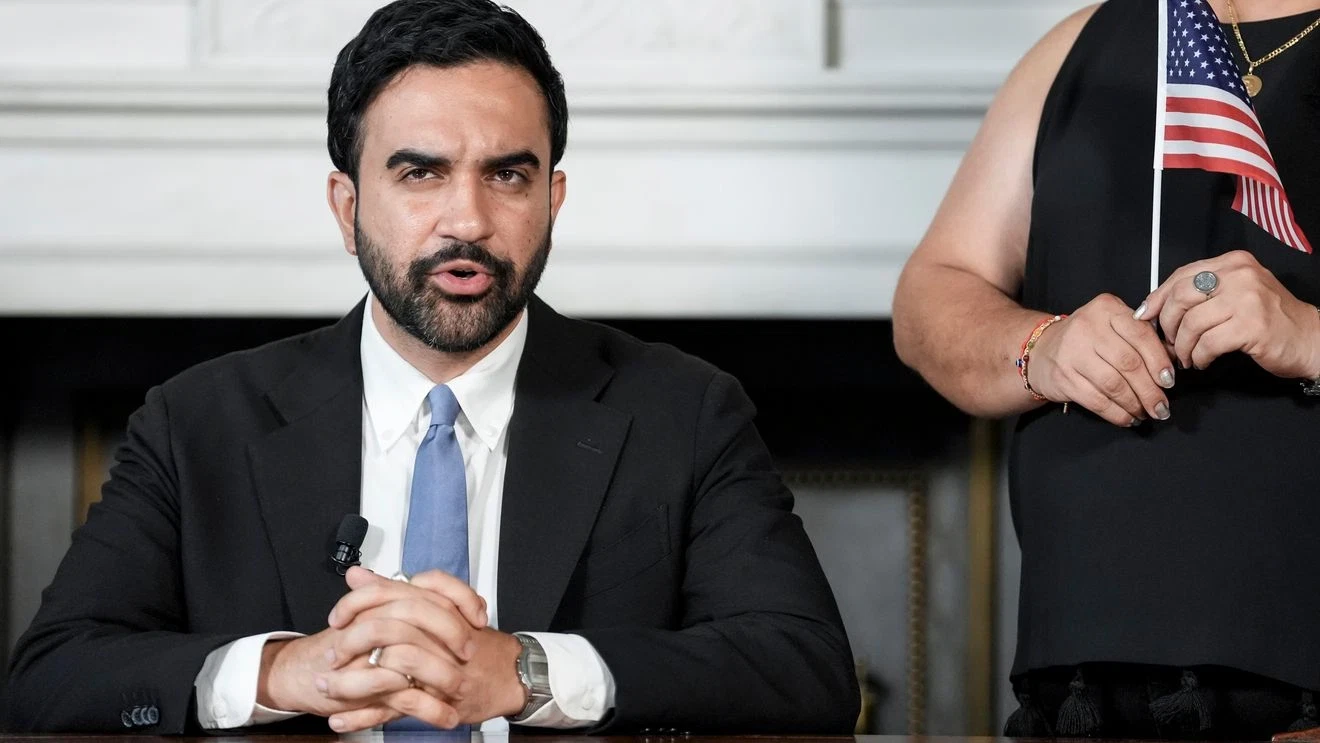
In a video posted to social media, New York City Mayor Zohran Mamdani said his administration had studied the matter thoroughly and reached a conclusion he clearly found unwelcome: the city simply cannot arrest Israeli Prime Minister Benjamin Netanyahu.
A Campaign Promise Meets Legal Reality
During his run for mayor, Mamdani said plainly that if Netanyahu set foot in New York City, his administration would act on the International Criminal Court’s arrest warrant against the Israeli leader. It became one of the defining moments of his campaign, cited endlessly by both his supporters and his critics.
He held that line even in recent days, saying the city would follow every applicable local law should Netanyahu arrive for the United Nations General Assembly this fall. The phrasing was careful, but the implication landed exactly where his base expected it to.
Then came Tuesday.
“My administration has reviewed every avenue available under applicable law to determine whether New York City could execute the International Criminal Court’s arrest warrant if Benjamin Netanyahu came here,” Mamdani said in the video. “It is clear that we do not have the independent legal authority to enforce this warrant.”
Passing the Question Upward
Mamdani did not soften his language about Netanyahu himself. He described the Israeli leader as a war criminal and the architect of what he called a horrific genocide against Palestinians, and he argued that the responsibility now falls on Washington rather than City Hall.
That call is almost certain to go nowhere, and Mamdani likely knows it.
The United States never joined the treaty that established the International Criminal Court and does not, as a general matter, accept the court’s jurisdiction. Whatever a mayor may believe about the warrant, the federal government has no obligation to act on it and has shown no appetite to.
President Trump made that explicit on Monday, posting on Truth Social that Netanyahu would not be arrested in any way, shape or form while on American soil. That statement effectively closed the door before Mamdani’s video ever went up.
Israel Responds Sharply
The reaction from Israeli officials was immediate and blunt.
Danny Danon, Israel’s ambassador to the United Nations, told Mamdani on social media that he had gone far enough, accusing him of repeating blood libels. Danon added a pointed reminder that the mayor was elected to serve New Yorkers, not to amplify what he characterized as Hamas propaganda.
It was a sign of how quickly this dispute escalated past municipal politics and into the middle of an international argument.
Where the ICC Warrants Came From
The warrants at the center of all this trace back to May 2024, when an ICC prosecutor requested them against Netanyahu, then-Israeli Defense Minister Yoav Gallant and several Hamas officials.
The request followed an investigation covering two things at once:
- Hamas’ attack on Israel on Oct. 7, 2023, in which roughly 1,200 people in Israel were killed and about 250 were taken hostage
- Israel’s subsequent military campaign in Gaza, where the Hamas-run Gaza Health Ministry reports that more than 73,000 Palestinians have been killed
Later in 2024, ICC judges issued warrants for Netanyahu and Gallant, saying they found reasonable grounds to believe the two men had cut off the civilian population’s access to food, medicine and other humanitarian supplies. Mohammed Deif, a former Hamas commander later killed in an Israeli airstrike, faced accusations of crimes against humanity.
Israel’s Position
Israel rejected the warrants outright. Netanyahu’s office dismissed the charges as absurd and false and described the ICC as a politically motivated body that applies its standards selectively.
The broader Israeli argument has stayed consistent throughout the war. Officials maintain that the military took steps to shield civilians during air and ground operations, and that responsibility for civilian deaths rests with Hamas for embedding its fighters and infrastructure in dense residential areas.
A ceasefire between Israel and Hamas took effect last fall. It has not fully held. Some operations have continued, and the Gaza Health Ministry says more than 1,000 people have died since the truce began.
Why This Moment Matters
Strip away the international drama and what happened Tuesday is a familiar story in city politics: a candidate makes a bold promise, wins, and then discovers the office doesn’t come with the powers the promise assumed.
Mayors run cities. They do not conduct foreign policy, and they cannot execute warrants issued by an international tribunal their own country never recognized. That was true during the campaign too, which is part of why the pledge drew such intense criticism at the time.
Several things follow from this.
Mamdani has spent political capital on a commitment he could not deliver, and opponents will bring it up often. Supporters who took the promise literally have reason to feel let down, even if his rhetoric hasn’t shifted an inch.
At the same time, he has arguably found the most defensible exit available: acknowledge the legal limit, refuse to retract the underlying moral position, and hand the question to a federal government that has already refused it. He loses the action but keeps the argument.
Netanyahu, meanwhile, retains a clear path to New York this fall if he chooses to attend the General Assembly. The president has said as much, and the mayor has now confirmed he cannot stop it.
What remains unsettled is the larger question none of this resolves. The ICC warrants still stand. Most of the world’s countries are treaty members and would face pressure to act on them. The United States is not among them, and that gap between international law on paper and enforcement in practice is exactly the space Mamdani just ran into.
Author
-
Lucienne Albrecht is Luxe Chronicle’s wealth and lifestyle editor, celebrated for her elegant perspective on finance, legacy, and global luxury culture. With a flair for blending sophistication with insight, she brings a distinctly feminine voice to the world of high society and wealth.