The House voter ID bill passed Wednesday did not travel to the floor alone. It arrived bolted to legislation restricting how members of Congress trade stocks — a pairing that had nothing to do with policy overlap and everything to do with putting Democrats in an uncomfortable position.
The maneuver worked, at least procedurally. The combined package cleared the chamber 232 to 198 on July 22, largely along party lines. Thirteen Democrats broke ranks and voted yes.
Whether it accomplishes anything beyond a campaign talking point is a different question entirely.
Two Bills, One Vote
The Voter ID Act was folded inside the Stop Insider Trading Act, creating a single up-or-down choice on two subjects that share no obvious connection.
That is the entire strategy. Voter identification requirements and congressional stock trading restrictions both poll well with the public, but they appeal to different coalitions and carry very different political risks. Combining them forces every member to weigh which position they are more willing to defend.
Republicans wasted no time framing the outcome. Their argument: Democrats who voted no rejected commonsense measures that ordinary Americans support.
Rep. Mike Lawler of New York made the point directly on the floor, arguing that voter identification protects the integrity of elections and public confidence in them, and suggesting Americans should pay close attention to how each member cast their vote.
The Democratic Objection
Most Democrats saw the construction as deliberate entrapment rather than legislating.
Rep. Seth Magaziner of Rhode Island called it a trap outright, arguing the underlying purpose was to make voting harder for eligible Americans while dressing the effort up as a stock trading ban to make opposition look bad.
Rep. Joe Morelle of New York characterized the package as a legislative trick and warned that its provisions would gut mail-in voting.
Their frustration is understandable from a tactical standpoint. Voting against a stock trading restriction generates a hostile campaign ad. Voting for voting restrictions generates a different one. There was no clean option.
The Timing Argument
Republicans pointed to a scandal that surfaced in New Jersey this week as evidence the measure could not wait.
The state’s governor attributed a Department of Motor Vehicles programming failure to the improper addition of roughly 6,600 non-citizens to voter rolls. Of that group, approximately 400 actually cast ballots.
Those numbers do real work in the debate, though they cut in more than one direction:
- Supporters see confirmation that registration systems have exploitable gaps
- Critics note the error originated in a state agency, not with individual voters
- The gap between 6,600 registered and 400 voting suggests most affected individuals never participated
- Whether identification requirements would have prevented an administrative database error remains contested
What the Stock Trading Portion Actually Does
Strip away the voter ID attachment and the trading provisions are narrower than the branding suggests.
The measure would bar members of Congress, along with their spouses and dependent children, from purchasing individual stocks while serving. Critically, it would not require anyone to divest holdings they already own.
That distinction is the source of much of the Democratic criticism.
Rep. Jason Crow of Colorado argued the bill fails to prevent insider trading or ban stock trading in any meaningful sense, and instead builds loopholes permitting members of Congress and the president to continue profiting from their positions.
A broader bipartisan effort exists in the form of the Restore Trust in Congress Act, which would impose considerably stricter limits. That legislation has not received the same floor treatment.
The Goldilocks Defense
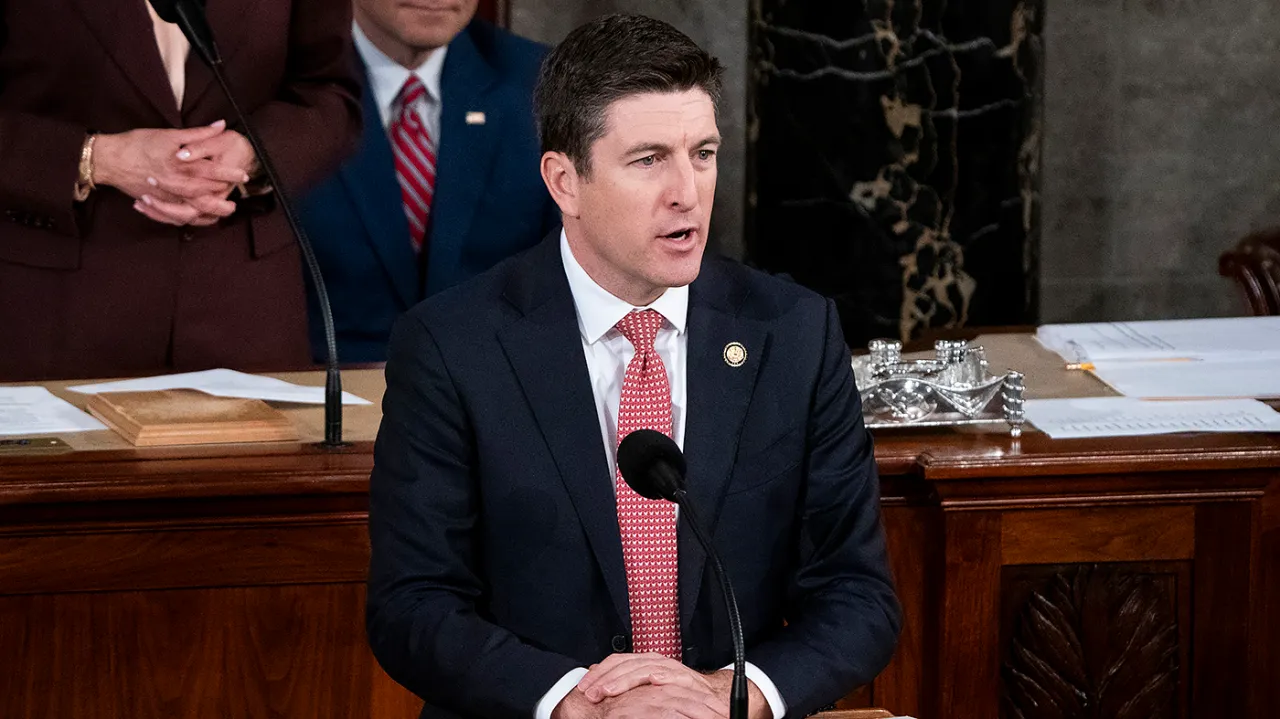
Rep. Bryan Steil, the Wisconsin Republican who introduced the package, pushed back on opposition arguments by noting their inconsistency.
He described critics as making a Goldilocks case — complaining simultaneously that the bill does too little and that it does too much.
It is a fair rhetorical point, though the two objections come from different concerns. The trading provisions draw the “too weak” criticism; the voting provisions draw the “too far” criticism. Bundling them guaranteed both critiques would appear in the same debate.
The Senate Reality
None of this is likely to become law.
The package requires 60 votes in the Senate, a threshold it has essentially no path to clearing. The chamber’s math makes the House vote symbolic in practical terms.
That does not make it pointless.
Why Pass Something Destined to Die
Messaging legislation serves purposes beyond enactment. This vote:
- Creates a documented roll call for campaign advertising
- Positions Republicans as champions of election integrity heading into midterms
- Forces Democrats to explain a complicated vote in simple terms
- Responds to presidential pressure to advance elements of the SAVE America Act
President Trump has pushed Congress to move on components of that broader elections measure, and this package represents partial compliance with that demand.
The Midterm Calculation
Both subjects landed in this bill because both resonate with voters.
Congressional corruption and self-dealing consistently rank among the public’s top frustrations with Washington. Election security, meanwhile, has become a defining organizing issue on the right and a defining threat on the left.
Combining them produced a vote that campaigns in both parties will reference for months. Republicans will describe opponents as protecting insider trading. Democrats will describe supporters as endorsing voter suppression.
Neither characterization captures the full picture, which is rather the point of a bundled bill.
The Bottom Line
The House passed something Wednesday that almost certainly will not become law, in a form deliberately designed to make voting against it costly.
Thirteen Democrats decided the stock trading provisions were worth the risk. The rest concluded the voting restrictions were not worth the trade.
Come November, both groups will be answering for that choice — which was always the actual objective.
Author
-
Lucienne Albrecht is Luxe Chronicle’s wealth and lifestyle editor, celebrated for her elegant perspective on finance, legacy, and global luxury culture. With a flair for blending sophistication with insight, she brings a distinctly feminine voice to the world of high society and wealth.