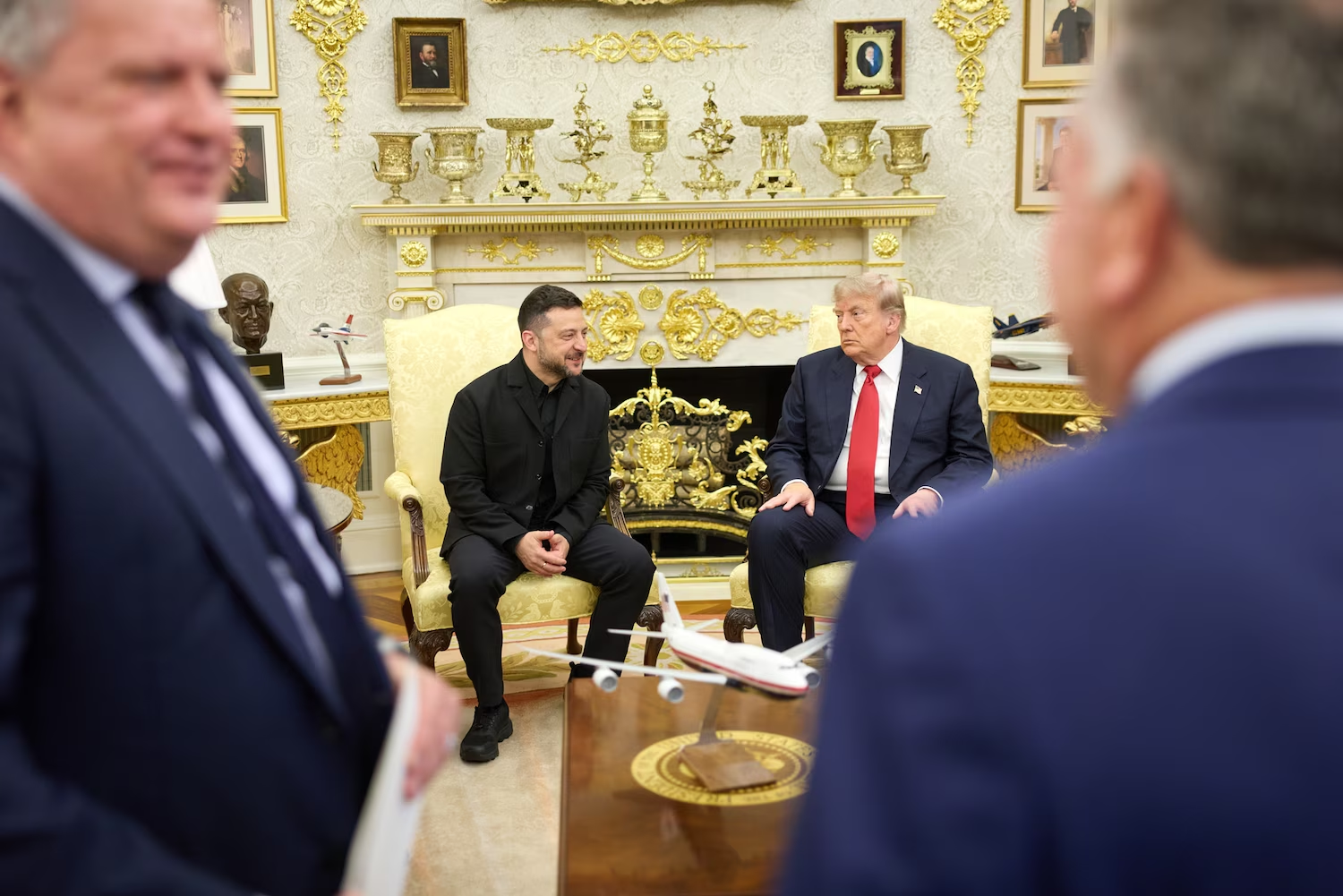
The Trump meeting with Netanyahu and Zelensky on Tuesday was notable less for what was said than for what the cameras never saw. For a president who treats the Oval Office as a stage — and who rarely misses a chance to be photographed inside it with a foreign leader — the decision to hold both sessions away from the press corps stood out. Stranger still, he then let his guests do most of the talking about how the day had gone.
Two Visitors, Two Wars, One Host
Prime Minister Benjamin Netanyahu of Israel arrived first in the afternoon; President Volodymyr Zelensky of Ukraine had come earlier. Both men wanted the same thing from the trip: photographic proof of American backing that they could carry home to skeptical publics.
But the symbolism cuts in more than one direction now. Each leader has become a walking reminder of a conflict the United States cannot seem to close out, and of a president who campaigned on ending both of them in short order.
Netanyahu, in a written statement afterward, described the conversation as genuinely excellent rather than merely diplomatic. He framed it as a full partnership built around a shared determination to keep Iran from obtaining nuclear weapons, along with other objectives he did not spell out. He went further, calling it among the best exchanges he has ever had with an American president.
Zelensky’s account was more granular. His hourlong session, held just before the Israeli prime minister’s, centered on reviving diplomacy that has gone nowhere in a war now stretching past four years. He said the two discussed licensing arrangements for Patriot interceptor production along with several other proposals that might help. His closing point was pointed: the diplomatic track needs new life.
The Patriot Problem
Trump appears to be honoring an earlier pledge to let Ukraine build its own Patriot air defense interceptors — the munitions Kyiv relies on to blunt Russian ballistic missile barrages. The catch is timing. Standing up that kind of manufacturing capacity is a project measured in months or years, not weeks. Zelensky has spent much of the war asking for faster, more direct weapons support, and his statement hinted at that request without quite making it again out loud.
There is a supply squeeze on the American side too. Part of the reason fighting in Iran has paused is that Trump’s own advisers have grown nervous about how thin the Pentagon’s stockpile of Patriot interceptors and other air defense munitions in the Middle East has become.
Two Conflicts That Are Starting to Blur
What worries analysts most is how tangled the two wars are becoming. A Ukrainian strike over the weekend hit an Iranian cargo vessel in the Caspian Sea. Russia has been launching Iranian-made drones at Ukrainian cities. Ukraine, meanwhile, has begun selling its inexpensive counter-drone systems to Gulf states.
Sitting at the center of that web is Trump, who chose to join Netanyahu’s campaign against Iran and has since found himself unable to force a patient opponent to the table.
John E. Herbst, a former U.S. ambassador to Ukraine who now directs the Atlantic Council’s Eurasia Center, put it bluntly: the president has damaged his party’s midterm outlook. Herbst added that Trump dislikes being pushed around, yet is being pushed around anyway, with limited options to change it.
How Iran Reached This Point
Tuesday was Netanyahu’s seventh visit to the United States since Trump’s second term began. The consequential one came in February, when the Israeli leader made his case that Tehran was vulnerable to regime change and that a combined American-Israeli effort could deliver it.
Five months on, Iran has absorbed the killing of its supreme leader and repeated U.S. airstrikes. The Strait of Hormuz — the artery through which a large share of global energy moves — remains under the control of the Islamic Revolutionary Guards Corps, which has shown no interest in reopening it on Trump’s schedule.
The Public Has Turned
Domestic support has collapsed. A Reuters/Ipsos survey released this week found only about one in three Americans backing the war. A CBS News/YouGov poll from the same week found that roughly three-quarters of respondents believe the conflict has proved far tougher than the president anticipated, and about two-thirds want it ended.
Trump’s own patience showed cracks on Tuesday morning. Speaking on Fox & Friends, he waved off reports that Netanyahu was bringing fresh intelligence about increased activity at Pickaxe Mountain, a site suspected of housing nuclear work. He said he did not need the prime minister to brief him on it, and suggested Netanyahu was raising it mainly to keep him invested. The nuclear sites had already been hit, he said, and Pickaxe would be next if no agreement materialized.
Optics and Absences
Netanyahu entered the White House through a side door. In the Oval Office he was accompanied by Israel’s ambassador, Yechiel Leiter, and his national security adviser, Shmuel Ben Ezra.
Zelensky, who was once mocked by a conservative reporter for wearing military fatigues to the White House, showed up in a black suit jacket. Trump has historically enjoyed putting the Ukrainian leader on the back foot — an Oval Office meeting early last year ended with him telling Zelensky to leave. But battlefield persistence has changed the dynamic somewhat, and Trump has always gravitated toward people he perceives as winning.
Evelyn Farkas, executive director of the McCain Institute and a former deputy assistant secretary of defense on Russia policy, suggested Vladimir Putin will simply wait it out, noting that consistency has never been Trump’s strong suit in negotiations of this kind.
The White House said almost nothing. Press secretary Karoline Leavitt posted on X that both meetings had been positive and productive, and left it there.
Trump’s attention was elsewhere for much of the day. He traveled to the National Cathedral to eulogize Senator Lindsey Graham of South Carolina, who died earlier this month, remarking that Graham never encountered a war he didn’t care for. Netanyahu and Zelensky sat nearby, listening closely.
Author
-
Lucienne Albrecht is Luxe Chronicle’s wealth and lifestyle editor, celebrated for her elegant perspective on finance, legacy, and global luxury culture. With a flair for blending sophistication with insight, she brings a distinctly feminine voice to the world of high society and wealth.