The Second Disaster: Kumamoto’s Quake Survivors Now Face 40-Degree Heat Without Water
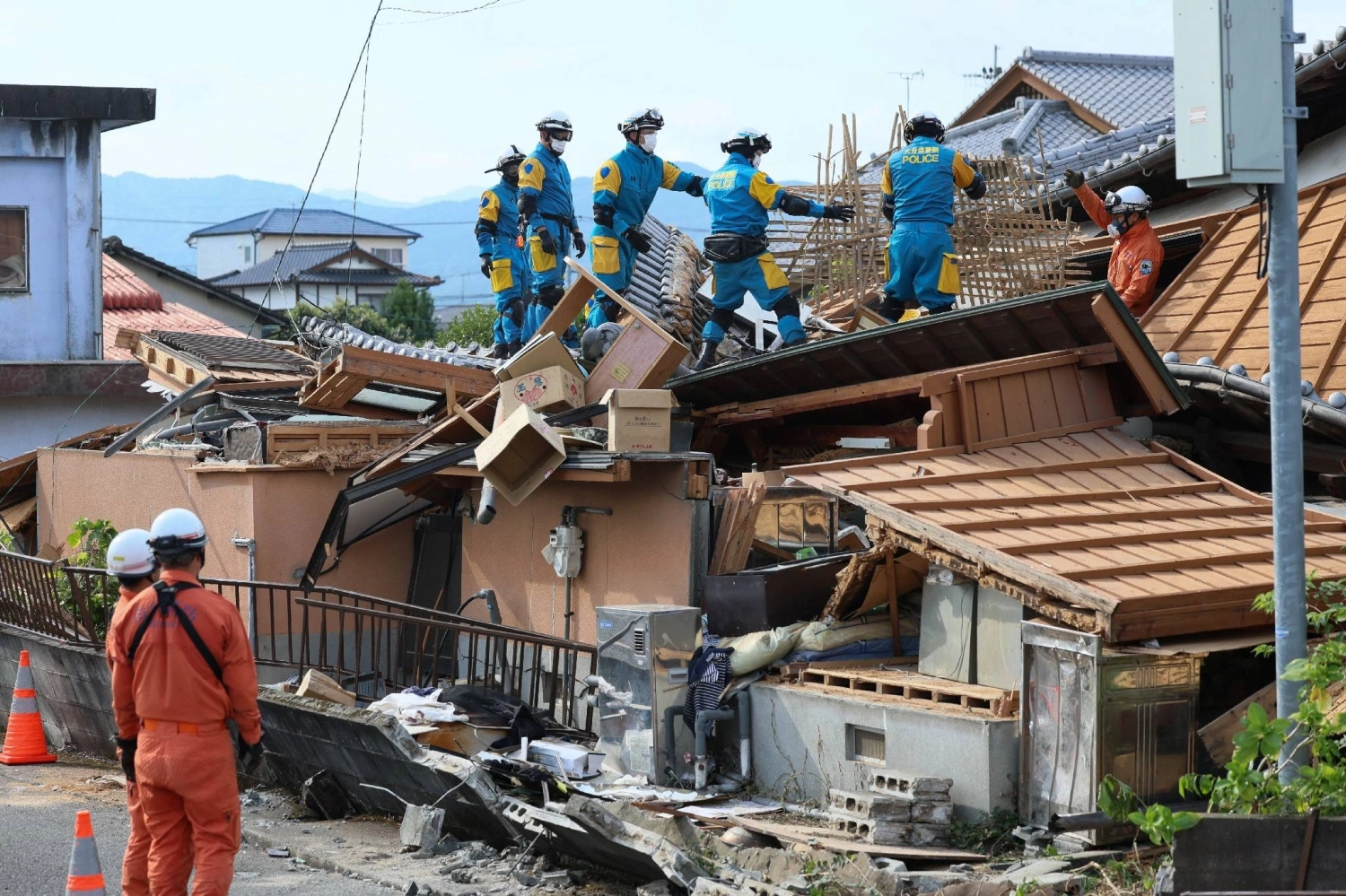
The Japan earthquake that struck Kumamoto prefecture on Tuesday afternoon did the visible damage first — houses collapsed, streets split open, a factory tower came down. Two days later, officials in the port city of Yatsushiro are worried about something harder to photograph.
Most of the city’s roughly 58,000 households still have no running water and no electricity. Outside temperatures are hovering around 35 degrees Celsius, or 95 Fahrenheit, with the kind of humidity that makes shade almost meaningless. Forecasters expect close to 40 degrees by the weekend.
Akio Matsushita, a local official helping direct relief, has been blunt about the water situation. The mains are badly damaged, and he has no idea whether repairs will take days, weeks or months. He said the work will be painstaking and there is currently no timetable.
The heat, he added, is what makes the shortage so hard.
A Rising Toll
The Kumamoto prefectural government now puts the confirmed death toll at 25. Nine additional deaths in the prefecture are being examined to determine whether they were caused by the quake, which would bring the total to 34.
Most of the confirmed deaths occurred at two locations. One was a Nippon Paper Industries mill, where a structure suffered major failure. The other was an Aeon shopping mall, where what officials believe was a gas explosion followed the shaking.
The mall detail is particularly hard to absorb. Roughly 3,000 customers had been moved out to a parking lot after the quake. The explosion happened in another part of the building, where some people were still working.
The mall had only recently reopened — a fresh start after the last time this region was broken by an earthquake.
Water by the Litre
The immediate response has focused on getting drinking water to people at all.
Self-Defense Force trucks towed water tanks to community centres and schools across Yatsushiro, then returned to city hall to refill from emergency reserves stored beneath the building. Residents queuing for supply have been limited to three litres each.
Three litres is roughly a day’s drinking requirement in this heat, with nothing left for washing, cooking or cleaning.
The absence of water has consequences that cascade quickly. City hall’s toilets stopped working, so staff erected emergency facilities over sewer manholes outside the building. In a region this hot, sanitation failures create their own public health timeline.
Kyushu Electric Power has said it is aiming to restore electricity by Friday evening. Water has no such target.
The Heat Emergency
A Kumamoto official has warned specifically about heatstroke, and the concern is well founded. Shelters without power become dangerous rather than merely uncomfortable, and the people most likely to be in them — elderly residents, those with chronic illness, families with small children — are also the most vulnerable to heat.
The Self-Defense Force is installing around 300 air-conditioning units at evacuation centres and other key sites across the prefecture. More than 8,800 people had left their homes for over 400 shelters, where power sources were being added to run cooling.
Others are not in shelters at all. One family in Yatsushiro has been eating meals in a tent pitched in front of their own house, unwilling to go back inside because of aftershocks — two parents and three daughters, the youngest three years old.
That decision captures the bind many residents are in. The building may be standing. Trusting it is a different question.
Hospitals Under Strain
Medical capacity has been affected directly. One hospital in Uki city, near the epicentre, reported being unable to function after losing power. Another in the same city suspended admissions once it had taken in 86 injured people, including three with serious injuries, saying it could not handle more emergencies.
At least 62 people were reported injured in early counts, six of them seriously, and officials acknowledged uncertainty about how many might still be unaccounted for.
The epicentre sat about 20 kilometres south of Kumamoto City, a city of roughly 700,000 people. Tokyo Metropolitan Police search and rescue teams were flown in to assist.
One Family’s Loss
Among those killed was a Vietnamese factory worker, recently married, who leaves behind a wife and a seven-month-old son.
His wife, Vu Thi Thuy, described their final video call the night before the quake to a Vietnamese news outlet. Their baby, who normally showed little interest in the screen, stayed fixed on his father that evening and did not want the call to end. She was the one who finally suggested hanging up so her husband could sleep before work.
She said she never imagined it would be the last conversation they had.
Living Through It Twice
For many people in Yatsushiro and nearby Kumamoto city, this is not a first experience of catastrophic shaking. Two powerful earthquakes in April 2016 killed more than 260 people across the prefecture and destroyed thousands of homes.
Matsushita has said Tuesday’s shaking was worse in Yatsushiro than anything he experienced a decade ago. It toppled shelves and threw computers to the floor.
Masahiro Miyamoto, who was helping clear rubble from a temple gate that had collapsed, described the sensation as never having felt the world move that way before — as though his body had become weightless and been thrown through the air.
Beyond the Prefecture
The quake has also disrupted production at major manufacturers in the region, with concern focused on automotive and semiconductor operations. Kyushu hosts significant chip-making capacity, and even brief outages at those facilities ripple outward through global supply chains.
That is a secondary story, and it will get more attention in the coming weeks. For now it matters mainly because the same infrastructure failures affecting households — power and water — are what keep those plants offline.
What Comes Next
The near-term sequence is fairly clear. Power should return within days. Water will take considerably longer, and until it does, the region is managing a heat emergency layered on top of an earthquake recovery.
The longer question is the one Matsushita cannot answer yet: how much of the network under those cracked streets needs replacing, and how a city of 58,000 households functions in a Kyushu summer while that work goes on.
Author
-
Lucienne Albrecht is Luxe Chronicle’s wealth and lifestyle editor, celebrated for her elegant perspective on finance, legacy, and global luxury culture. With a flair for blending sophistication with insight, she brings a distinctly feminine voice to the world of high society and wealth.