A dispute over who actually sits on the Uplifters Foundation board surfaced this week after the nonprofit’s president told a community audience that a sitting state senator was among its members, a claim the senator’s office flatly rejects.
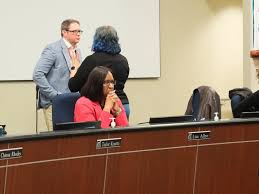
The exchange emerged from a special virtual meeting of the Pacific Palisades Community Council held Wednesday, where the organisation presented an ambitious rebuilding proposal and fielded pointed questions about how it is governed.
What Was Said at the Meeting
PPCC Treasurer Daphne Gronich pressed the presenters on a straightforward point. She asked who the members of the independent board were and noted that no names appeared on the organisation’s website.
Lee West, president and co-founder of the foundation, responded by naming state Senator Ben Allen as the first person to join. He described Allen as instrumental in getting the nonprofit off the ground, saying Allen had volunteered for the board and had written the initial letter that helped secure the organisation’s tax-exempt status. West called the arrangement fitting given that history.
The Senator’s Office Responds
On Friday, a spokesperson for Allen contradicted the account without qualification.
Joe Arellano, speaking for the campaign Allen is currently running for state insurance commissioner, said the senator never joined the Uplifters Foundation board and has no affiliation with the organisation.
Arellano did acknowledge that Allen knows both West and executive director Steven Dietz, the foundation’s other co-founder. He explained that the contact came through Allen’s official duties, since the senator represents the area, and that professional interaction is how the relationship developed.
West could not be reached before publication. Dietz, contacted by telephone on Friday evening, declined to comment.
The Proposal Behind the Scrutiny
The governance questions did not arise in a vacuum. The foundation used the meeting to outline a plan to purchase sixty lots and finance home construction on them, backed by 250 million dollars in tax-exempt bonds.
That figure alone guaranteed a long question and answer session. Attendees split between supporters and sceptics, with much of the discussion centring on transparency and accountability rather than on the construction itself.
What the Board Is Supposed to Do
Dietz described a nine-member independent board that would hold authority over several significant functions:
Recruiting executives and setting their compensation
Determining employee salaries
Deciding how grant funds are distributed
Those responsibilities place the board at the centre of nearly every consequential decision the organisation would make. Which explains why the composition of that body became the focus of so much attention, and why a disputed name on the roster matters more than it might otherwise.
Community Members Want Seats
PPCC Vice President Reza Akef raised a related request during the session. He said the most pressing question for residents concerned which community leaders would actually participate in governance.
Akef asked the co-founders to commit to placing at least three community members on the board, arguing that local representation would help ensure grant money reaches organisations that deserve it.
Neither West nor Dietz publicly committed to that request during the meeting.
Why the Discrepancy Matters
For a nonprofit seeking to raise a quarter of a billion dollars in tax-exempt financing, the credibility of its governing body is not a peripheral issue. Naming an elected official as a founding board member conveys legitimacy and suggests a level of official comfort with the venture.
If that association does not exist as described, the question becomes how the misunderstanding arose. There is meaningful distance between a legislator writing a letter to support a tax-exempt application, which is routine constituent service, and that same legislator agreeing to serve as a director with fiduciary responsibilities.
Arellano’s account draws exactly that line. He confirmed the relationship while denying the role.
Open Questions
Several things remain unresolved. The foundation has not published its board roster, so the identities of the other eight members remain unknown publicly. It is unclear whether the organisation will correct the statement made about Allen.
Also unaddressed is whether any letter supporting the tax-exempt application was in fact written, and if so, whether it was framed as constituent assistance rather than as an indication of board membership.
What Comes Next
The Uplifters Foundation now faces a more sceptical audience than it likely anticipated walking into Wednesday’s meeting. Residents entered with questions about a large financing structure and left with questions about who is actually accountable for it.
Restoring confidence would probably start with the simplest possible step: publishing the names of all nine directors and letting each confirm their participation independently. Until that happens, scrutiny of the Uplifters Foundation board is unlikely to ease.
Author
-
Lucienne Albrecht is Luxe Chronicle’s wealth and lifestyle editor, celebrated for her elegant perspective on finance, legacy, and global luxury culture. With a flair for blending sophistication with insight, she brings a distinctly feminine voice to the world of high society and wealth.