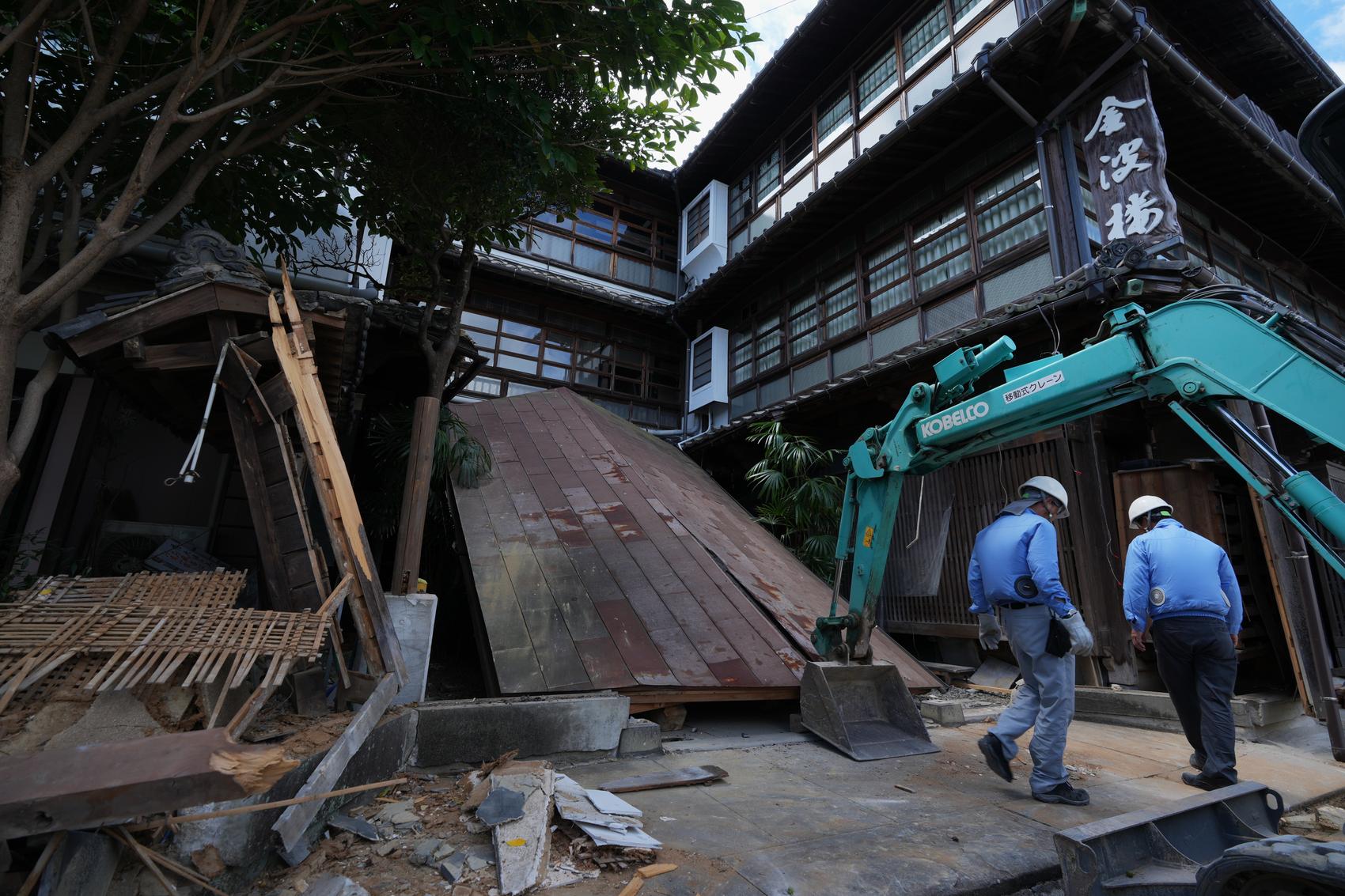
The Japan mall explosion that followed last week’s earthquake in Kumamoto prefecture has taken on a far more troubling dimension, with the revelation that two of those killed had returned to the building on the instruction of a manager to secure money from a cash register.
Their employer has since apologised publicly, acknowledging the decision as indefensible.
What Happened in Kumamoto
A magnitude 6.8 earthquake struck Kumamoto prefecture on 28 July, killing 38 people.
Seven of those deaths occurred at Aeon Mall. Most people inside the complex evacuated promptly after the shaking stopped, following the standard response to a major seismic event.
But roughly an hour later, some employees were still inside the building when an explosion tore through it.
The Instruction That Proved Fatal
Among those killed were two workers from Habita, a general goods retailer with a store in the mall.
They had not remained inside by accident. Their company had asked them to go back in and move cash from the register into a safe.
Habita sales director Goji Yuse addressed the matter publicly, stating that the instructions given at the time were inappropriate and expressing deep regret over them.
His assessment to reporters was blunt. Looking back, he said, it was not worth a life.
A Chance Encounter Outside the Mall
One of the two has been identified as Kurumi Otake, aged 22. The second employee has not been named publicly.
Otake’s family told local media that she encountered a relative outside the mall in the aftermath of the earthquake. She was out of the building. She was safe.
She explained to that relative that she had to go back inside, because her employer had asked her to move money from the till into the safe.
Two company representatives who attended her wake on Sunday confirmed this account and offered apologies to her family.
Who She Was
Her relative described Otake as someone with a strong sense of justice, the kind of person who would follow through on what she believed she was supposed to do.
She had also been supporting her mother since her father’s death three years earlier, taking on responsibility for her family at an age when most people are still establishing themselves.
The relative’s words captured the awfulness of the situation with painful simplicity: had she not gone back inside the store at that moment, she would still be with her family.
Her mother’s response, reported by local media, was shorter still. Her daughter is not coming back.
Why This Case Resonates
Japan has among the most developed earthquake preparedness systems anywhere in the world. Evacuation drills are routine from childhood, building codes are stringent, and public messaging around post-quake risks is well established.
Central to that guidance is a straightforward principle: once you are out of a compromised building, you stay out.
The reasons are well documented. Aftershocks can bring down structures already weakened. Gas lines rupture during seismic events and can leak undetected. Electrical systems fail in ways that produce ignition sources. The period immediately following an earthquake carries hazards that are often invisible from outside.
An explosion an hour after the initial quake is precisely the scenario those protocols exist to prevent.
The Question of Authority
What makes this case particularly difficult is that the workers did not misjudge the danger independently. They were told to go back.
The imbalance in such moments is considerable. A young employee receiving an instruction from a supervisor during a chaotic situation has limited scope to weigh the risk personally, question the reasoning, or refuse outright. The instruction carries the implicit authority of the workplace, and in the confusion following a disaster there is little time to think it through.
Yuse’s admission that the instructions were inappropriate is significant precisely because it locates the failure with the company rather than with the individuals who followed the order.
What Happens Now
Habita has indicated it is considering how to proceed with the matter.
The company was founded in 1976 and operates more than ten stores across several prefectures. It now faces questions extending beyond this single incident, including what its emergency procedures actually specified, whether staff had been trained on post-earthquake protocols, and how an instruction of this kind came to be issued at all.
Public apologies carry considerable weight in Japan and often precede more formal accountability processes. Whether that follows here remains to be seen.
A Lesson Written in the Worst Way
The details of this case are stark because the decision point is so clearly identifiable. A young woman stood outside a building, in the open air, out of danger. She then walked back in because she had been asked to protect money.
An hour after an earthquake, in a structure whose integrity was unknown, cash in a register was treated as something worth retrieving.
The sales director’s own words remain the clearest summary of what went wrong. It was not worth a life. The tragedy is that this conclusion arrived after the fact rather than in the moment the instruction was given.
Author
-
Lucienne Albrecht is Luxe Chronicle’s wealth and lifestyle editor, celebrated for her elegant perspective on finance, legacy, and global luxury culture. With a flair for blending sophistication with insight, she brings a distinctly feminine voice to the world of high society and wealth.