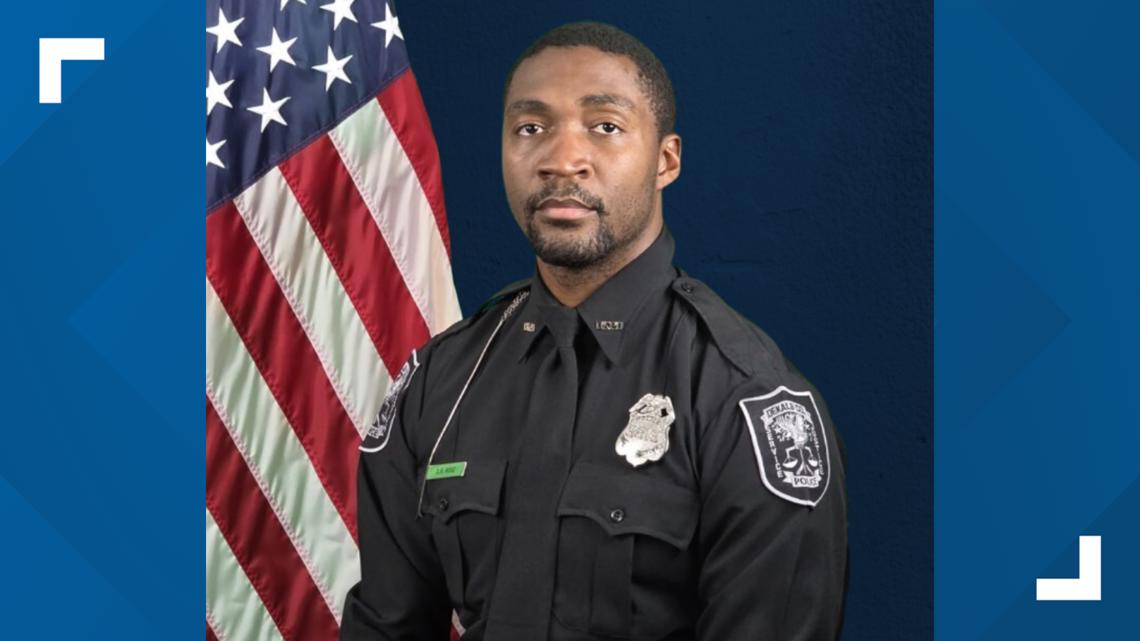
The CDC shooting anniversary brought Health and Human Services Secretary Robert F. Kennedy Jr. to Atlanta on Friday, one year after a gunman fired hundreds of rounds at the Centers for Disease Control and Prevention campus and a DeKalb County police officer lost his life responding.
The visit combined two very different obligations: honoring a man who died protecting the facility, and facing an agency workforce with plenty on its mind.
Remembering Officer David Rose
The commemorative ceremony was held for CDC employees rather than the public, and members of Officer David Rose’s family were present.
Rose was killed during the attack, which forced the federal campus into lockdown for hours as officers worked to contain the situation. The volume of gunfire directed at the buildings was substantial, and the incident left a lasting mark on people who had never expected a public health agency to become a target.
For the employees who gathered Friday, the anniversary is not an abstraction. Many were inside during the lockdown, sheltering in offices and laboratories while the shooting unfolded outside.
A Tense Town Hall
After the memorial, Kennedy addressed staff directly in a town hall that was reported as tense.
That description is not surprising given the broader context. The relationship between the current HHS leadership and the CDC workforce has been strained, with disagreements over public health policy, agency direction and staffing playing out publicly over the past year.
Holding a session like that on an anniversary of violence creates a complicated dynamic. Employees arriving to grieve a colleague found themselves also confronting questions about the institution’s future.
A Notable Absence
Dr. Erica Schwartz, recently confirmed as CDC director, did not attend. A CDC spokesperson explained that she has not yet been sworn in and has not officially begun the job.
Her appointment carries significance beyond this event. Schwartz becomes the agency’s first permanent leader in more than a year, ending an extended stretch during which the CDC operated without confirmed leadership at the top.
That gap has been widely discussed among public health observers, who argue that acting leadership makes it harder for an agency to set direction, defend its work or advocate internally during budget and policy fights.
Why the Attack Resonated Beyond Atlanta
The shooting at the CDC campus was not simply a violent crime at a workplace. It was an attack on an institution, and it landed at a moment when public health agencies were already absorbing intense criticism.
For staff, the implications were immediate and personal:
- A campus that had felt like an ordinary office environment became a place requiring visible security
- Employees who had worked on vaccines, disease surveillance and outbreak response had to weigh whether their jobs carried physical risk
- Recruitment and retention questions took on a dimension they had not previously had
Public health workers across the country followed the incident closely, seeing in it a reflection of pressures many had felt in their own communities.
The Officer Who Responded
Rose was a DeKalb County police officer, part of the response to an active shooter situation at a federal facility.
Officers in that position operate with limited information and no way to know the scale of what they are entering. Rose went toward the gunfire, and he did not come back.
His family’s presence at Friday’s ceremony placed that loss at the center of the observance, which is where the agency clearly wanted it. The event was closed to the public, giving the family and employees space without cameras.
Looking Forward
The anniversary arrives with the CDC in transition. A new director is preparing to take over, the workforce is navigating a difficult relationship with department leadership, and the agency continues to operate under considerable public scrutiny.
Kennedy’s attendance served as an acknowledgment that what happened in Atlanta was significant and that the loss belongs to the whole department, not just one campus.
Whether the town hall that followed advanced the relationship between HHS leadership and CDC staff is a separate question, and one the reported tension suggests remains unresolved.
For the family of David Rose, and for colleagues who were there that day, the anniversary was about something simpler and harder: a year gone by, and a person still missing from it.
Author
-
Lucienne Albrecht is Luxe Chronicle’s wealth and lifestyle editor, celebrated for her elegant perspective on finance, legacy, and global luxury culture. With a flair for blending sophistication with insight, she brings a distinctly feminine voice to the world of high society and wealth.