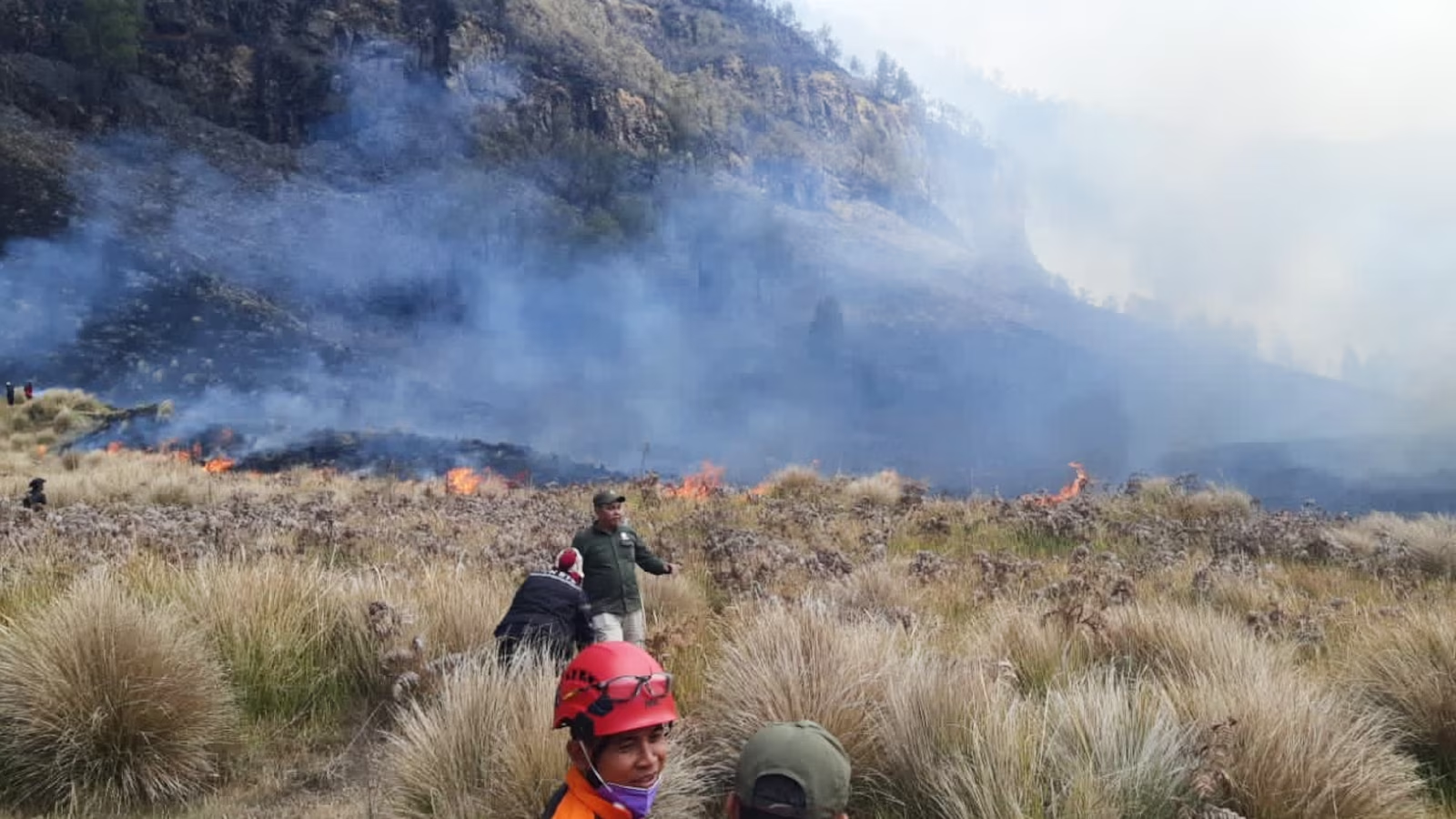
The Bromo national park wildfire entered its eighth day on Monday, with Indonesian crews still working to contain flames that have already consumed more than 500 hectares on Java Island, according to officials.
That is an area larger than 700 football fields, and the fire has now forced the closure of Bromo Tengger Semeru National Park, one of the country’s most visited destinations.
The Fire Reaches Populated Ground
The concern shifted significantly on Monday.
Satriyo Nurseno, an official with the East Java disaster mitigation agency, said the fire had begun moving toward residential areas in the park’s Dingklik Valley.
Once a wildfire approaches homes, the operation changes character entirely. Crews stop working purely to contain the perimeter and start defending structures, which stretches limited resources across a wider set of priorities.
What Crews Are Working With
The response has combined ground personnel with aerial support.
Two water-bombing helicopters are in operation alongside several fire trucks and drones fitted with sprinklers. Forest rangers and soldiers have been deployed to fight the flames directly.
Drones with sprinkler systems are a relatively recent addition to firefighting in the region. They cannot deliver anywhere near the volume a helicopter drops, but they can reach terrain that is dangerous or impossible for ground crews and can operate in conditions where sending a pilot would be unwise.
The Weather Will Not Cooperate
One tool that would normally be reaching for is currently unavailable.
Forestry Minister Raja Juli Antoni said Sunday that cloud-seeding flights over the Bromo area would not be possible for several days, for a simple reason: there are not enough clouds.
Cloud seeding works by dispersing particles such as silver iodide or salt into existing clouds from aircraft, giving water vapour something to condense around and encouraging rainfall. It cannot manufacture clouds. Without sufficient moisture already in the atmosphere, the technique has nothing to work with.
That leaves crews dependent on ground and aerial suppression alone until conditions change.
This Has Happened Before
Bromo burned significantly in 2023, when more than 500 hectares were destroyed.
The cause of that fire remains one of the more frustrating examples of how easily these disasters begin. It was sparked by a couple setting off a flare during a pre-wedding photo shoot.
The current fire’s cause has not been announced.
A Season Already Worse Than the Last
The Bromo blaze is not an isolated event. It sits within a national picture that has deteriorated sharply.
In the first half of this year alone, more than 107,000 hectares burned across Indonesia. That is more than double the total area lost to wildfires in all of 2023.
The weather agency BMKG has forecast a long and intense dry season this year, with elevated risk of both drought and wildfire, driven partly by El Nino.
Understanding El Nino’s Role
El Nino is a naturally occurring climate pattern that shifts winds, air pressure and rainfall distribution across the globe.
Across India and Southeast Asia, the typical effect is drier conditions. Rainfall that would normally arrive on schedule either diminishes or does not come at all, leaving vegetation dry for longer stretches and dramatically extending the window in which fires can start and spread.
The previous El Nino contributed to making 2023 and 2024 the two hottest years ever recorded globally.
For fire management, the practical consequence is that the margin for error shrinks. Ignition sources that would produce a small, containable fire in a normal year can produce something like the current situation instead.
What Happens Next
Everything hinges on weather that is not currently forecast to arrive. Without cloud cover, seeding is off the table. Without rain, containment depends on crews holding lines by hand and from the air.
For travellers, the park remains closed and is likely to stay that way until the fire is controlled and the terrain assessed for safety.
For residents in the Dingklik Valley area, the immediate concern is whether crews can hold the fire before it reaches homes.
A note on sourcing: this account works from the reported details available. Conditions in an active wildfire change quickly, and figures on area burned typically rise as assessments continue.
Author
-
Lucienne Albrecht is Luxe Chronicle’s wealth and lifestyle editor, celebrated for her elegant perspective on finance, legacy, and global luxury culture. With a flair for blending sophistication with insight, she brings a distinctly feminine voice to the world of high society and wealth.