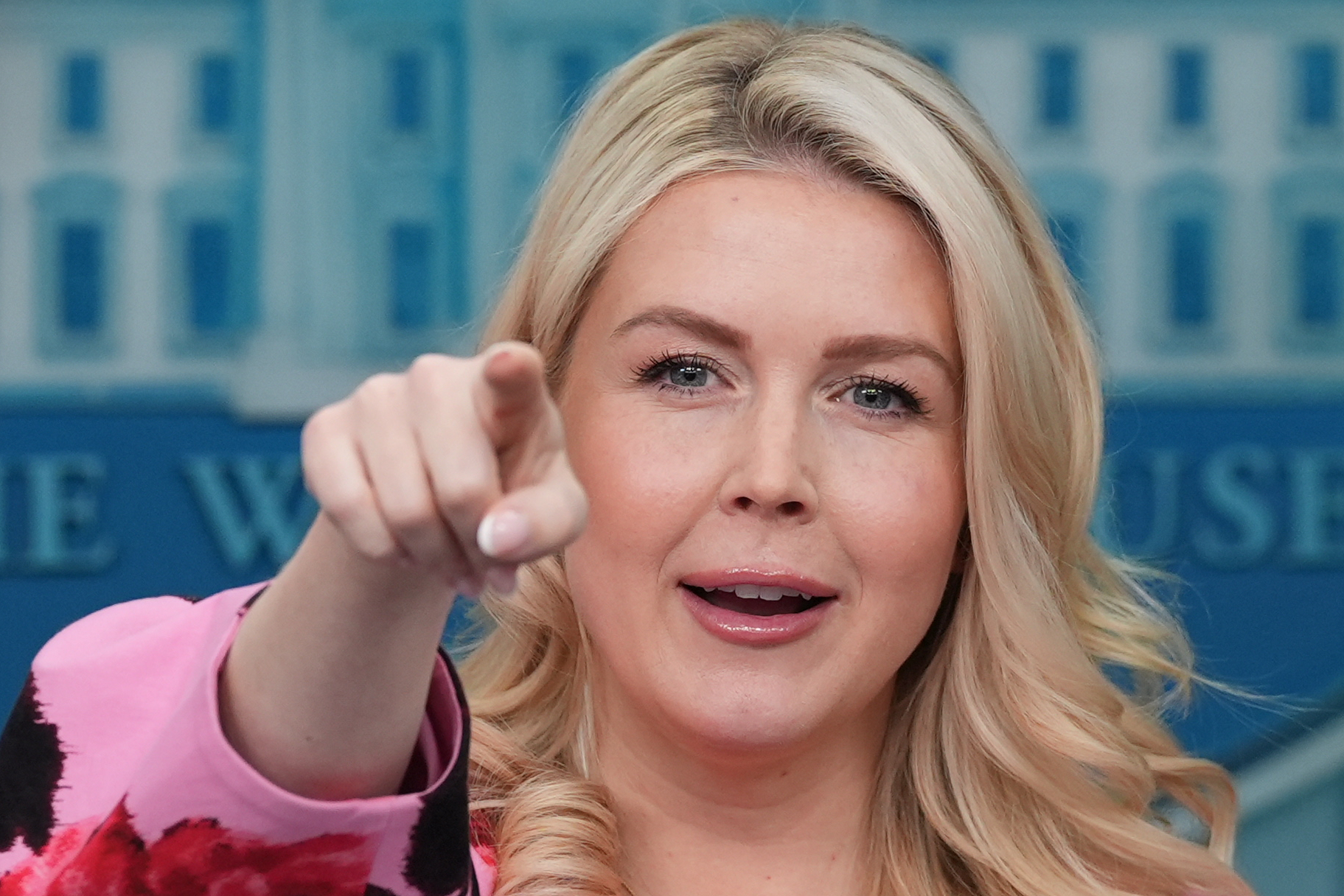
Karoline Leavitt, the youngest person ever to stand behind the White House press secretary’s lectern, is stepping away from the job at the end of the month. At 28, she has spent her time in one of the most scrutinized communications roles in American politics, and she says the pull of her two small children finally outweighed the pull of the podium.
The announcement arrived in familiar fashion for this administration: President Donald Trump shared the news online first, and Leavitt followed shortly afterward with a message of her own describing the choice as bittersweet.
A Choice Made at Home, Not in the Office
Leavitt returned to work not long ago after welcoming her second child, a daughter named Viviana, in May. She is also raising a two-year-old son. In her statement, she explained that coming back to the building after maternity leave clarified something she had been quietly wrestling with — that she could not give her children the version of herself they deserved while also giving the press secretary role the round-the-clock attention it demands.
That framing will sound familiar to a lot of working parents. The job is not a nine-to-five. It involves early-morning message coordination, constant travel, unpredictable news cycles, and evenings spent preparing for whatever the next day’s questions might bring. Doing it well tends to consume everything around it.
Rather than trying to stretch herself across both roles indefinitely, Leavitt chose to close the chapter and begin another one.
Trump’s Reaction and What Comes Next for Her
The president responded warmly, saying he both understood and respected the decision. He also made clear that Leavitt is not disappearing from his political world.
In his post, Trump described her as someone who will become one of his leading outside advisors and a significant voice inside the Republican Party as it pushes toward the midterm elections. He framed the coming campaign season in characteristically ambitious terms, suggesting the party intends to break the historical pattern that usually punishes the president’s party in midterm years.
In practical terms, that means Leavitt is likely to remain visible — just from a different chair. Former press secretaries often move into commentary, consulting, campaign strategy, or media roles, and her profile suggests she will have no shortage of options.
Notably, Trump did not name a successor or signal who is under consideration. That leaves an open question hanging over one of the administration’s most public-facing positions.
The Road That Took Her to the Briefing Room
Leavitt’s rise was unusually quick, even by the accelerated standards of modern political careers.
Here are the steps that shaped her path:
- She worked as an aide inside the White House press operation during Trump’s first term, learning the machinery of presidential communications from the inside.
- She later served as communications director for Representative Elise Stefanik of New York, a prominent Republican voice.
- In 2022, she ran for Congress in New Hampshire and won a crowded ten-candidate Republican primary before losing the general election to incumbent Democratic Representative Chris Pappas.
- She then became a spokesperson for MAGA Inc., a super PAC built to support Trump.
- From there she joined his 2024 presidential campaign, and the press secretary appointment followed.
That trajectory — staffer, congressional aide, candidate, campaign surrogate, then chief spokesperson — compressed into a handful of years explains how she arrived at the podium younger than anyone before her.
A Press Secretary Who Redefined the Role
One of the more interesting details of Leavitt’s tenure is how she used the job. She held formal briefings in the West Wing press room less often than several of her recent predecessors did.
Part of that reflects Trump’s own style. The president speaks to reporters constantly — during Oval Office events, on the South Lawn, aboard Air Force One, and at rallies. When the principal is his own most active spokesperson, the traditional daily briefing loses some of its purpose.
Instead, Leavitt was frequently deployed to Fox News and other conservative outlets, where she promoted the administration’s agenda and pushed back against Democrats and mainstream media coverage. It was a strategy built around friendly platforms and direct messaging rather than daily sparring with the White House press corps.
Supporters saw it as smart adaptation to a fragmented media landscape. Critics argued it reduced accountability by limiting the forum where a broad range of outlets could ask questions on the record. Both views are worth weighing.
How She Compares With Her Predecessors
The press secretary role has looked dramatically different depending on who holds it.
During Trump’s first term, Sean Spicer and Sarah Huckabee Sanders became known for combative exchanges with reporters. Stephanie Grisham held the title without ever conducting a formal briefing. Kayleigh McEnany, who followed her, often used briefing-room appearances to challenge journalists directly.
Placed in that lineage, Leavitt was less confrontational at the lectern simply because she stood at it less frequently, choosing other venues instead.
The Vacancy Left Behind
Whoever takes over inherits a demanding assignment: representing a president who prefers speaking for himself, managing an aggressive news environment, and doing it heading into a midterm election year when every word carries campaign weight.
For now, the search appears to be unfolding quietly.
A Familiar Trade-Off in an Unfamiliar Job
Strip away the politics and Leavitt’s departure lands on something broadly relatable. A demanding career and two children under three collided, and something had to give.
She is leaving on her own terms, at a young age, with a network that will keep her close to Republican politics. Few people exit the White House with that combination. Whatever comes next, the podium was clearly not meant to be the final stop.
Author
-
Lucienne Albrecht is Luxe Chronicle’s wealth and lifestyle editor, celebrated for her elegant perspective on finance, legacy, and global luxury culture. With a flair for blending sophistication with insight, she brings a distinctly feminine voice to the world of high society and wealth.