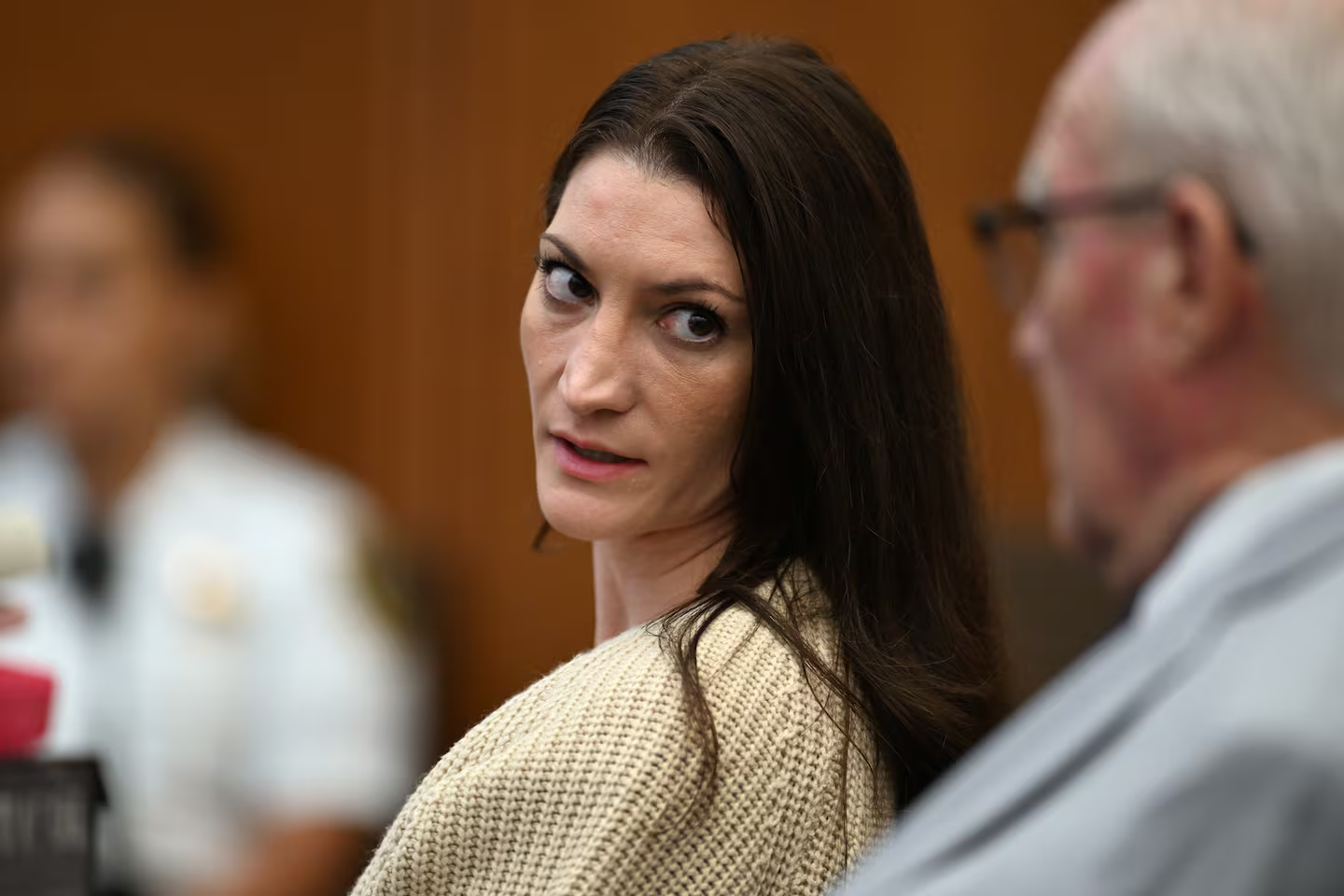
The Lindsay Clancy trial moved slowly Thursday, with jurors hearing from just one witness before being sent home for the day. The more consequential activity happened after they left the room.
Testimony resumes Friday at 9 a.m.
Thursday’s Sole Witness
Sheila Cavanaugh, a chaplain at Brigham and Women’s Hospital, was the only person to take the stand.
The brevity followed a similarly shortened session Wednesday, when the judge excused jurors early because of what he described as an unforeseen circumstance.
Short trial days are not unusual in complex cases. Scheduling conflicts, witness availability and legal arguments that must occur outside the jury’s presence all compress the time available for testimony.
The Case Being Tried
Prosecutors allege that on January 24, 2023, Clancy strangled her three children at the family’s home in Duxbury, Massachusetts, after sending her then-husband Patrick out on errands.
The children were Cora, 5, Dawson, 3, and Callan, 8 months.
Following the killings, she went through a second-story window of the home. The fall left her paralyzed from the waist down.
The defense does not dispute what happened. It argues that Clancy was experiencing bipolar disorder and postpartum psychosis at the time and therefore should not be held criminally responsible.
That framing shapes the entire proceeding. The question before the jury is not whether the deaths occurred but whether the woman who caused them possessed the mental capacity the law requires for criminal responsibility.
The Argument After the Jury Left
With jurors dismissed, the judge and attorneys took up the question of what instructions the jury will eventually receive. Those instructions matter enormously, since they define the legal framework jurors apply to everything they have heard.
The dispute Thursday centered on intoxication.
Prosecutors objected to any instruction on intoxication as it relates to criminal responsibility, stating that from their perspective, no evidence showed intoxication by drugs or alcohol during the killings.
Defense attorney Kevin Reddington pushed back firmly, characterizing the case as clearly involving an involuntary intoxication defense. He argued that potential overprescription of medication could have directly affected Clancy’s actions.
Why This Distinction Matters
The legal difference between the two positions is substantial.
Voluntary intoxication generally provides limited defense in criminal cases. A person who chooses to drink or take drugs and then commits a crime is typically held accountable for that choice.
Involuntary intoxication operates differently. When a substance enters someone’s system without their meaningful consent, or when prescribed medication produces effects the patient could not have anticipated, the law treats the resulting impairment more like an external force acting on the person.
Reddington’s framing places prescribed medication in that second category. If jurors receive an instruction permitting that analysis, they gain a pathway to consider whether the drugs themselves, rather than any choice by Clancy, drove what happened.
Prosecutors want that pathway closed.
The Timeline Ahead
Responding to a question from Reddington, Judge Sullivan indicated he anticipates closing arguments on Monday or Tuesday, while noting he remains flexible depending on what the case requires.
He acknowledged the volume of what jurors have absorbed, observing that there has been substantial evidence and many witnesses, and that if the parties need a day to organize their thinking, that can be discussed.
Court recessed for the day and will reconvene Friday morning.
What Comes Next
Once testimony concludes, several things happen in sequence.
- The judge finalizes jury instructions after hearing arguments from both sides
- Attorneys deliver closing arguments, with the prosecution typically speaking last
- Jurors receive their instructions and begin deliberating
That instruction conference, which happened in part Thursday, often receives less attention than dramatic testimony but can influence outcomes more directly. Jurors deliberate within the boundaries the judge sets.
The Broader Question
Cases involving postpartum psychosis occupy difficult territory in criminal law. The condition is medically recognized and can produce severe breaks from reality, yet proving its presence and effect at a specific moment requires expert testimony that juries must weigh against their own instincts.
Massachusetts law on criminal responsibility asks whether a defendant, due to mental disease or defect, lacked substantial capacity either to appreciate the wrongfulness of their conduct or to conform their behavior to legal requirements.
Both halves of that standard will be at issue when jurors in the Lindsay Clancy trial begin their work next week.
Author