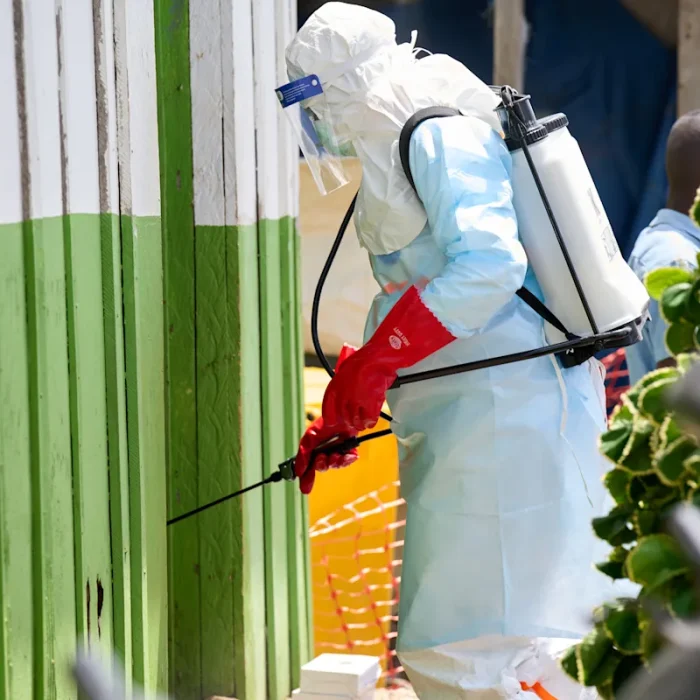
A summer Covid wave is building across the country, even though the traditional respiratory illness season has not begun and both flu and RSV activity remain low.
If you have been coughing, feeling feverish or assuming it is just a seasonal cold, a test might be worth taking.
What the Numbers Show
Case counts are not dramatic, and the country is not recording large numbers of hospitalizations or deaths.
But CDC data placed the test positivity rate above 3 percent for the week ending August 8, the first time it has reached that level since March. Numbers are climbing in every state.
Dr. Caitlin Rivers, an outbreak science expert and senior scholar at the Johns Hopkins Center for Health and Security, put it plainly: August is solidly Covid season.
She noted that the South and West are leading this wave, and that the pattern is familiar. It almost always begins in Florida, Texas and Georgia, which is exactly what is happening again.
Why Covid Behaves Differently
Respiratory viruses circulate year-round, but flu and RSV follow a predictable rhythm. Both peak once annually between December and February before tapering off around April.
Covid does not follow that pattern. It produces both winter and summer waves, which has effectively extended the period when respiratory illness spreads meaningfully.
Tracking Has Gotten Harder
Following Covid’s spread is considerably more difficult than during the pandemic, when daily case counts appeared on the CDC website.
The federal government now collects substantially less data. Laboratories are no longer required to report negative tests. Hospitals no longer report specific bed capacity.
Dr. Scott Harris, state health officer for the Alabama Department of Public Health, summarized the situation with resignation: they just have the tools they have.
The CDC now relies on indirect indicators including wastewater measurements, emergency room visits and laboratory results.
Harris described conditions in Alabama as an uptick rather than a surge, with no reflection yet in hospitalizations or mortality. He also described the underlying analytical problem, noting that they no longer know how to interpret the numbers because the denominator is unclear. They know when a positive test appears, he said, but often lack clinical data to place it in context.
Where to Look for Information
Dr. Amanda Zink, an emergency room physician in Alaska and Yale fellow who helped develop PopHIVE, a free platform for checking local and national health trends, recommends checking conditions before travel.
People can look directly at what respiratory illness looks like in a specific state, said Zink, who served as Alaska’s chief medical officer during the pandemic. Knowing what is circulating allows individuals to take whatever measures they feel comfortable with and can actually control.
Amanda Bidwell, scientific program manager at WastewaterSCAN, a Stanford-based monitoring program that updates daily, described treating the site like a weather forecast.
Living in the Bay Area, she said, she can check her phone, see that Covid is taking off, and decide to wear a mask before a concert or a flight.
Wastewater data offers an early signal because people shed viral RNA days before symptoms appear or tests get taken.
Two Sources, Two Readings
The available data does not agree, which is worth knowing.
The CDC’s wastewater surveillance described Covid activity as very low as of the week ending August 8.
WastewaterSCAN, which uses different methodology and updates more frequently, characterized activity as high. It also detected an upward trend over the previous 21 days in every region except the Midwest, where activity registered as medium.
That discrepancy reflects genuine methodological differences rather than error, but it means checking more than one source is sensible.
The CDC’s emergency room analysis showed visits low for Covid across many regions while increasing in the West and South as of August 12.
Why Cases Will Likely Keep Rising
Several factors point the same direction:
- Last-minute summer travel mixing populations
- Schools reopening and concentrating children indoors
- Waning immunity from previous vaccination or infection
Prevention Without Pills
Zink emphasizes that non-pharmaceutical measures keep people out of her emergency room in Palmer, Alaska.
Regular handwashing remains basic and effective. The CDC recommends soap and water for roughly 20 seconds, about as long as singing “Happy Birthday” twice.
A well-fitting N95 mask filters at least 95 percent of airborne particles, protecting both the wearer and others if the wearer is infected.
Vaccination Questions
Dr. James McDonald, health commissioner for the New York State Department of Health, suggested that anyone who skipped last year’s Covid vaccine consider speaking with a provider or pharmacist, potentially even about last season’s formulation.
For people at genuinely high risk, he said, if eight or ten months have passed since their last dose, they should talk to their provider. He stressed that the answer is not black and white and depends on individual risk factors.
The FDA’s vaccine advisory committee has issued recommendations for this season’s formula. Experts expect availability in late September, though the CDC has not yet issued an official recommendation.
Federal policy has shifted from a universal recommendation to a narrower approach in which everyone 6 months and older is advised to consult a healthcare provider. Most medical organizations still recommend the vaccine, and insurers have indicated continued coverage.
If You Are Exposed
A newly approved option exists for people who have had close contact with someone infected. Xocova is the first FDA-approved oral antiviral pill designed to help prevent illness in exposed individuals aged 12 and older.
If You Get Sick
Paxlovid reduces the risk of severe infection, particularly when started early after symptoms begin.
One change from the pandemic era matters: it is no longer free. Check whether your insurance covers it.
To limit spread, stay home while symptomatic. The CDC recommends isolating and masking around others until symptoms resolve. Once you have gone 24 hours without fever and without fever-reducing medication, the agency considers it safe to resume contact with others.
The Practical Takeaway
The summer Covid wave is real but moderate. Nobody needs to cancel their life over it.
Knowing it exists changes small decisions, though. A test instead of an assumption. A mask on a crowded flight. A conversation with a pharmacist if you are high risk and overdue.
Author