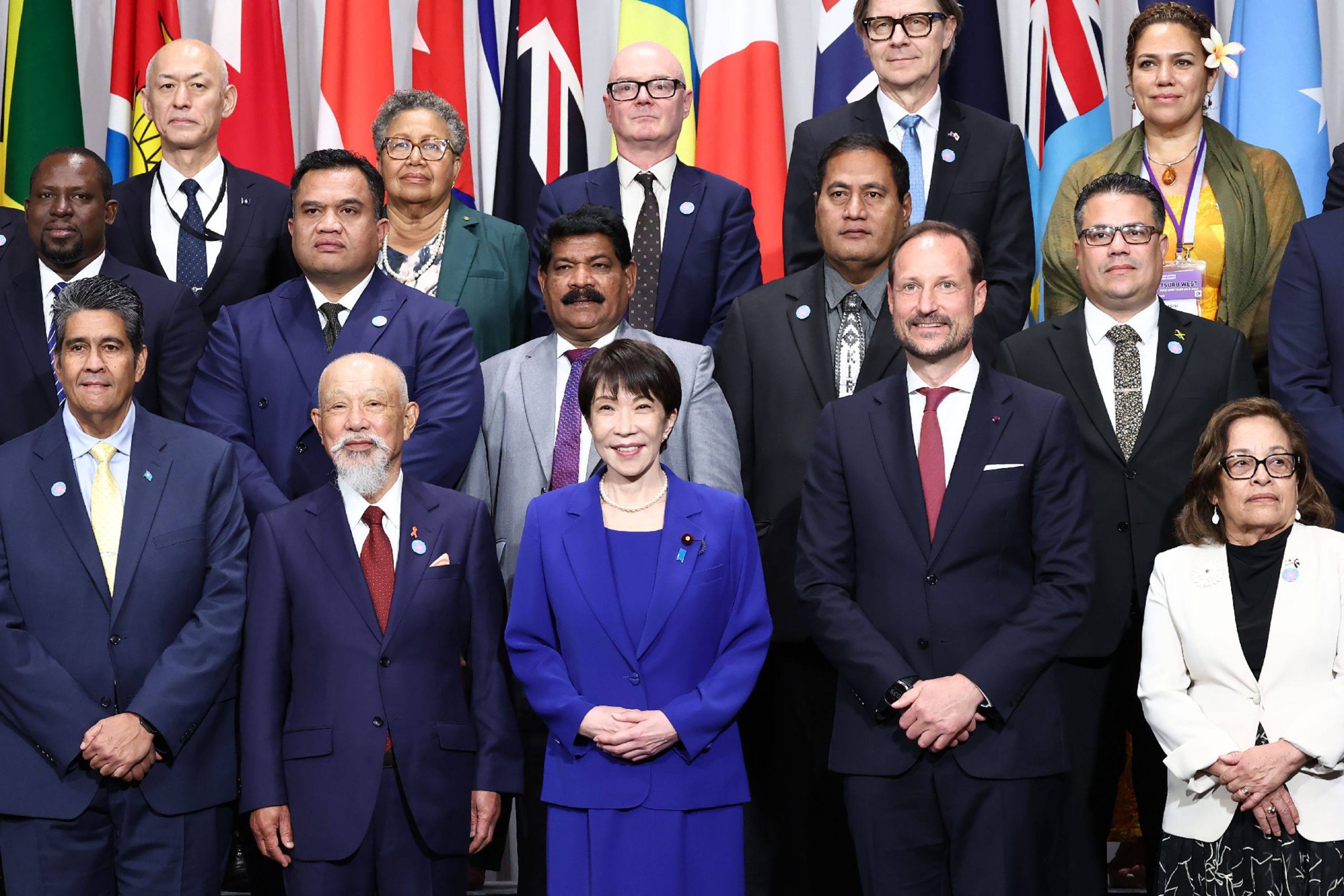
The Pacific Islands Forum has convened in a place unlike any conventional summit venue. Leaders from some of the world’s smallest nations gathered in Palau, a quiet tropical archipelago with no traffic lights, where the host country’s population of roughly 18,000 was expected to rise to around 20,000 as delegations arrived from dozens of countries.
It is a long way from New York or Davos, and deliberately so.
A Summit Run by the Community
The preparations said as much about the place as the agenda did.
Before the official opening on Monday, Palau’s president and other senior officials walked the main road circling the island collecting rubbish. Barbers and tattoo artists set aside their usual work to drive delegates. Students volunteered to escort visiting dignitaries.
There is no separate class of summit infrastructure here. When a country of 18,000 hosts an international meeting, the country itself becomes the staff.
That produces a different atmosphere from the heavily secured, tightly scheduled gatherings held in larger capitals. Proceedings move at their own pace, and decisions emerge through consensus rather than voting.
The Consensus Tradition
That last point deserves attention, because it shapes everything about how the Forum operates.
Consensus means no member is outvoted. It also means a single objection can stall an outcome, which slows the process considerably and rewards patience over pressure.
For small states, the arrangement has real value. In a body where decisions require agreement rather than majorities, a nation of a few thousand people carries weight that population figures would never grant it elsewhere.
The Competition Underneath
Beneath the informality sits a serious and intensifying contest over influence in the region.
The Pacific covers an enormous expanse of ocean, and the countries that administer it control fisheries, shipping routes, undersea cable corridors and exclusive economic zones many times larger than their landmasses. That geography has made the region a focus of competition between major powers seeking security arrangements, development partnerships and diplomatic alignment.
The result is a familiar pattern for Pacific leaders: a sharp increase in visits, aid offers, infrastructure proposals and security agreements from outside the region, often arriving faster than small administrations can evaluate them.
What Island Leaders Actually Want to Discuss
The external framing of these summits often centres on great power rivalry. The internal agenda is usually different and more immediate.
Priorities commonly raised at Forum meetings include:
- Climate change and sea level rise, which pose existential rather than theoretical risks
- Fisheries management and revenue from tuna stocks
- Disaster preparedness and recovery funding
- Health and education access across scattered island populations
- Labour mobility arrangements with larger neighbours
- Regional unity and keeping decision-making in Pacific hands
Climate remains the through-line. For several member states, the question is not economic growth but whether inhabited territory remains habitable.
The Tension the Summit Cannot Avoid
The difficulty facing Forum members is that outside attention brings both opportunity and risk.
Increased engagement means more funding, more infrastructure and more leverage in negotiations. It also means pressure to take positions, and the possibility that competition between larger states fractures the regional consensus that gives the Forum its authority.
Pacific leaders have consistently argued that the region should not be treated as an arena for other countries’ contests. That position is easier to state than to maintain when the offers arriving are substantial and the states receiving them have limited resources.
Why the Setting Matters
There is something instructive about a summit where the president picks up litter and a tattoo artist drives a delegation.
It underlines the gap between the scale of these countries and the scale of the issues being decided around them. Nations with populations smaller than a mid-sized town are negotiating on ocean governance, climate finance and security arrangements with partners a thousand times their size.
The Forum exists to close some of that gap by allowing members to speak collectively rather than individually.
What Comes Next
The measure of this meeting will not be the communiqué language on great power competition. It will be whether members leave with a shared position that holds when they return home and face bilateral approaches separately.
That has always been the central challenge for the Forum. Collective bargaining works only if the collective stays intact.
For the week ahead in Koror, the unhurried pace and consensus rules will do their work, and the outcome will say something about whether small states can set the terms of engagement in a region everyone else has suddenly decided is strategically vital.
Author