The Seattle gun violence strategy moving through City Hall advanced on Tuesday, two days after three people were killed in three separate shootings across the Belltown neighbourhood.
The City Council’s Public Safety Committee voted to send the measure forward, though a notable gap has already opened between the council and the mayor’s office over how the city should proceed.
What the Resolution Does
Sponsored by Councilmember Maritza Rivera, the resolution passed 3-0 with Councilmember Eddie Lin abstaining.
It calls for a two-year partnership with the National Network for Safe Communities at a cost of $418,000. Rivera said the organisation has worked with cities including Boston, Baltimore and Philadelphia, where she said gun violence dropped by as much as 60 percent.
Her argument for urgency was personal in tone. She said she cannot sit and watch what is happening to the city while knowing a strategy exists that Seattle could be trying and is not.
The measure now goes to the full council next week.
The Model Behind the Proposal
The approach at the centre of the resolution is known as focused deterrence.
Rather than broad enforcement across a neighbourhood, focused deterrence concentrates on the small number of individuals responsible for the majority of shootings in a given city. The logic is that gun violence in most American cities is highly concentrated among a relatively small network of people, and that direct intervention with that group produces larger reductions than diffuse strategies.
It typically combines direct communication with those individuals, offers of services and support, and clear consequences for continued violence. The model has a substantial track record in some cities and a mixed one in others, largely depending on implementation quality and sustained commitment.
The resolution itself is nonbinding. What it does is signal council intent.
A Split With the Mayor’s Office
Rivera acknowledged that Mayor Katie Wilson’s office has not signed on to the approach, describing that as unfortunate.
Wilson issued a statement Tuesday calling the weekend’s violence tragic and unacceptable, and said her office would announce its own gun violence prevention strategy within days.
According to that statement, the mayor plans to announce additional staffing to support gun violence prevention efforts and to push the state legislature to pass policies aimed at keeping guns off the streets.
Two different responses, then, arriving at roughly the same moment.
The Council Signals It Will Proceed Regardless
Committee Chair Bob Kettle made clear the council does not intend to wait for the mayor’s endorsement.
Sometimes a shock to the system is needed, Kettle said, arguing that an outside voice bringing a different perspective has real value. This matters to the city, he said, and it is what residents expect.
Vice Chair Rob Saka pressed the mayor directly on funding, urging Wilson to include money for the partnership in her forthcoming budget proposal.
Saka framed the case bluntly, invoking the familiar line that the definition of insanity is repeating the same actions while expecting different outcomes. Something different needs to be tried on gun violence, he said.
Why Funding Is the Real Test
The nonbinding nature of the resolution matters here. Councils can express intent, but budgets determine what actually happens.
If Wilson’s budget proposal excludes the $418,000, the council faces a choice between finding the money elsewhere and letting the partnership stall. That negotiation, rather than Tuesday’s vote, will determine whether this strategy is implemented at all.
The mayor’s stated plan, focused on staffing and state legislation, is not incompatible with focused deterrence. But it does reflect a different theory of where the leverage lies: one emphasising internal capacity and gun access policy, the other emphasising targeted intervention with specific individuals.
The Weekend That Prompted It
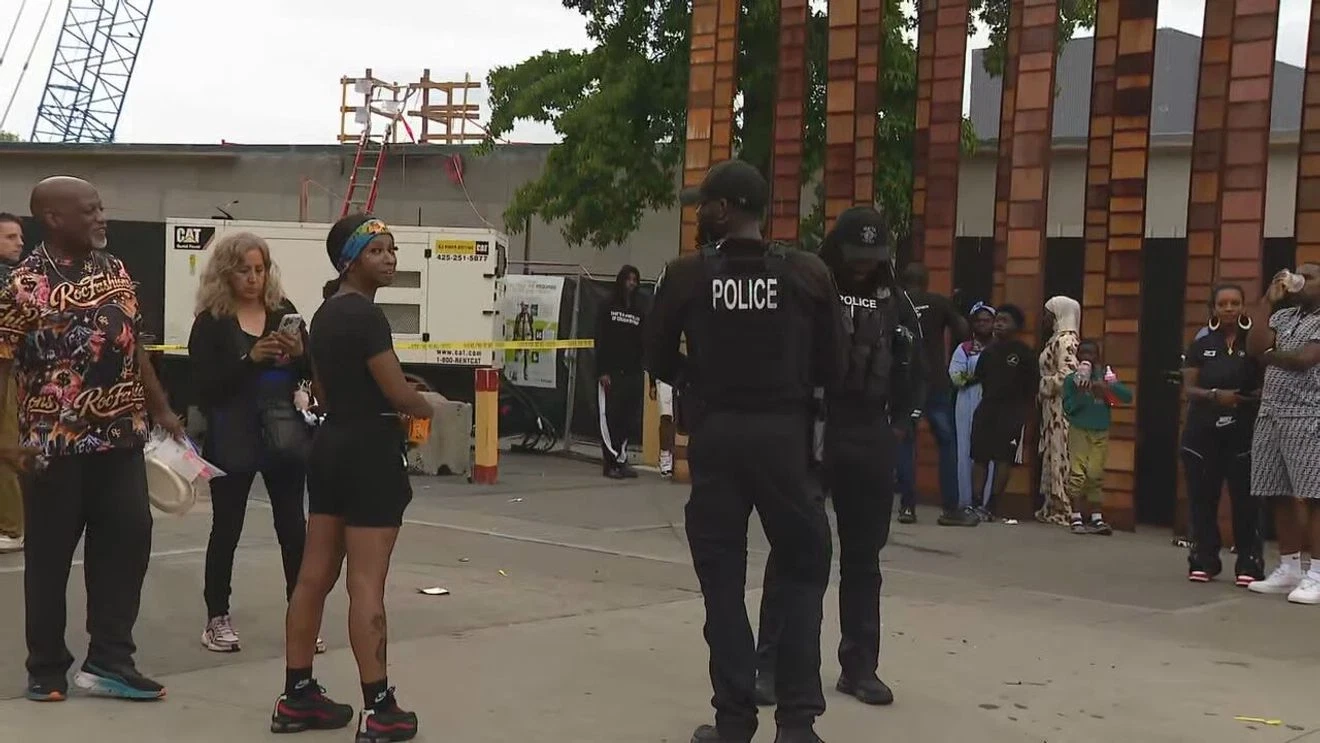
The three Belltown shootings loom over the entire debate. Three people died in three separate incidents in a single neighbourhood across one weekend.
As of Tuesday afternoon, no arrests had been made in connection with any of them.
That fact carries weight in the policy discussion. Unsolved shootings feed the cycle focused deterrence is designed to interrupt, since retaliation often follows when cases go unresolved and the people involved conclude the system will not act.
What Happens Next
The full council takes up the resolution next week. Wilson’s office is expected to announce its own strategy in the coming days.
The near-term question is whether the two approaches merge into a single coordinated effort or remain parallel tracks competing for the same limited budget space.
Seattle residents watching from Belltown are likely less interested in which office wins that argument than in whether anything measurable changes on their streets.
Author